
Key takeaways
- ACTH is the pituitary's morning order to the adrenal glands to release cortisol; the test measures that signal.
- The draw happens between 8 and 9 AM because ACTH peaks in the early morning and reference ranges are calibrated for morning samples.
- You may be asked to fast for several hours before the draw; your lab will confirm how long. Water is fine.
- Rest 20 to 30 minutes before the draw, and tell your doctor about medicines, steroids, and poor sleep.
- Read ACTH alongside cortisol and your own lab's range; one number alone is never a diagnosis.
- At HWP: book the evening before for the morning slot, free home collection across Malad, Kandivali, Borivali and Goregaon, reports in about 24 hours, bookings on 84250 40353.
Book tests from this article
Sample collected at home - free
- ACTH (Adreno Corticotropic Hormone)
₹2,349₹3,09924% off
- Cortisol
₹699₹94926% off
- Cortisol (8:00 AM)
₹699₹94926% off
Free collection 24 hr reports
The short answer: 8 AM is when the reference range was measured
Most blood tests don't care what time you show up. This one does, and the reason is simpler than people expect.
ACTH runs on a daily rhythm. It peaks in the early morning, around 6 to 8 AM, and sinks to its lowest point around 11 PM. That rhythm is so pronounced that a number which looks high at 8 in the morning could be perfectly ordinary at 10 at night. The laboratory ranges printed next to your result were measured from morning samples, usually drawn between 7 and 10 AM. Mayo Clinic Laboratories, one of the reference labs whose catalog other labs model their own ranges on, is explicit about this: its reference range of 7.2–63 pg/mL applies to morning draws, and there are no established reference values for afternoon or evening draws at all.
So the 8 AM slot on your prescription is not about fasting, and it is not the lab being difficult. It is about comparability. A number can only be judged against a range when both were measured at the same point in the rhythm. Miss the slot, show up at noon, and the lab cannot fairly read your result; most likely you will be asked to come back the next morning. That single rule, more than anything else in this article, is what protects you from a misleading report. Keep the clock in mind as you read; nearly everything below traces back to it.
One more thing worth knowing early: ACTH is almost never ordered alone. It travels with a cortisol test, because the two are read as a pair. Cortisol tells the doctor what the adrenals are doing; ACTH tells the doctor whether the pituitary is driving that behaviour or merely reacting to it. Keep that pairing in mind as you read on, because nearly every section below comes back to it.

Meet the chain of command: hypothalamus, pituitary, adrenals
ACTH stands for adrenocorticotropic hormone. Say it three times fast and you'll understand why everyone just calls it ACTH.
It is made by the anterior pituitary gland, a pea-sized gland at the base of your brain. The pituitary itself takes orders from the hypothalamus, which releases a messenger called CRH (corticotropin-releasing hormone). ACTH then travels through the bloodstream to the adrenal glands, two small glands sitting on top of your kidneys, and delivers one instruction: release cortisol.
Cortisol is the hormone people call the "stress hormone," which undersells it. Yes, it rises when you're stressed, but it also steadies blood pressure, helps manage blood sugar, and keeps a dozen background processes ticking.
And the chain has a feedback loop: when cortisol in the blood is high enough, it signals back to the hypothalamus and pituitary to ease off the ACTH. When cortisol runs low, the pituitary pushes out more ACTH to compensate.
The ACTH test measures how much of this messenger hormone is circulating at the moment of the draw. Like prolactin, which we covered recently, ACTH is a pituitary hormone: one tiny gland running a surprising share of your body's daily operations. The result is reported in pg/mL, picograms per milliliter, which tells you something about the scale here. We are measuring whispers, not shouts, and that is exactly why timing, rest, and sample handling matter so much.
A hormone that cannot sit still (and a sample that cannot either)
Here is a detail most patients never hear, and it explains a lot of the fuss around this test. ACTH is fragile. Once blood leaves your arm, the hormone starts degrading in the tube. Leave it sitting warm on a counter and the number the analyzer reads an hour later is not the number that was in your blood.
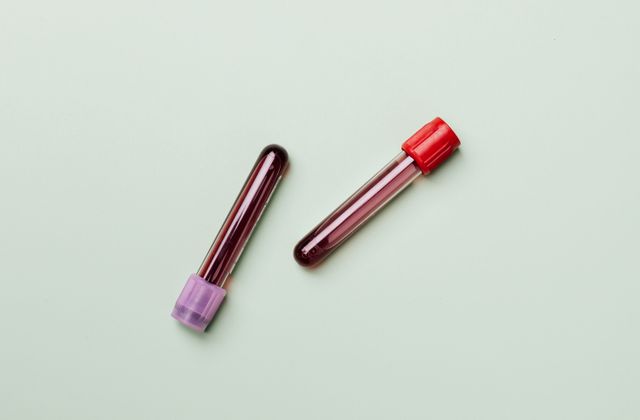
That is why your blood is drawn into a special tube, an EDTA tube, and why the good labs chill it. Mayo Clinic Laboratories instructs its collection sites to draw into a pre-chilled tube, transport it on ice, spin it cold within two hours, and freeze the plasma immediately. NHS hospital protocols say the same thing in plainer words: ACTH goes in an EDTA tube on ice and must reach the laboratory within two hours of collection. Some labs even reject warm specimens outright.
Why the rush? Because ACTH is one of the least patient hormones in the lab, and every minute at room temperature quietly eats into the result.
So if you ever watch the phlebotomist hurry your tube into an icebox right after the draw, don't read it as drama. It is the test working as designed. The cotton ball taped to your arm is the part you feel; the icebox is the part that protects the number. And it is one more reason the morning draw matters: an 8 AM sample that reaches the lab fast is a clean sample. A sample drawn late, left waiting, and read against a morning range is two problems stacked on top of each other.
When a doctor writes ACTH on the prescription
ACTH is not a routine health-check test. It does not appear in annual packages, and your doctor will not order it out of curiosity. It shows up on a prescription when something specific needs investigating.
On the too-much-cortisol side, the clues that prompt it include weight gain settling around the face and trunk while the limbs stay thin, purple or reddish stretch marks, blood pressure that refuses to come down with the usual medicines, and blood sugar creeping up without a clear reason. On the too-little side, the clues run the other way: fatigue that rest doesn't fix, low blood pressure, dizziness when you stand up, nausea, weight loss, and sometimes a darkening of the skin in creases, knuckles, and scars. That last one has a direct connection to this test: when the pituitary keeps shouting ACTH at adrenals that can't answer, the extra ACTH itself can darken the skin.
It is also ordered after pituitary surgery, when a pituitary tumor is suspected, or when a cortisol result has already come back odd and the doctor needs to find where the problem starts. That last scenario is the most common one in practice. A morning cortisol looks strange, and the next question is always the same: whether the pituitary is driving this or something is happening further down the chain. ACTH is the test that answers it.
Sometimes the trail starts even earlier, in ordinary blood work. In suspected adrenal insufficiency, the first hints often show up as low sodium, high potassium, or low glucose on a basic panel, well before anyone orders a hormone test. Those electrolyte shifts are the downstream noise of missing cortisol and aldosterone, and they are part of why a doctor who spots them reaches for morning cortisol and ACTH next. If your ACTH prescription followed a routine blood test with odd sodium or potassium, that is the thread your doctor is pulling.
High signal, low signal: reading your number against the range
Your report will show the result in pg/mL next to a reference range, and the first rule is the one every lab prints in small text and every doctor repeats: ranges vary by laboratory. Read your number against the range on your own report, not against a number you found online.
For orientation only: an early-morning sample often sits somewhere around 10 to 60 pg/mL at 8 AM, and Mayo's reference range for draws taken between 7 and 10 AM is 7.2–63 pg/mL. An afternoon sample runs much lower; one widely used reference puts a 4 PM sample at under 20 pg/mL. Notice the gap between those two sentences. That gap is the entire reason for the 8 AM rule, and it is also why you should never compare your morning number with someone else's afternoon number, or with a range quoted for a different time of day.
In broad strokes, a higher-than-expected result suggests the pituitary is sending more signal than usual. That pattern shows up in certain pituitary conditions, and it also shows up when the adrenal glands aren't answering: the pituitary keeps shouting because cortisol isn't rising the way it should. A lower-than-expected result suggests the pituitary is holding back. That happens in some pituitary disorders, and it also happens when cortisol-like medicines are coming in from outside: with plenty of signal arriving from a bottle, the pituitary sees no reason to send its own.
Both patterns are starting points, not conclusions. A slightly high number after a night of broken sleep and a stressful morning means something very different from the same number in a calm, well-rested patient with matching symptoms. Doctors read the number with your symptoms, your medicines, your sleep, and, always, your cortisol result beside it.
Shift work, jet lag, and rhythms that don't keep office hours
The 8 AM rule assumes your body keeps office hours. Plenty of bodies don't. If you work night shifts, your cortisol rhythm flips: the "morning peak" lands in your evening, whenever your long sleep ends. The reference range on the report was still built from day-shift mornings, so a night-shift worker's 8 AM sample is being judged against a rhythm they don't live in.
This doesn't make the test useless for you; it makes the conversation with your doctor more important. Mention your shift pattern when the test is ordered, and note your usual sleep and wake times on the day of the draw. Some doctors will still take the standard 8 AM sample and read it with the shift pattern in mind; others may pair it with a second sample timed to your own rhythm, since ACTH can be drawn morning and afternoon specifically to check how the rhythm behaves across the day. What you should not do is quietly "correct" for it yourself by showing up at a different hour without telling anyone. An undisclosed 2 PM sample read against a morning range is worse than a disclosed 8 AM sample read with context.
Jet lag does the same thing on a shorter fuse. If you've just flown across several time zones, your internal clock is somewhere over the ocean while your body is in Mumbai. Give it a few days to settle before the draw if the prescription allows, and tell the doctor about the travel. The same goes for new parents running on two-hour sleep fragments, or anyone in exam season pulling all-nighters: the rhythm is real, but it is also fragile, and a good interpretation accounts for the life around the number.
Never read ACTH alone: the cortisol pairing
This is the section that makes the whole test click. ACTH and cortisol are read as a pair because the pair points to where the problem lives. Four combinations cover nearly every story:
High ACTH with low cortisol. The pituitary is shouting and the adrenals aren't answering. This is the classic pattern of primary adrenal insufficiency, the condition most people know as Addison's disease: the fault sits in the adrenal glands themselves, and the pituitary is doing its job by pushing harder.
Low ACTH with low cortisol. The adrenals are quiet because nobody told them to work. This points upstream, to the pituitary or hypothalamus: secondary adrenal insufficiency. The treatment logic is completely different from the pattern above, which is why the distinction matters so much.
High ACTH with high cortisol. The pituitary is driving the excess. The usual suspect is a pituitary tumor making too much ACTH, a condition called Cushing's disease. Less commonly, some other tumor elsewhere in the body makes ACTH on its own, which doctors call ectopic ACTH production. Either way, the signal is coming from above.
Low ACTH with high cortisol. The adrenals are producing on their own, ignoring the pituitary entirely. This points to an adrenal source, such as an adrenal tumor, or to steroid medicines taken from outside suppressing the pituitary's own signal while cortisol stays high.
You can see why a cortisol result without ACTH is only half a map. Cortisol tells you something is off; ACTH tells you which floor of the building the problem is on. If your prescription lists both a morning cortisol test and ACTH, that pairing is deliberate, and it is the single most useful thing your doctor will read on the page.
If the pair looks off: what happens next
An odd ACTH result rarely ends the story; it usually starts the next chapter. What comes next depends on which direction the pair pointed.
When the suspicion is too little cortisol, the workhorse is the ACTH stimulation test. This is a different test from the morning ACTH draw, and the name confuses people, so here is the distinction: the morning test measures the ACTH your own body made; the stimulation test injects a man-made version of ACTH and watches how your adrenals respond.
Blood is drawn before the injection and again at 30 and 60 minutes after, and the lab measures cortisol each time. A healthy adrenal gland answers the injection with a clear rise in cortisol. In Addison's disease, and in most long-standing secondary insufficiency, there is little or no rise: the glands are too damaged, or too long unused, to respond.
The Endocrine Society treats this as the gold-standard diagnostic step for adrenal insufficiency, and the NIDDK notes one caveat worth knowing: in recent-onset secondary insufficiency the adrenals may still answer, so an unclear result can lead to further testing rather than a firm answer.
As a patient, the stimulation test is a slower morning than the ACTH draw. You sit in the clinic while a baseline sample is taken, receive the injection, and then wait through two more timed draws at 30 and 60 minutes. There is nothing to recover from afterward; the odd part is the waiting, not the needle.
Results take longer than a routine report because the lab is reading a response curve, not a single number. If your doctor suspects the pituitary rather than the adrenals and the stimulation result is unclear, the next step may be an insulin tolerance test, which the NIDDK calls the most reliable test for secondary insufficiency, or a CRH stimulation test that watches whether the pituitary answers its own upstream signal.
Each test interrogates one link of the chain, which is why endocrinologists stack them instead of repeating the same one.
When the suspicion is too much cortisol, doctors screen first and localize second. The Endocrine Society's diagnostic guidance recommends starting with one high-accuracy screening test: a 24-hour urinary free cortisol collection, a late-night salivary cortisol sample, or an overnight dexamethasone suppression test. Each attacks the same question from a different angle, and doctors usually want two of them before moving on. Only after excess cortisol is confirmed does ACTH step back into the spotlight to find the source, which is exactly the four-pattern logic from the previous section: high ACTH points the imaging toward the pituitary (an MRI), suppressed ACTH points it toward the adrenals (a CT scan).
There are also quieter follow-ups. For suspected Addison's, an antibody blood test can confirm the autoimmune form without further testing. None of this happens in one visit, and none of it is a reason to panic at the first odd number. The morning ACTH draw is the compass; these are the maps it points you toward.
The night before: how to prepare
Preparation for ACTH is mostly about protecting the rhythm, not about elaborate fasting rituals. Here is what actually matters, in the order patients ask about it.
Food. You may be asked to fast for several hours before the draw; your lab will confirm how long. Water is fine. This is one of those instructions where labs differ, so follow the specific instruction your booking confirmation gives you rather than a rule from the internet. The pathology review behind this guide specifically softened older advice here: the 8 AM timing is about the cortisol rhythm, not about food.
Sleep. A rough night can push ACTH higher in the morning. You cannot always control this, and one bad night does not ruin the test, but try for a normal bedtime and mention a terrible night to your doctor so the number is read in context.
Medicines and supplements. Tell your doctor about everything you take. Steroid medicines are the big one: they suppress the pituitary's own ACTH while keeping cortisol-like activity high, which scrambles the pairing logic completely. Hormonal medicines and insulin can shift results too. And here is one most people miss: Mayo Clinic Laboratories asks patients to avoid multivitamins and hair, skin, and nail supplements containing biotin (vitamin B7) for 12 hours before the draw, because biotin can interfere with the laboratory method itself. Never stop a prescribed medicine on your own to "clean up" a test; the doctor needs to know what you were taking when the blood was drawn, because the interpretation changes with it.
Exercise and stress. A hard workout the evening before is fine, but don't sprint up the stairs to the lab. Acute physical stress raises ACTH, which is why the next section asks you to sit still first.
Logistics. Lay out the prescription the night before and set the alarm with the 20-minute quiet sit in mind, not just the draw time. If you've booked a home collection, keep your phone nearby in the morning; the phlebotomist will call when they're close, and the whole visit takes about ten minutes.
The morning of the draw: dos and don'ts
The draw itself is unremarkable: one tube, one needle prick, the sting most people describe as brief, and the cotton ball taped to your arm afterward. What makes this morning different from any other blood test is everything around those two minutes.
Do:
- Do arrive early enough to sit quietly for 20 to 30 minutes before the needle goes in. Rushing in flustered and getting drawn immediately is one of the easiest ways to nudge the number up for no reason.
- Do bring your prescription and a list of your medicines, including supplements. The phlebotomist may ask; the doctor definitely will.
- Do drink water. Hydration makes veins easier to find, and water doesn't break the fast.
- Do tell the staff if you slept badly or had a stressful morning. It takes ten seconds and it changes how your doctor reads the number.
Don't:
- Don't have tea or coffee before the draw unless your lab specifically allows it. Caffeine and a hurried morning are both stimulants your pituitary notices.
- Don't exercise that morning. Save the run for after the draw.
- Don't arrive at 10:30 hoping the 8 AM slot was a suggestion. The range on your report was measured from morning samples; a late sample can't be judged against it, and you'll likely be asked to return the next day.
- Don't try to "fix" the result by skipping prescribed medicines without your doctor's word. A result drawn on your real medicines, honestly disclosed, beats a secretly altered one every time.
That sit-quietly-first instruction deserves one more line, because patients often read it as inefficiency. It isn't. Resting before the draw is part of the measurement, the same way zeroing a scale is part of weighing. The chair, the waiting, the boredom: all of it is the test.
What your report page actually shows
When the report lands on your phone, usually within about 24 hours, the ACTH line looks like this: the test name, your result in pg/mL, the reference range, and a flag if you're outside it. A few labs report in pmol/L instead of pg/mL; the numbers look completely different between the two units, so check which one your report uses before comparing with anything else. What many people don't notice is the collection time, which good labs print alongside the result. That time stamp is doing quiet work: it tells your doctor the number was drawn inside the window the range was built for.
Read the range, not just the flag. A result of 58 against a range of 7.2–63 is technically normal, but a doctor who knows you slept three hours and fought traffic to reach the lab will read it differently from the same number in a calm, asymptomatic patient. Conversely, a mildly high number with no symptoms and a chaotic morning usually earns a conversation and a repeat, not a diagnosis. Single values wobble; trends and pairs are what doctors trust.
One more honest note about ranges: they differ between labs because they depend on the analyzer and the population the lab measured. Two labs can give you slightly different ranges and both be right. That is why every section of this guide keeps saying the same thing: your number belongs to your report, your lab, and your morning.
A quick walk-through, with made-up numbers, shows how a doctor thinks. Say your report reads ACTH 72 pg/mL against a range of 7.2–63, drawn at 8:15 AM, with a morning cortisol sitting low. The ACTH is above range and the cortisol is low: the pituitary is shouting, the adrenals aren't answering. That combination points toward the adrenal glands themselves and usually leads to a stimulation test to confirm. Now flip it: ACTH 8 pg/mL, cortisol also low. Both quiet. That points upstream, toward the pituitary not sending the signal, and the next steps look completely different. Same test, same page, opposite meanings. That is why the pairing section above isn't optional background; it is the actual logic your doctor applies.
Booking it in Mumbai: one morning sitting
Because ACTH and cortisol are read as a pair, book them as a pair. The ACTH test page carries the current price and preparation notes, and adding the cortisol test means one needle, one morning, one report set. If your prescription specifically says morning cortisol, take the Cortisol (8:00 AM) slot so the timing of the two samples matches.
Two bundles are worth a look if your doctor is investigating the adrenal axis more broadly. The Hormones Adrenal Panel groups adrenal markers into a single draw, and the Stress and Cortisol Panel Basic wraps cortisol markers into a wider stress-hormone check. Browse all options on /packages/, or the tests page if you want to compare markers first.
One practical warning about that 8 AM slot: book the home visit the evening before, because this draw cannot slide to the afternoon and rescheduling wastes a fasting morning. Ring 84250 40353 and the phlebotomist will be at your door while your cortisol rhythm is still near its peak, tube straight into the icebox, ten minutes and done. Home collection is free across Malad, Kandivali, Borivali, and Goregaon, our Malad lab runs 24x7, and the report usually reaches your phone and email within about 24 hours.
Questions we hear at the counter
Does the ACTH draw hurt more than a normal blood test? No. One tube, one needle prick, exactly like a routine draw. The only unusual part is the strict morning timing and the sit-quietly-first wait.
Can I have chai or coffee before the draw? Usually not. Labs typically ask for several hours of fasting before an ACTH draw, though water is fine. Follow your doctor's instructions if they differ; this is the question we get asked most, and the answer is always the one your booking confirmation gives.
I slept terribly. Will it ruin the result? Poor sleep and acute stress can push ACTH up, but they won't ruin anything. Tell your doctor so a slightly high number is read in context rather than in isolation.
Why not just test cortisol and skip ACTH? Cortisol alone can't show where a problem starts. ACTH reveals whether the pituitary is driving the change or reacting to it, which is usually exactly what your doctor wants to know.
Can I do the test in the afternoon if mornings don't work? The reference range on your report was built from morning samples, and major reference labs publish no established values for afternoon draws. An afternoon number has nothing reliable to compare against, so the lab will almost certainly ask you to come back in the morning.
Why did the lab rush my tube into ice? ACTH degrades quickly in whole blood at room temperature. The chilled EDTA tube and the icebox protect your number; a warm, waiting sample quietly reads lower than your blood actually was.
References
Mayo Clinic Laboratories : Test Definition: ACTH (Adrenocorticotropic Hormone, Plasma) MedlinePlus / ADAM Medical Encyclopedia : ACTH blood test NIDDK : Diagnosis of Adrenal Insufficiency and Addison's Disease Endocrine Society : Clinical Practice Guideline resources on the diagnosis of Cushing's syndrome
Book these tests at home
Live prices · free home sample collection in Malad, Kandivali, Borivali & Goregaon
ACTH (Adreno Corticotropic Hormone)
- Report in 24 hrs
- Free home collection
Cortisol
- Report in 24 hrs
- Free home collection
Cortisol (8:00 AM)
- Report in 24 hrs
- Free home collection
More tests related to this topic
Other Hormones tests you can book with free home sample collection.
Thyroid Profile (T3, T4, TSH)
- Report in 24 hrs
- Free home collection
25 OH Vitamin D
- Report in 24 hrs
- Free home collection
ADH (Anti Diuretic Hormone Vasopressin), EDTA Plasma
- Report in 24 hrs
- Free home collection
Aldosterone
- Report in 24 hrs
- Free home collection
Aldosterone Urine 24H
- Report in 24 hrs
- Free home collection
Aldosterone/Direct Renin Ratio
- Report in 48 hrs
- Free home collection
Androstenedione (A4)
- Report in 24 hrs
- Free home collection
Anti Mullerian Hormone (AMH)
- Report in 24 hrs
- Free home collection
Calcitonin
- Report in 24 hrs
- Free home collection
Catecholamines (Adrenaline and Nor – adrenaline) – 24 Hours Urine
- Report in 24 hrs
- Free home collection
CATECHOLAMINES(Adrenaline and Nor - Adrenaline)
- Report in 24 hrs
- Free home collection
Cortisol (4:00 PM)
- Report in 24 hrs
- Free home collection
Get more from the same visit
Health packages that already include these tests, and tests people usually add.
Frequently asked questions
Does the ACTH draw hurt more than a normal blood test?
No. It is one tube and one needle prick, exactly like a routine draw, and most people feel only a brief sting. The only unusual part is the strict 8 to 9 AM timing and the 20 to 30 minutes of quiet sitting before the needle.
Can I have tea or coffee before the draw?
Usually not. Labs typically ask for several hours of fasting before an ACTH draw, though water is fine. Follow your doctor's instructions if they differ, and check your booking confirmation for the lab's specific guidance.
I slept badly last night. Will it ruin the result?
It will not ruin the test, but poor sleep and acute stress can push ACTH higher in the morning. Tell your doctor so a slightly high number is read in context rather than in isolation.
Why do I need ACTH tested if cortisol is already being checked?
Cortisol alone shows that something is off but not where it starts. ACTH reveals whether the pituitary is driving the change or merely reacting to it, which is usually what the doctor wants to know.
Can I do the test in the afternoon instead?
No. Reference ranges are calibrated for morning samples, usually drawn between 7 and 10 AM, and major reference labs publish no established values for afternoon draws. The lab will almost certainly ask you to come back the next morning.
Do I need to stop my medicines before the test?
Tell your doctor about everything you take, especially steroid medicines, hormonal medicines, and insulin, because they can shift the result. Never stop a prescribed medicine on your own; the doctor needs to interpret the result knowing what you were taking.
What is the ACTH stimulation test?
A different test from the morning ACTH draw. A man-made version of ACTH is injected, and blood is drawn before and at 30 and 60 minutes after to measure cortisol. It checks whether the adrenal glands respond; little or no rise points toward adrenal insufficiency.
How long does the ACTH report take?
About 24 hours at HWP Diagnostic, delivered to your phone and email.
My ACTH is slightly high but I feel fine. Should I worry?
One slightly high number after a bad night or stressful morning usually earns a conversation and possibly a repeat, not a diagnosis. Doctors trust trends and the ACTH-cortisol pair, not single values.
Why does the lab rush my tube into ice?
ACTH breaks down quickly in whole blood at room temperature. Drawing into a chilled EDTA tube and transporting it on ice protects the number; a warm, waiting sample can read lower than your blood actually was.
HWP Diagnostic Editorial Team
Health guides written by the team at HWP Diagnostic, Mumbai, to help you understand your tests before you book. This article is for general education and is not a substitute for medical advice - reference ranges vary between labs, so always discuss your results with your doctor. Read our editorial policy. Photos: Pexels.