
Key takeaways
- The letter B marks a panel version, not a grade: one blood draw, one bundled set of tests tracing why haemoglobin is low.
- The panel usually combines red-cell indices (CBC), iron studies, ferritin, and B12/folate; the exact parameter list is printed on your test page and report.
- For most of the panel there is no special preparation: ferritin, vitamin B12 and folate need no fasting. The iron studies part is best drawn in the morning (serum iron drifts through the day), and many labs ask you to skip iron supplements for 24 hours before the sample.
- Read the pattern, not single flags: low ferritin, low iron and low MCV with high TIBC points toward iron deficiency; high MCV points toward B12 or folate.
- Reference ranges vary by laboratory, so compare your values only against the range on your own report, and treat flagged values as clues for your doctor, not diagnoses.
- Free home collection covers Malad, Kandivali, Borivali and Goregaon; the lab runs 24x7; bookings on 84250 40353.
Book tests from this article
Sample collected at home - free
- Complete Blood Count (CBC)
₹199₹59967% off
- Anemia Profile - B
₹2,899₹3,84925% off
- Iron Studies
₹599₹1,29954% off
Free collection 24 hr reports
A report we see all the time: low ferritin, normal haemoglobin
Ferritin low. Haemoglobin normal. The patient stares at the two lines and asks: "But am I anaemic or not?" Strictly speaking, no. That is iron deficiency without anaemia: the storage shelves draining while the red cells still hold their shape. It is the stage where the problem is easiest to fix, and it is the stage a lone haemoglobin test would never catch.
That gap is why your doctor ordered a bundle instead of a single number. The slip says "Anemia Profile - B", and the letter is the lab's bundle code, nothing more. B is not better than A, and C is not the premium edition; the letters mark different pre-set mixes of tests, and your doctor picked the B mix for your case.
Doctors reach for this panel when haemoglobin has come back low, or when the classic signs show up: tiredness that sleep doesn't fix, getting winded on stairs that never bothered you before, nails that look pale or oddly scooped at the edges. The panel's job is detective work, and it does all of it from one blood draw. One appointment, one needle, and the report starts narrowing down why the haemoglobin is low instead of leaving everyone guessing.

Why your doctor ordered a bundle instead of one test
Low haemoglobin is a finding, not a diagnosis. Behind it sit several different families of causes: iron shortage, vitamin shortage, slow blood loss, long-running inflammation, inherited conditions of the red cells. No single test can tell these families apart. Haemoglobin alone can't. Ferritin alone can't.
That is why panels like this exist. They answer the family question in one go instead of sending you back for a second and third blood draw while the doctor guesses at which test to try next. It also keeps the cost and the hassle lower than ordering each test on a different day, which matters when you're the one giving the blood and paying the bill.
It helps to know what the bundle doesn't cover, too. The B panel answers "which deficiency family is this" and "is iron the problem or a vitamin". It doesn't usually include a reticulocyte count (which measures how hard your marrow is working to compensate), a peripheral blood smear, or haemoglobin studies for inherited conditions.
Those are second-line tests your doctor adds when the first-line pattern points that way. Think of the panel as the first sweep of the torch, not the whole search party.
There's a practical side to it too. The alternative to a panel is a slow drip of appointments: CBC today, iron studies next week after the doctor sees the CBC, B12 the week after that. Each round means another morning spent, another prick, another wait for results. A panel front-loads all of that into one visit. For someone juggling office hours in Malad or a long commute from Borivali, that's the difference between sorting this out in a day and stretching it across a month.
The four corners of the panel
Anemia profiles aren't single tests. The B version groups the same four corners that anaemia workups have always used. Learn the corners and the report stops looking like alphabet soup.
Corner one: the complete blood count with red-cell indices. This is the headcount. It measures haemoglobin (the oxygen-carrying protein), the number of red cells, and a set of calculated indices: MCV, MCH, MCHC and RDW. These indices describe the size of your red cells and how much haemoglobin each one carries. They're the first thing your doctor looks at, because cell size points the investigation in a direction. The panel usually includes white cells and platelets too, mostly as context, so your doctor can see whether the rest of the blood picture is quiet.
Corner two: iron studies. Serum iron, TIBC (total iron-binding capacity, sometimes reported as transferrin), and transferrin saturation. These describe iron in transit: how much is floating in the blood right now, how much carrying capacity the blood has, and how full those carriers are.
Corner three: ferritin. If iron studies show iron in transit, ferritin shows iron in storage. It is the body's iron warehouse gauge. More on it below, because it behaves in ways that surprise people.
Corner four: vitamin B12 and folate. The other big deficiency family. B12 and folate run the machinery that builds new red cells, and when either runs short, the cells come out wrong in a very specific way.
I won't list the exact parameter count here, because panel recipes get updated and the honest source of truth is your own test page and your report page. What matters: all four corners come from the same draw.
MCV: the quiet little number that runs the whole show
Of everything on the report, MCV (mean corpuscular volume) quietly steers the diagnosis. It is the average size of your red blood cells, measured in femtolitres. A typical lab reference sits around 80–100, though the exact span varies from lab to lab, which is why your report's own range is the only one that counts.
Below that span, the cells are small. Doctors call this microcytic. The classic reason is iron deficiency: without enough iron, each cell gets built small and pale. Low MCV with low MCH (less haemoglobin per cell) is the fingerprint your doctor looks for.
Above that span, the cells are large. That's macrocytic, and the classic reason is B12 or folate deficiency. When those vitamins run short, red-cell precursors grow but can't divide properly, so they drift into the blood oversized.
Then there's RDW, the red-cell distribution width. It measures how much the cell sizes vary. A high RDW means the sizes are all over the place, and it can shift early, sometimes before MCV moves at all. Doctors read it as an early whisper of deficiency.
Two more indices round out the size story. MCH (mean corpuscular haemoglobin) is the average amount of haemoglobin in each red cell, and MCHC is the concentration of haemoglobin inside the cells. In iron deficiency both tend to run low, which is the "hypochromic" part of the classic microcytic-hypochromic picture you might see mentioned on a report. In B12 or folate deficiency they're usually normal or high, because the problem there is cell division, not haemoglobin loading. These indices rarely change a diagnosis on their own, but they fill in the shading around MCV.
For context on the haemoglobin line itself: the World Health Organization's 2024 guideline sets the anaemia cutoff at under 12 g/dL for non-pregnant adult women, under 13 g/dL for adult men, and under 11 g/dL for pregnant women in the first and third trimesters (under 10.5 in the second). Below those cutoffs, the guideline grades anaemia as mild, moderate or severe. Your lab's printed range may phrase it slightly differently, but it lands in the same neighbourhood.
So the rough logic of the panel: haemoglobin says whether there's anaemia, MCV says which direction to investigate, and the iron and vitamin corners confirm or rule out the suspects. That sequence is why the bundle beats a single test every time.
Reading the iron corner: ferritin, iron, TIBC and transferrin saturation
Iron deficiency is the most common cause of anaemia in the world, and this corner of the report is where it shows up. (If you want these markers on their own, outside the panel, the lab offers standalone iron studies and a standalone ferritin test.) But the four markers don't all fall at once. They fall in a sequence, and understanding the sequence explains a lot of confusing reports.
Ferritin falls first. Ferritin is the storage protein, so it is the earliest thing to drop when iron intake can't keep up with iron loss. In the first stage of deficiency, ferritin is low while haemoglobin and MCV still look completely normal. Your marrow is running on empty shelves but hasn't started shipping bad product yet. This is exactly why someone can have "low ferritin, normal haemoglobin" and be told they don't have anaemia yet. They don't, strictly speaking. They have iron deficiency without anaemia, which is its own thing and worth knowing about.
One catch with ferritin: it rises during inflammation, infection, or liver irritation. It's what doctors call an acute-phase reactant. So a ferritin that looks "normal" while you're running a fever can be hiding a real deficiency. Your doctor reads ferritin in the context of the other markers, and of how you're feeling that week, not as a lone number.
Then the transit markers shift. Serum iron (iron currently floating in the blood) drops. TIBC, the total carrying capacity, rises, because the body builds more transferrin carriers in a bid to grab every scrap of iron. But the carriers are mostly empty, so transferrin saturation (iron divided by TIBC, times 100) falls.
A saturation under about 20% with a high TIBC and low ferritin is the classic iron-deficiency picture.
On your report page, the iron corner usually sits together as a block: serum iron, TIBC or transferrin, transferrin saturation calculated underneath, ferritin nearby. It's worth reading the block as one unit. Serum iron alone bounces around enough that doctors rarely trust it by itself; paired with ferritin and saturation, it tells a coherent story.
Then the cells change. Only after the storage and transit markers have been low for a while do the red cells themselves come out small and pale: low MCV, low MCH, low haemoglobin. That's full iron-deficiency anaemia.
One more thing worth knowing: serum iron drifts through the day. It's highest in the morning and slides as the hours pass. That's not a lab error, it's biology, and it's the reason labs ask for a morning draw for iron studies. More on the preparation rules in a bit.
The usual suspects behind iron deficiency, per clinical guidelines, are chronic blood loss (heavy menstrual periods, slow gastrointestinal bleeding), pregnancy and growth spurts raising demand, diets low in iron, and poor absorption from the gut. Your doctor traces which of these fits your story before deciding on next steps.
We go deeper into these markers in our iron studies guide and our ferritin explainer, if you want the full treatment of each line.
The vitamin half: B12 and folate
If the iron corner is about building material, this half is about the assembly line. Vitamin B12 and folate are needed for DNA synthesis when red cells are being made. Without them, the precursor cells grow but can't divide properly, and they drift into the blood oversized: the high MCV from the earlier section.
Vitamin B12 comes almost entirely from animal foods: meat, fish, eggs, dairy. Your liver stores years' worth, so deficiency creeps up slowly and can take a long time to show. The people most likely to run short: strict vegetarians and vegans who don't supplement, people whose stomach or gut can't absorb it properly (pernicious anaemia, where the immune system blocks absorption; past gastric surgery; inflammatory bowel disease), and people on long-term metformin or acid-reducing medicines, which can quietly lower absorption over time.
B12 has one extra sting that folate doesn't: nerve damage. Tingling or numbness in the hands and feet, an unsteady walk, a tongue that feels sore or looks smooth, trouble with memory and concentration. These can show up before the anaemia does, which is why doctors take B12 symptoms seriously even when the haemoglobin looks fine. Untreated for long enough, some of the nerve damage doesn't fully reverse.
Folate (vitamin B9) comes from green vegetables, beans, lentils and citrus fruit. Unlike B12, the body stores very little of it, so a poor diet shows up in weeks, not years. Folate deficiency produces the same oversized red cells, but not the nerve damage. One caution doctors live by: check B12 before treating a folate deficiency, because folate can fix the blood picture while the nerve damage from an unrecognised B12 deficiency keeps progressing.
When the B12 result lands in the grey zone, not clearly low and not clearly fine, doctors have tie-breakers: methylmalonic acid and homocysteine. Both rise when B12 is functionally short even if the B12 number itself looks borderline.
Vegetarians reading this: you are the group most likely to need B12 attention, and it's a simple thing to check. Our vitamin B12 guide walks through deficiency signs and testing in more detail, and the standalone vitamin B12 test is the one to book if you want to check your level directly.
When iron, B12 and folate all look normal and haemoglobin is still low
This happens more often than people expect, and it's exactly why the panel is a starting point rather than the whole answer. A few possibilities your doctor weighs:
Anaemia of chronic disease. Long-running inflammation, chronic infections, autoimmune conditions and some cancers make the body lock iron away in storage as a defence strategy. The iron studies look odd in a specific way: ferritin normal or even high, serum iron low, TIBC low or normal, MCV usually normal or only slightly low. The iron is there; the body just won't release it.
Ongoing blood loss. Iron studies may show a mixed or early-deficiency picture while the real story is a slow bleed, often from the gut. This is the possibility doctors are most careful not to miss, especially in older adults.
Thalassemia trait and other inherited conditions. These produce small red cells (low MCV) with normal or high ferritin and normal iron studies, which looks nothing like iron deficiency once you know the pattern. Thalassemia trait is common enough in India that doctors keep it on the mental checklist.
Rare corners. Bone-marrow problems, B12 or folate masking each other, combined deficiencies pulling MCV in opposite directions. Your doctor picks the next tests from the pattern, which might mean a reticulocyte count, a peripheral smear, or haemoglobin studies.
None of this is yours to diagnose from the report. The point is simpler: a panel that "explains nothing" has still done real work. Crossing causes off the list is half of how a diagnosis gets made.
Three report patterns, and what H and L flags really mean
Doctors read the panel as patterns, not as individual lines. Three broad pictures cover most reports:
Pattern one: iron deficiency. Low ferritin, low serum iron, low transferrin saturation, high TIBC, low MCV and MCH, low-ish haemoglobin. Common in women of menstruating age, in pregnancy, and in anyone with slow blood loss or poor iron absorption. The lower the ferritin and the lower the MCV, the more confident the read.
Pattern two: B12 or folate deficiency. High MCV, low B12 or low folate, haemoglobin low or borderline. This is the one vegetarians and vegans need to watch, and so do people on long-term metformin or acid-reducing medicines. If both iron and B12 are low at once, MCV can land deceptively normal, because small-cell and large-cell tendencies cancel each other out. That's a good example of why the whole panel matters.
Pattern three: everything normal except haemoglobin. Iron fine, B12 fine, folate fine, cells normal-sized, yet haemoglobin sits low. Then the cause lies elsewhere: chronic disease, blood loss, or an inherited condition, and your doctor picks the next tests from there.
Now about those H and L flags on your report. A flag only says one thing: this value sits outside the laboratory's reference range. It is not a disease stamp. Read this part slowly, because it saves a lot of worry: reference ranges vary by laboratory. The only range that counts for your values is the one printed on your own report. Comparing against a friend's report, or a chart from the internet, will mislead you more often than it helps.
One flagged value is a clue. The diagnosis comes from the pattern, which is exactly why the tests were bundled in the first place.
The morning draw and the 24-hour rule
For most of the panel there is no special preparation: ferritin, vitamin B12 and folate need no fasting. Walk in (or open your door to the phlebotomist) at whatever time suits you.
Two small exceptions, and they're both about the iron studies part. Serum iron drifts through the day, highest in the morning, so the iron studies are best drawn in the morning. And many labs ask you to skip iron supplements for 24 hours before the sample, because a tablet taken the night before can puff up the serum iron reading and muddy the picture. If your doctor told you to keep taking your supplements, your doctor wins that argument. The prescription slip has the final word.
Drink water before the draw. It genuinely helps: a hydrated vein is an easier vein, and the whole thing goes faster. If your doctor added other tests alongside the panel, like fasting blood sugar, then fasting applies to those, and you should follow that instruction for the whole draw.
If your schedule only allows an afternoon draw, don't skip the test over it. Tell the lab what time the sample was taken; the iron reading will still be usable, your doctor just reads it with the timing in mind. A slightly imperfect sample beats no sample.
What the draw feels like, minute by minute
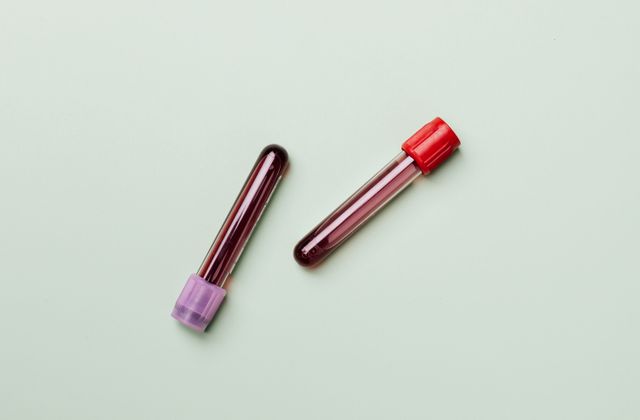
If you've never given blood for a panel like this, here's the honest version. The phlebotomist ties a band around your upper arm. It feels snug, not painful, and it makes the vein stand up. An alcohol swab goes over the spot; it's cold for about two seconds. Then the needle. Most people say the prick is less than a proper mosquito bite, sharp for a moment and then nothing much. While the needle stays put, the vials fill one after another. You might hear a soft click as each tube swaps. Nobody rushes you.
Then the needle comes out and a cotton ball gets taped over the puncture spot. Keep it on for about ten minutes and keep the arm straight rather than bending it at the elbow. If you're the bruising type, a small purple patch the next day is common and harmless.
At home, it's the same sequence on your sofa or at your dining table. The phlebotomist brings the vials, finds the vein, and takes the sample while you sit where you're comfortable. Our lab in Malad offers free home collection across Malad, Kandivali, Borivali and Goregaon, and the lab itself runs 24x7, so odd-hour appointments are genuinely possible. Bookings go through 84250 40353.
The report for this panel is usually shared within about two working days, delivered over the same channel you booked through. The report page lists your details at the top, then the parameters grouped by test, each row carrying your value, the unit, and the lab's reference range.
Who gets anaemia most often in India
Anaemia in India is not rare. It is, frankly, everywhere. The National Family Health Survey (2019-21) found anaemia in 57.0% of women aged 15 to 49, 67.1% of children aged 6 to 59 months, 52.2% of pregnant women, and 25.0% of men in the same age band. Read those numbers twice. More than half of the women in the country.
The reasons stack up: diets low in iron-rich foods, heavy menstrual bleeding, pregnancies close together, vegetarian diets without B12 attention, slow blood loss that nobody notices, and infections that drain iron over time. Adolescent girls and pregnant women carry the heaviest burden, which is why doctors in India order panels like this one so often.
If your report flags something, you're not an outlier with a strange disease. You're in very large company, and the cause is usually one of the ordinary, fixable things this panel was designed to find. That is a much better position than it feels like at first glance.
Booking Anemia Profile - B in Mumbai
Start at the Anemia Profile - B test page, which carries the current parameters and live price. The booking itself takes a couple of minutes: pick home collection or a lab visit, choose a slot, and the confirmation comes through on the same channel.
Two wider options exist if your case needs more than the B panel. The Anemia Profile is a 32-parameter bundle built around the same problem, and the Comprehensive Anemia Profile goes further if the basic panel left questions unanswered. Browse the packages page for how these sit alongside general health checkups, or head to the tests page if you're unsure what to book and want to compare test by test.
If your slip actually says A and you landed here by mistake, we covered Anemia Profile - A separately. And if your doctor left the choice to you, the right letter is the one that matches your case, so ask the lab counter before swapping letters on your own.
To book: 84250 40353. This panel's report takes a little longer than a single test, usually about two working days, because the iron and vitamin lines run on slower analysers than the CBC. The lab works round the clock, and home collection across Malad, Kandivali, Borivali and Goregaon costs nothing extra.
Carry your prescription slip if you have one, and a list of any supplements or medicines you take, including iron tablets. The phlebotomist will ask about fasting and supplements before the draw, and having the list handy keeps the answers accurate. If you're booking for a parent or a child, their previous reports help too, because trends across reports tell your doctor more than any single snapshot.
Questions patients keep asking us
Do I need to fast before Anemia Profile - B? Usually no. Ferritin, B12 and folate need no fasting, and the panel is a routine draw. But check your prescription slip: if your doctor added tests alongside the panel, like fasting blood sugar, fasting applies to those.
Why does the lab want a morning sample? Because of the iron studies part. Serum iron drifts through the day and is highest in the morning, so a morning draw gives the cleanest reading. The rest of the panel doesn't care what time it is.
Should I skip my iron tablet the day before the test? Many labs ask for a 24-hour break from iron supplements before the sample, since a recent tablet can inflate the serum iron reading. But if your doctor told you to keep taking them, follow your doctor. Mention whatever you did when you give the sample.
Will one needle prick cover all the tests in the panel? Yes. That's the entire point of the bundle. Several vials fill from the single draw while the needle stays put.
How long until I get the report? For this panel the report is usually shared within about two working days, delivered over the same channel you booked through.
Can the sample be collected at home? Yes. The phlebotomist comes to your door at a slot that suits you, including early morning for the iron studies part. Collection is free across Malad, Kandivali, Borivali and Goregaon, and the booking line is 84250 40353.
Is B better than A, C or M? Neither. The letters mark different panel recipes, not better or worse versions. Use the one your doctor wrote, or ask the lab counter which bundle matches your case.
My ferritin is low but my haemoglobin is normal. Is that anaemia? Not technically, no. That's iron deficiency without anaemia: the storage is emptying but the red cells haven't been affected yet. It's worth knowing about and worth discussing with your doctor, because it's the stage where the problem is easiest to address.
I'm vegetarian. Should I be worried about B12? It's the one to watch. B12 comes almost entirely from animal foods, and the body takes years to run its stores down, so the shortfall builds silently. A check every so often is cheap insurance, especially if you're feeling unusually tired or getting tingling in your hands and feet.
My report shows an H flag on one line. Should I panic? Not from the flag alone. The H or L only says a value sits outside the lab's reference range. Your doctor reads it in the pattern of the whole panel before calling it anything, and single flagged values often turn out to mean very little on their own.
Can I book this test without a doctor's prescription? Yes, walk-in and home-collection bookings don't need a prescription for this panel. That said, having your doctor read the report is what turns numbers into answers.
Does the panel include a peripheral blood smear? Not always. The panel reports the counts and indices; a smear (where a pathologist actually looks at the cells under a microscope) is a separate add-on your doctor orders when the indices suggest something worth seeing directly, like abnormal cell shapes. If your doctor wants one, they'll write it on the slip.
References
- World Health Organization, Guideline on haemoglobin cutoffs to define anaemia in individuals and populations (2024).
- Mayo Clinic Laboratories, Iron and Total Iron-Binding Capacity, Serum (SFEC) test catalog: specimen requirements and ordering guidance.
- NICE Clinical Knowledge Summary, Anaemia: B12 and folate deficiency, interpreting investigation results.
- CMAJ, Severe vitamin B12 deficiency causing pseudo-thrombotic microangiopathy: clinical features and confirmatory testing (2023).
Book these tests at home
Live prices · free home sample collection in Malad, Kandivali, Borivali & Goregaon
Complete Blood Count (CBC)
- Report in 12 hrs
- Free home collection
Anemia Profile - B
- Report in 48 hrs
- Free home collection
Iron Studies
- Report in 24 hrs
- Free home collection
Ferritin
- Report in 24 hrs
- Free home collection
Vitamin B12
- Report in 24 hrs
- Free home collection
More tests related to this topic
Other Anemia tests you can book with free home sample collection.
Alpha thalassemia gene analysis
- Report in 168 hrs
- Free home collection
Beta - Thalassemia Screenig
- Report in 24 hrs
- Free home collection
Beta - Thalassemia Screenig with Graph
- Report in 24 hrs
- Free home collection
CBC & Pheripheral Blood Smear
- Report in 48 hrs
- Free home collection
CBC - Complete Hemogram Test(28)
- Report in 12 hrs
- Free home collection
G6PD (Glucose - 6 - Phosphate Dehydrogenase) EDTA Whole Blood
- Report in 12 hrs
- Free home collection
Haptoglobin Serum
- Report in 24 hrs
- Free home collection
Hemoglobin
- Report in 24 hrs
- Free home collection
Hemoglobin - Free, Urine
- Report in 24 hrs
- Free home collection
Hemoglobinopathies Profile - HbF/HbS
- Report in 48 hrs
- Free home collection
Hemoglobinopathies Profile - HbF/HbS (with Graph)
- Report in 48 hrs
- Free home collection
Iron
- Report in 24 hrs
- Free home collection
Get more from the same visit
Health packages that already include these tests, and tests people usually add.
Frequently asked questions
Do I need to fast before Anemia Profile - B?
Usually no. Ferritin, B12 and folate need no fasting, and the panel is a routine draw. But check your prescription slip: if your doctor added tests alongside the panel, like fasting blood sugar, fasting applies to those.
Why does the lab want a morning sample?
Because of the iron studies part. Serum iron drifts through the day and is highest in the morning, so a morning draw gives the cleanest reading. The rest of the panel doesn't care what time it is.
Should I skip my iron tablet the day before the test?
Many labs ask for a 24-hour break from iron supplements before the sample, since a recent tablet can inflate the serum iron reading. But if your doctor told you to keep taking them, follow your doctor. Mention whatever you did when you give the sample.
Will one needle prick cover all the tests in the panel?
Yes. That's the entire point of the bundle. Several vials fill from the single draw while the needle stays put.
How long until I get the report?
For this panel the report is usually shared within about two working days, delivered over the same channel you booked through.
Can the sample be collected at home?
Yes. Free home collection runs across Malad, Kandivali, Borivali and Goregaon, and the lab operates 24x7, so morning or late-evening slots both work. Call 84250 40353 to book.
Is B better than A, C or M?
Neither. The letters mark different panel recipes, not better or worse versions. Use the one your doctor wrote, or ask the lab counter which bundle matches your case.
My ferritin is low but my haemoglobin is normal. Is that anaemia?
Not technically, no. That's iron deficiency without anaemia: the storage is emptying but the red cells haven't been affected yet. It's worth knowing about and worth discussing with your doctor, because it's the stage where the problem is easiest to address.
I'm vegetarian. Should I be worried about B12?
It's the one to watch. B12 comes almost entirely from animal foods, and the body takes years to run its stores down, so the shortfall builds silently. A check every so often is cheap insurance, especially if you're feeling unusually tired or getting tingling in your hands and feet.
My report shows an H flag on one line. Should I panic?
Not from the flag alone. The H or L only says a value sits outside the lab's reference range. Your doctor reads it in the pattern of the whole panel before calling it anything, and single flagged values often turn out to mean very little on their own.
Can I book this test without a doctor's prescription?
Yes, walk-in and home-collection bookings don't need a prescription for this panel. That said, having your doctor read the report is what turns numbers into answers.
Does the panel include a peripheral blood smear?
Not always. The panel reports the counts and indices; a smear (where a pathologist actually looks at the cells under a microscope) is a separate add-on your doctor orders when the indices suggest something worth seeing directly. If your doctor wants one, they'll write it on the slip.
HWP Diagnostic Editorial Team
Health guides written by the team at HWP Diagnostic, Mumbai, to help you understand your tests before you book. This article is for general education and is not a substitute for medical advice - reference ranges vary between labs, so always discuss your results with your doctor. Read our editorial policy. Photos: Pexels.