Key takeaways
- Anti-TPO and Anti-TG measure antibodies your immune system makes against two thyroid proteins, not your hormone levels.
- Anti-TPO is the more sensitive marker of autoimmune thyroid disease, but doctors order both because anti-TG occasionally catches what anti-TPO misses.
- A positive result is a clue your doctor reads next to TSH, T3 and T4, not a diagnosis by itself; the titre does not grade how ill you are.
- Reference cutoffs differ widely between lab methods, so read your result against the range printed on your own report, not a number from the internet.
- Antibodies can appear before TSH shifts, and they matter in pregnancy: elevated anti-TPO is linked to higher miscarriage, preterm delivery and postpartum thyroiditis risk.
- No fasting is needed for the antibody test itself; pause biotin-containing supplements before the draw, since biotin can distort lab readings.
- In Mumbai you can book it with free home collection across Malad, Kandivali, Borivali and Goregaon, with reports in about 24 hours.
Book tests from this article
Sample collected at home - free
- Thyroid Auto Antibodies (Anti - TG & Anti - TPO)
₹2,899₹3,84925% off
- Thyroid Profile (T3, T4, TSH)
₹699₹1,44952% off
- TSH Ultrasensitive
₹449₹69936% off
Free collection 24 hr reports
The short answer first
Your thyroid is under investigation, and the two suspects are called Anti-TPO and Anti-TG. They are not hormones. They are antibodies, which means they belong to your immune system, and finding them near your thyroid means your immune system has started paying your thyroid a kind of attention it was never supposed to.
The Thyroid Auto Antibodies (Anti-TG and Anti-TPO) blood test checks whether those antibodies are present in your blood. That is the whole of it. One tube of blood, no fasting, and the answer comes back as negative or positive, sometimes with a number attached.
If your report just came back positive, the first thing to know is that a positive result on this test is information, not a verdict. It tells your doctor something about why your thyroid might be misbehaving, or might misbehave in the future. It does not, on its own, say you have a disease, and the number on the report does not grade how sick you are.
The single most important sentence of this entire article is this one: the antibody test means nothing until it is read next to your TSH, T3 and T4.
The two proteins your immune system picked a fight with
To understand the antibodies, you need about thirty seconds of thyroid factory tour. Your thyroid is a small butterfly-shaped gland at the front of your neck, and its job is to make two hormones, T3 and T4, that set the pace of your metabolism. To make them, the gland needs two raw materials it keeps on hand.
The first is thyroid peroxidase, TPO for short. It is an enzyme, which is a worker protein that speeds up a chemical job. TPO sits on the surface of the thyroid's cells and does the delicate chemistry of attaching iodine to another protein, step by step, until T3 and T4 are built. Without TPO, the assembly line stalls.
The second is thyroglobulin, TG for short. This one is the warehouse. It is a large storage protein in which the finished hormones sit, parked, until the body signals for their release. The thyroid stores weeks' worth of hormone supply in this form, which is unusual. Most glands make hormones on demand. Yours keeps a warehouse full of them.
Now here is where it goes wrong. In autoimmune thyroid trouble, your immune system loses the plot and starts treating these two home-grown proteins as intruders. It makes antibodies against them: Anti-TPO targets the enzyme, Anti-TG targets the warehouse protein. These are sometimes called autoantibodies, meaning antibodies against yourself.
A small but useful nuance from how labs think about it: the antibodies themselves are considered markers more than weapons. Mayo Clinic Laboratories notes that anti-TPO and anti-TG are most commonly seen in autoimmune thyroiditis and are generally treated today as disease markers, evidence that an autoimmune process is under way, rather than the main cause of the damage. The destruction in conditions like Hashimoto's involves immune cells directly attacking the gland. The antibodies are the smoke, not necessarily the fire. That matters because it explains why doctors treat your hormone levels and your symptoms, and mostly just note your antibody numbers.
The pairing your doctor actually wants to see
Thyroid tests come in two families, and the antibody test is in the second one.
The first family measures performance. The thyroid profile (T3, T4, TSH) tells you what your thyroid is doing right now: how much hormone is circulating, and how hard your pituitary is shouting at the gland through TSH to make more. If you have never really understood that feedback loop, read our guide to reading thyroid numbers first. It explains the loop in plain language, and everything about antibodies sits on top of it much more comfortably.
The second family asks about motive. Anti-TPO and Anti-TG try to answer why the numbers look the way they do. The question becomes whether an autoimmune process is behind this TSH. That is a genuinely different question from "is the TSH high," and it changes what your doctor watches for next.
So the practical rule: never read the antibody report on its own. The combination doctors actually use looks like this:
- TSH, free T4, free T3: what the gland is producing today.
- Anti-TPO and Anti-TG: whether the immune system is involved in the story.
- Sometimes a TSH ultrasensitive: a sharper version of the TSH reading, useful when your doctor is tracking small shifts over months.
One more pairing worth knowing about, because fatigue is the symptom that brings most thyroid patients to a lab in the first place. If tiredness is part of your story, doctors often add a vitamin B12 test to the same prescription. Low B12 is a frequent travelling companion of autoimmune thyroid trouble, and its symptoms, fatigue, fogginess, that heavy-limbed feeling, overlap so closely with thyroid symptoms that the two get confused constantly. At the counter we hear this one a lot: "my thyroid report was fine but I still feel exhausted." Sometimes the answer was sitting in the B12 column all along.
Why your doctor wrote this test on your prescription
Most of the time, this test arrives as a follow-up, not a first move. The usual sequence goes like this. You got a routine checkup, or you complained of tiredness, weight changes, hair shedding, feeling cold when nobody else is. Your doctor ordered a thyroid profile. The TSH came back a little off, high or low, or borderline in a way that was hard to interpret. And now they want to know whether your immune system is the reason.
That is the single most common trigger: an odd TSH that needs an explanation. But there are several others worth knowing, because your reason might be one of them:
- A visibly or palpably enlarged thyroid. During an examination your doctor may have felt that your gland is bigger than it should be, what gets called a goiter. Antibody testing helps sort out whether autoimmunity is behind the enlargement.
- A normal TSH with a suspicious story. This one surprises people. Sometimes the test is ordered when thyroid trouble runs in the family, mother, sister, aunt with Hashimoto's, and your doctor wants a head start. Antibodies can show up in the blood before TSH or T4 ever move. The test is acting as an early-warning sensor here, not confirming anything.
- Family history of autoimmune thyroid disease. These conditions cluster in families, so a doctor who hears "my mother takes thyroid medicine" is more likely to check for antibodies in you.
- Pregnancy or planning one. Thyroid antibodies influence how closely the thyroid needs watching through pregnancy and after delivery. There is a whole section on this below, because it is genuinely important.
- Other autoimmune conditions. Autoimmune diseases like to travel in packs. NHS laboratory guidance notes that autoimmune thyroid disease is associated with conditions like pernicious anaemia, Sjogren's syndrome and coeliac disease. If you have one autoimmune diagnosis, your doctor may check for thyroid antibodies as part of keeping an eye on the others.
Notice what is missing from that list: this test is almost never ordered to check how your thyroid is functioning. It cannot do that. It has no opinion on your hormone levels. If someone sold you this test as a thyroid function check, that was a misunderstanding.
What "positive" on this report means (and the panic it doesn't deserve)
Here is what a positive Anti-TPO or Anti-TG result actually says: antibodies were detected in your blood. Your immune system has made antibodies against one of the two thyroid proteins. That is the full literal meaning. Everything else is interpretation, and the interpretation belongs to your doctor, sitting with your full report.
Here is what it does not say:
- It does not say your thyroid is damaged. Many people carry detectable thyroid antibodies with perfectly normal thyroid function for years. NHS laboratory guidance puts it plainly: TPO antibodies are not uncommon in apparently healthy individuals, and their appearance can precede the development of thyroid dysfunction by a long stretch. You can be positive and fine.
- It does not grade your illness. The number on the report, the titre, does not map neatly onto how you feel or how serious things are. A very high number does not automatically mean worse symptoms, and a modestly positive number is not "mild disease." People compare numbers with friends and relatives over this, and it is one of the least useful comparisons in thyroid medicine.
- It does not, on its own, diagnose Hashimoto's or Graves' disease. High TPO antibodies are a sign seen in both, and high TG antibodies point toward Hashimoto's, per MedlinePlus. But a diagnosis is built from your symptoms, your examination, your TSH and T4, and sometimes an ultrasound. The antibodies are one witness among several.
What a positive result does change is your doctor's watchfulness. It puts you in a group that gets monitored a little more closely. The logic is straightforward: if your immune system has flagged the thyroid once, it may do more over time, and catching a drifting TSH early is much easier than catching one late. This is why the test is worth doing even when you feel fine. It gives your doctor a reason to watch, not a reason to worry.
A negative result on both antibodies is reassuring but not absolute. It makes autoimmune thyroid disease less likely, but it does not rule out every thyroid problem. Thyroid trouble has non-autoimmune causes too, iodine issues, nodules, medication effects, and those show up in the hormone numbers, not the antibody column.
One question patients always ask deserves its own answer: can the antibodies go away? Honestly, usually not. Levothyroxine treatment replaces the missing hormone; it does not erase the antibodies, and no part of treatment aims to chase the antibody number down to zero. Doctors track your TSH and T4 instead, because those are the numbers treatment actually moves. Antibody levels can drift down over the years in some people, but a positive result is generally treated as a permanent piece of information, which is exactly why your doctor reads the hormone levels and leaves the antibody column alone after the first check.
Sometimes your doctor will pair the antibody result with a thyroid ultrasound, and the two corroborate each other in a satisfying way. In Hashimoto's, the ultrasound often shows a particular texture: the gland looks diffusely uneven, with patchy darker areas where immune cells have infiltrated and the normal fine grain of the tissue is disrupted. Researchers describing Hashimoto's on ultrasound use terms like diffuse heterogeneous changes in the gland. It is not a diagnosis on its own either, but when the scan and the antibodies tell the same story, your doctor's confidence in the autoimmune explanation goes up. If your doctor suggested an ultrasound alongside the antibody test, this is why. They are collecting witnesses.
Why both antibodies, not just one
Patients always ask this at the counter: if Anti-TPO and Anti-TG both flag thyroid autoimmunity, why pay for both? Fair question. Here is the honest answer from how laboratories actually work.
Anti-TPO is the sharper tool. Mayo Clinic Laboratories states that anti-TPO measurements have higher sensitivity and equal specificity compared with anti-TG in the diagnosis of autoimmune thyroid disease. In plain words: anti-TPO catches more cases and is no less accurate. The numbers behind that: in autoimmune hypothyroidism, roughly 50 to 90 percent of people have detectable anti-TPO, while only about 30 to 50 percent have detectable anti-TG. If you could only run one, you would run Anti-TPO.
The reason doctors order both anyway is simple: the second antibody occasionally catches what the first misses. Some people are anti-TPO negative but anti-TG positive, and in that smaller group the anti-TG result is the only flag. Mayo's own guidance reflects exactly this: anti-TG levels should be measured when anti-TPO is negative but clinical suspicion of autoimmune thyroid disease is high. Running both up front just saves a second visit.
A practical detail about how the measurement itself works. Both antibodies are measured from serum, the clear liquid left after your blood clots in the tube, using automated immunoassay platforms. Your result comes back in IU/mL, international units per millilitre, which is simply a standardized way of expressing how much antibody the assay detected. Different manufacturers calibrate their assays differently, which is the root cause of those wildly different reference ranges we discussed. The lab is not being sloppy. The methods genuinely disagree, and that is exactly why your own report's printed range is the only one that counts.
There is one more, less-known job that anti-TG does, and it has nothing to do with diagnosing Hashimoto's. In people who have had thyroid cancer, doctors follow a protein called thyroglobulin in the blood as a marker of whether any thyroid tissue remains or has returned. Anti-TG antibodies in the blood can interfere with that measurement, making the thyroglobulin reading falsely low and potentially masking disease. So in thyroid cancer follow-up, knowing the anti-TG status is about trusting the other test's numbers. You will not need this detail unless cancer is part of your story, but it is a good illustration of how one antibody wears several hats.
The pregnancy and postpartum chapter
This is the part of the story where thyroid antibodies matter most urgently, and where the test earns its place on prescriptions written for women planning a pregnancy.
Pregnancy asks more of the thyroid. The developing baby depends on the mother's thyroid hormone supply, especially in the early months, and the mother's own hormone needs rise. If the immune system is already eyeing the thyroid, pregnancy becomes the period when doctors want the closest watch. Here is what the evidence says, in plain terms.
Elevated anti-TPO during pregnancy is linked to real risks. The Endocrine Society's clinical practice guideline on thyroid dysfunction in pregnancy and postpartum states that women with elevated anti-TPO antibodies are at increased risk for miscarriage, preterm delivery, progression of hypothyroidism, and postpartum thyroiditis. Four separate risks from one positive result.
Which is why the same guideline says that when elevated anti-TPO is identified, the woman should have her TSH checked before pregnancy and again during the first and second trimesters. Not once. Repeatedly, because things can shift.
Postpartum thyroiditis is more common than most new mothers realise. About 5 to 10 percent of women develop thyroid inflammation in the year after delivery, and the figure climbs in women who were antibody-positive during pregnancy. Research reviews put the chance at roughly one in three to one in two for women who were TPO-positive in pregnancy. What makes it tricky is the shape it takes: it often opens with a brief overactive phase, jittery, racing heart, weight loss, a few weeks or months after delivery, and then swings into an underactive phase, fatigue, low mood, weight gain, around four to six months postpartum. New mothers attribute both phases to the chaos of having a newborn. Sometimes they are right. Sometimes it is the thyroid, and the antibody test done months earlier was the hint.
Antibodies can cross to the baby. This is why the test sometimes appears on a prescription with no thyroid symptoms at all in the mother. Maternal thyroid antibodies can reach the fetus, and in the case of certain antibody types this affects the baby's thyroid function after birth. Doctors factor this in when a pregnant patient has known autoimmune thyroid disease. It is one more reason the test is about vigilance, not panic.
A note of proportion, because this section can sound alarming. Most women with positive thyroid antibodies have healthy pregnancies. The elevated risk is a reason for monitoring, closer TSH checks, a doctor who knows the full picture, not a reason for fear. If you are planning a pregnancy and thyroid trouble runs in your family, this test is one of the more useful things you can discuss with your doctor before you conceive.
Your numbers are method-made: read the range on YOUR report
Here is a detail that causes more confusion than almost any other in thyroid testing. There is no single universal cutoff for these antibodies. The "normal range" printed on your report depends on the testing method your lab uses, and different methods disagree with each other substantially.
Two real examples, from published lab data:
- On one widely used platform (Roche's electrochemiluminescence assay), the reference range runs 0 to 34 IU/mL for anti-TPO and 0 to 115 IU/mL for anti-TG.
- On another (Abbott's chemiluminescent assay), the ranges are 0 to 5.61 IU/mL for anti-TPO and 0 to 4.11 IU/mL for anti-TG.
- Mayo Clinic Laboratories, on its own methods, reports less than 9.0 IU/mL for anti-TPO and less than 4.0 IU/mL for anti-TG.
Look at those side by side. A result of 20 IU/mL for anti-TPO is comfortably negative on the first method and clearly positive on the other two. The number means nothing without the range printed next to it on your own report.
An example makes this concrete. Suppose your report says Anti-TPO: 28 IU/mL, with the reference column reading 0 to 34 IU/mL. Negative, done, nothing to discuss. Now take that same 28 IU/mL and put it on a report whose range runs 0 to 5.61 IU/mL. Clearly positive. The number never changed. Only the ruler did. This is why your doctor glances at the reference column before saying a word about the result.
So the rules for reading your report:
- Read your result against the reference range on the same page. Not against a number from the internet, not against your cousin's report from a different lab.
- Do not compare numbers across labs or across years if the lab changed its method. A jump from 8 to 40 might be a real change, or it might be two different machines.
- Remember that the titre, the number, is a flag, not a grade. Doctors use it to confirm the autoimmune pattern, not to measure severity.
One more practical point from professional guidance: once this test has been done and the answer is in, there is usually no need to keep repeating it. Antibody testing establishes whether an autoimmune process is present. After that, your doctor monitors your thyroid function, TSH and T4, because those are the numbers that change with treatment and time. If your antibodies are positive but your TSH is still normal, many doctors put you on a once-a-year TSH rhythm: the American Thyroid Association's guidance points that way for antibody-positive, euthyroid people, because a drifting TSH caught at an annual check is easy to act on. If your doctor orders anti-TPO again next year with no new reason, it is fair to ask what new question they are trying to answer.
The biotin catch most people miss
Here is a genuinely useful piece of preparation advice that almost nobody gives. If you take hair, skin and nail supplements, a multivitamin, or anything with biotin (vitamin B7) in it, it can interfere with the laboratory measurement and produce misleading results.
This is not about your thyroid at all. It is about the testing technology. Many modern lab assays use biotin as part of their detection chemistry, and extra biotin circulating in your blood from a supplement can distort the readings. With thyroid tests, the classic distortion is TSH appearing falsely low while T4 and T3 appear falsely high, a pattern that looks exactly like an overactive thyroid on paper in someone whose thyroid is perfectly fine. Mayo Clinic Laboratories' own specimen instructions ask patients to avoid multivitamins or supplements containing biotin for 12 hours before collection for their thyroid antibody testing.
The annoying part: biotin hides in products that do not advertise it. Hair gummies, "beauty" multivitamins, B-complex tablets, even some protein powders list biotin far down the ingredients. If any of that sounds like your bathroom shelf, check the label before your blood draw and pause the supplement as your lab advises. Mention it to the phlebotomist too. It takes ten seconds and it protects you from a confusing report.
Beyond that, preparation for the antibody test itself is blessedly simple. No fasting is required for Anti-TPO and Anti-TG on their own. Food does not move antibody levels. The only wrinkle is that doctors rarely order this test alone. If your prescription also carries fasting sugar or a lipid profile, follow the fasting rules for those tests, and the antibody test will ride along just fine. When in doubt, book a morning slot. It covers every scenario, and you get the whole thing over with before the day starts.
What the blood draw is like
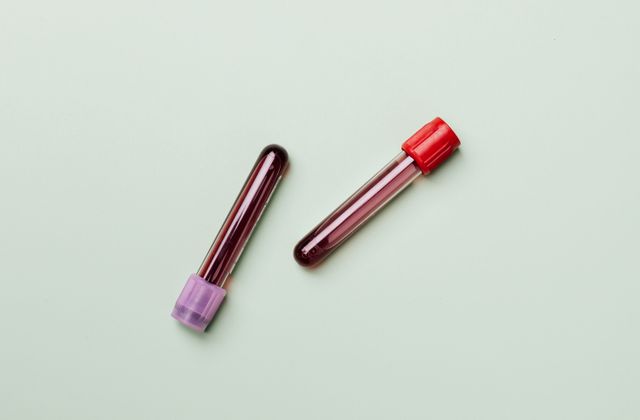
The good news first: this is the easy kind of blood test. One plain tube, drawn exactly like any routine sample. No special tube, no timed collection, no lying still for half an hour.
If you have never watched a home phlebotomist work, here is the thirty-second version. They tie the band around your upper arm, feel for the vein with two fingertips, swab the spot with spirit that smells faintly of a chemistry lab, and then the familiar pinch. It is a sharp second, honestly, then the dull pressure of the tube filling, which takes less time than checking a text message. A cotton ball goes on the spot, a strip of tape over it, and you are told to press for a minute. The whole visit at your door is usually over in ten minutes, most of it paperwork and labelling.
One detail worth knowing: the tubes arrive sealed and leave barcoded with your name, and the phlebotomist carries a small cool box. Your sample reaches the lab the same morning it is drawn. Antibody samples are stable for the journey; nothing about this test is time-critical in a way you need to worry about. If the person drawing your blood asks whether you took any supplements this morning, say yes or no plainly. They ask because of the biotin thing, and they would rather hear it from you than discover it on the report.
Bundles that fold these antibodies in
Prescriptions have a way of growing. You went in for one thing, and now the slip lists the antibody test, the thyroid profile, B12, maybe vitamin D. When the list gets long, a panel is simpler and usually cheaper than booking tests one by one, and it means a single blood draw instead of several.
The Complete Thyroid Care Panel wraps the antibody tests together with the hormone panel, so one draw covers the whole thyroid picture, function and motive in a single sitting. The Thyroid Health Panel - Advanced goes wider, folding in related markers for a fuller workup when your doctor wants the broader view. If your doctor has suggested screening beyond the thyroid entirely, browse the full set of health packages on the site and match one to the prescription rather than guessing.
The principle is simple either way. Book the antibodies with the thyroid profile they belong to, not as an orphan test on a separate day. Your doctor wants to read them side by side, so give them the chance.
Booking it from home in Mumbai
This is a single-tube draw, which makes it an ideal home-visit test. You stay in your own chair, the phlebotomist finds the vein, and the tube is on its way to the lab within the hour.
Our Malad lab never sleeps, so samples get processed as they arrive instead of waiting for the next morning. Home collection costs nothing extra across Malad, Kandivali, Borivali and Goregaon, and reports land in about 24 hours on WhatsApp and email. Unsure which thyroid tests your prescription actually calls for? The tests page lists every panel with what is inside, and 84250 40353 reaches the counter staff, who field the "is this the antibody one" question about forty times a week. You will not be the first to ask.
A last practical note
Bring the full thyroid picture to the appointment. Antibodies alone never settle anything; read next to TSH, T3 and T4, they settle a lot. One tube of blood, no fasting, and a morning slot covers every scenario.
References
- Mayo Clinic Laboratories: Thyroglobulin Antibody, Serum (TGAB) test definition: clinical interpretation and reference values.
- Mayo Clinic Laboratories: Thyroid Autoantibodies Profile, Serum (TAB): reference values for thyroglobulin antibody and thyroperoxidase antibodies.
- NIH / MedlinePlus: Thyroid Antibodies medical test page: antibody types and their clinical associations.
- NHS Sheffield Laboratory Medicine: Thyroid Microsomal (Peroxidase) Antibodies, TPO: description and clinical notes.
- Endocrine Society Clinical Practice Guideline: Management of Thyroid Dysfunction during Pregnancy and Postpartum.
- Frontiers in Endocrinology: review on postpartum thyroiditis and thyroid autoimmunity in pregnancy.
Book these tests at home
Live prices · free home sample collection in Malad, Kandivali, Borivali & Goregaon
Thyroid Auto Antibodies (Anti - TG & Anti - TPO)
- Report in 24 hrs
- Free home collection
Thyroid Profile (T3, T4, TSH)
- Report in 24 hrs
- Free home collection
TSH Ultrasensitive
- Report in 12 hrs
- Free home collection
Vitamin B12
- Report in 24 hrs
- Free home collection
More tests related to this topic
Other Thyroid tests you can book with free home sample collection.
Anti Thyroglobulin AntiBody(ATG)
- Report in 24 hrs
- Free home collection
Anti TPO
- Report in 24 hrs
- Free home collection
Free TFT (Free T3,Free T4,TSH)
- Report in 24 hrs
- Free home collection
Free Thyroxine (FT4)
- Report in 24 hrs
- Free home collection
Free Triiodothyronine (FT3)
- Report in 24 hrs
- Free home collection
PTH - Intact (Parathyroid Hormone)
- Report in 24 hrs
- Free home collection
Thyroglobulin - Cancer Marker
- Report in 24 hrs
- Free home collection
Thyroid mass - Large Biopsy 3 - 6 cm
- Report in 96 hrs
- At our Malad West lab
Thyroid mass biopsy - Small 1cm
- Report in 96 hrs
- At our Malad West lab
Thyroid mass Biopsy - XL
- Report in 96 hrs
- At our Malad West lab
Thyroid Profile (5 Parameters)
- Report in 48 hrs
- Free home collection
Thyroid Profile - Total T3,Total T4,TSH (TFT)
- Report in 48 hrs
- Free home collection
Get more from the same visit
Health packages that already include these tests, and tests people usually add.
Frequently asked questions
Do I need to fast before the Anti-TPO and Anti-TG test?
No. Food does not move antibody levels, so fasting is not required for these tests on their own. But they are rarely ordered alone, so if your prescription also carries fasting sugar or a lipid profile, follow the fasting rules for those. A morning booking covers every case.
Anti-TPO and Anti-TG: aren't they the same thing?
No, they target two different thyroid proteins. Anti-TPO looks for antibodies against thyroid peroxidase, the enzyme the gland uses to build hormones. Anti-TG targets thyroglobulin, the storage protein that holds those hormones. Doctors order both because either one can flag an autoimmune process.
If my result is positive, is my thyroid permanently damaged?
Not necessarily. A positive result means antibodies were detected, but many people carry them with normal thyroid function for years. What matters is the full picture: your TSH, T3 and T4 alongside the antibodies, plus your symptoms. That interpretation belongs to your doctor.
Can I have antibodies and completely normal thyroid function?
Yes, and it is not rare. Thyroid antibodies can appear in the blood before hormone levels ever shift, sometimes by years. Doctors treat this as a reason for closer monitoring, not as a disease to fix.
Why did my doctor order this when my TSH was normal?
Common reasons include a family history of thyroid autoimmunity, an enlarged thyroid felt on examination, pregnancy or planning one, or another autoimmune condition. In these situations the test works as an early-warning sensor rather than a confirmation of disease.
Do I need to repeat this test every year?
Usually not. Once the antibody question is answered, your doctor monitors your thyroid function with TSH and T4, because those are the numbers that change over time. Repeating the antibody test without a new clinical reason is generally not needed.
I'm planning a pregnancy. Should I get my thyroid antibodies checked?
It is worth discussing with your doctor, especially if thyroid trouble runs in your family. Elevated anti-TPO is linked to higher risks of miscarriage, preterm delivery and postpartum thyroiditis, and guidelines advise closer TSH monitoring before and during pregnancy when it is found.
Do my hair, skin and nail supplements affect this test?
They can. Many beauty and multivitamin supplements contain biotin (vitamin B7), which can interfere with the lab's measurement chemistry and produce misleading thyroid results. Lab guidance asks patients to pause biotin-containing supplements before the blood draw; check your supplement labels and tell the phlebotomist what you take.
How long before I get the report?
About 24 hours. The antibody measurement itself takes a few hours of lab work once your sample reaches the lab, and we deliver reports on WhatsApp and email as soon as they are ready.
Can I get this test done at home?
Yes. It is a standard single-tube blood draw, so a home visit works exactly like a lab visit: sealed tubes, barcoded labels, and the sample reaches the lab the same morning. In our Mumbai service areas the home visit is free.
HWP Diagnostic Editorial Team
Health guides written by the team at HWP Diagnostic, Mumbai, to help you understand your tests before you book. This article is for general education and is not a substitute for medical advice - reference ranges vary between labs, so always discuss your results with your doctor. Read our editorial policy. Photos: Pexels.