Key takeaways
- Osteoporosis is silent: about 50 million Indians live with it, and most only learn after a fracture.
- A bone profile checks bone chemistry (calcium, phosphorus, alkaline phosphatase, vitamin D), not bone density; the DXA scan gives the diagnosis.
- Calcium after 60 usually runs 8.8-10.2 mg/dL, but every lab's range differs slightly, so read your own lab's range.
- Phosphorus moves opposite to calcium; the pair together points toward parathyroid, kidney or bone causes.
- High alkaline phosphatase can mean busy bones or liver trouble; the rest of the report tells them apart.
- Vitamin D under 20 ng/mL needs attention by every guideline; 20-30 is the grey zone where doctors judge.
- Women at 65, men around 70, or anyone after a fragility fracture should be checked; no fasting needed.
Book tests from this article
Sample collected at home - free
- Bone Profile A
₹1,999₹2,64925% off
- Calcium
₹199₹29933% off
- Alkaline Phosphatase
₹249₹34929% off
Free collection 24 hr reports
Today, 20 October, is World Osteoporosis Day. It passes quietly most years, the way bone disease itself arrives: no ribbon on a lapel, no awareness march past your building, no trending hashtag that survives the day. And that silence is exactly the problem this day exists for.
Here are the numbers, reported in the Indian press over the past year, that should make anyone over 60 sit up a little straighter in their chair. Roughly 50 million Indians are estimated to be living with osteoporosis. One in three women over 50, and one in five men over 50, will sustain a fragility fracture in their remaining lifetime. About one in four seniors who fracture a hip dies within a year; half lose the ability to walk without help. A single hip-fixation surgery plus aftercare can cost a family two to three lakh rupees. And none of this shows up in how you feel on any given morning, because bone loss does not ache. It does not tire you. It simply continues, year after year, until the first break.
The encouraging part, and it is genuinely encouraging, is that bone chemistry betrays itself in your blood long before a bone breaks. A handful of markers: calcium, phosphorus, alkaline phosphatase, vitamin D: paint a picture of what your skeleton is doing right now. Your doctor may order them together as a Bone Profile A, a single blood draw that groups the bone markers into one report. This guide walks through what each number means for someone over 60, when the test is worth booking, and what the report is actually telling you. If you want the broader picture of checkups at this age, our senior citizen health checkup guide covers the full screening list.
How bones thin after 60 (and why you feel nothing)
Bone is not a statue. It is a construction site that never closes. Two crews work it constantly: osteoclasts dissolve old bone and carry the minerals away, osteoblasts lay down fresh bone in its place. In your thirties, the two crews are roughly matched, and your skeleton stays dense. After about 40, and sharply after menopause in women and more gradually in men, the demolition crew starts outpacing the builders. The skeleton gets lighter, more porous, more brittle, all without a single symptom you could notice.
This is why the orthopaedic surgeons quoted in the Indian press keep saying the same thing: most people do not know they have osteoporosis until a fracture announces it. A wrist snaps while catching yourself in a bathroom fall. A vertebra compresses while lifting a bucket. A hip gives way stepping off a kerb in Malad station's morning crowd. In the United States, the preventive-services guidelines state plainly that osteoporosis screening for women starts at 65, and for younger postmenopausal women who carry extra risk factors. The International Osteoporosis Foundation's India audit put the picture for this country even more bluntly: Indians tend to have lower bone density than Western reference populations, partly genetics, partly nutrition, partly smaller skeletal size, and the over-60 population is set to roughly double by 2050.
None of this is a reason to panic. It is a reason to measure. Which brings us to the tests.
Blood tests vs the DXA scan: what each one tells you
People confuse two very different investigations, and clearing this up saves a lot of anxiety.
The DXA scan, short for dual-energy X-ray absorptiometry, is an imaging test. You lie on a table for ten minutes while a low-dose X-ray arm passes over your spine and hips, and the machine reports your bone mineral density as a T-score. A T-score of minus 2.5 or lower at the hip or spine is the World Health Organization's definition of osteoporosis; between minus 1 and minus 2.5 is osteopenia, the warning zone. DXA is the test that diagnoses osteoporosis. It is quick, painless, non-invasive, and available at most city hospitals in India for under two thousand rupees.
A bone profile is a blood test. It cannot measure how dense your bones are. What it can do is report the chemistry your bones depend on: the calcium circulating in your blood, the phosphorus paired with it, the enzyme your bone-building cells release when they are active, and the vitamin D that controls calcium absorption. When these numbers drift, they reveal the bone story from the inside: deficiency, excessive turnover, parathyroid trouble, or kidney involvement. Doctors often order a bone profile before or alongside a DXA scan, because fixing the chemistry is what lets treatment work.
Think of it this way. The DXA scan photographs the building. The bone profile checks the supply chain.
Calcium: the number everyone asks about first
Calcium is the mineral your skeleton is mostly made of, and the one your blood guards most jealously. About half of your blood calcium rides attached to albumin protein, and the rest travels free. The body keeps blood calcium inside a narrow window because nerves and muscles use calcium ions to fire their signals; too much or too little and the heart's rhythm can suffer.
Mayo Clinic Laboratories publishes its reference ranges by age, and they are worth knowing because they are narrower than the textbook numbers most Indians have memorised. For adults between 18 and 59, their range is 8.6 to 10.0 mg/dL. For people 60 and above, it is 8.8 to 10.2 mg/dL. Your own lab's printed range is the one that counts, and ranges do vary slightly between laboratories, but these figures give you the shape of it.
What does it mean when calcium is low? Mildly low calcium in a senior is often about the supporting cast: too little vitamin D, so the gut absorbs less calcium; low albumin, which is common with poor nutrition and drags the total down without the free calcium being truly low; or parathyroid glands making too little parathyroid hormone. Genuinely symptomatic low calcium, the tingling around the mouth and the hand cramps, is less common and needs a doctor's attention.
High calcium is the number doctors worry about more. Symptoms commonly appear above 11.5 mg/dL, levels above 12.0 are treated as critical, and above 15 is a medical emergency, per Mayo's interpretive notes. In outpatient practice, the commonest cause of persistent high calcium in an older adult is an overactive parathyroid gland, usually a small benign adenoma pumping out parathyroid hormone and instructing the bones to release calcium into the blood. Certain cancers can do the same thing, which is why a high calcium number gets a doctor's full attention rather than a shrug.
One practical note that we hear often at the counter: "Doctor ne bone profile likha hai, fasting karna hai kya?" Fasting is not required for a calcium test or for the Bone Profile A panel as ordered here. That said, a morning sample is still a good idea, and you should tell the lab about any calcium or vitamin D supplements you take, because megadose supplements can nudge the numbers. If you want the full backstory on this single test, our earlier piece on why your doctor ordered a calcium test covers the decision trail in detail.
Phosphorus: the number that travels with calcium
If calcium is the famous one, phosphorus is the colleague doing half the work in silence. It is the second most abundant mineral in your body, and most of it sits in bones and teeth alongside calcium. It also runs energy metabolism in every cell. Kidneys, bones and the parathyroid glands manage it together, which is why it rides in the bone profile: it completes the calcium picture.
The normal adult range is where the guidelines disagree slightly, so here is the honest version. MedlinePlus, the U.S. National Institutes of Health's patient encyclopedia, lists 2.8 to 4.5 mg/dL for adults. Most textbooks and hospital labs quote 2.5 to 4.5 mg/dL. Children run higher, roughly 4 to 7, because growing bones are hungry for it. Your lab's own range is the final authority, and slight differences between laboratories are normal.
The useful thing about phosphorus is its seesaw relationship with calcium. When one rises, the other tends to fall, because the parathyroid hormone regulates both in opposite directions. That gives the pair their diagnostic power. High calcium with low phosphorus points one way, typically parathyroid overactivity. Low calcium with high phosphorus points the other, often toward failing kidneys, which is relevant for seniors because kidney function declines with age and struggling kidneys stop excreting phosphorus properly. High phosphorus with kidney disease pushes the body toward secondary hyperparathyroidism, a long chain that ends in weaker bones.
A few mundane things skew phosphorus results. Antacids containing phosphate, laxatives, and water pills can move the number. So can a haemolysed sample, where red cells burst during collection and spill their contents, which is one more reason the lab's collection quality matters. If your report shows an odd phosphorus number in isolation, the first question your doctor will ask is about your kidney numbers and your medicines, not your diet.
Alkaline phosphatase: your bones' activity meter
Alkaline phosphatase, usually written ALP, is an enzyme made in several organs, with the liver and bones producing the most. Osteoblasts, the bone-building cells, release it when they are active. So a high ALP can mean busy bones: growth in children, healing after a fracture, or in older adults, conditions where bone turnover has accelerated, such as Paget disease, where patches of bone remodel chaotically, or bone softening from vitamin D deficiency, or secondary hyperparathyroidism.
Mayo Clinic Laboratories gives adult ranges that matter for this article: men 19 and above, 40 to 129 U/L; women 17 and above, 35 to 104 U/L. Women run a touch lower than men, and the ranges narrow considerably from the sky-high values children have during growth spurts.
Here is the catch that confuses patients, and it deserves plain language. ALP has two main sources, bone and liver. A high ALP alone does not tell you which organ is shouting. Your doctor looks at the company it keeps. High ALP with normal bilirubin and normal liver enzymes leans toward bone. High ALP alongside a raised GGT or abnormal bilirubin leans toward the liver and the bile ducts. That pattern-reading is exactly what the bone profile enables: it holds the bone markers on one page so the doctor can weigh them together instead of chasing a single flagged value.
A note for the anxious: a mildly raised ALP after a fracture is your body doing its job. Bone healing calls for osteoblast activity, and osteoblast activity calls for ALP. Falling off a scooter at 64 and watching your ALP climb while the wrist heals is biology, not a new disease. The alkaline phosphatase test page lists the test's details if your doctor ordered it on its own.
Vitamin D: the cutoff nobody agrees on
No number in bone testing starts more arguments between guidelines than 25-hydroxy vitamin D, the blood marker of your vitamin D stores. And this one matters for India more than most countries, because vitamin D deficiency here is extraordinarily common even in a city drenched in sunlight, with dark skin pigmentation, indoor jobs, covered clothing and sunscreen all cutting down the skin's production.
Here is the disagreement, presented without picking a side. The Endocrine Society's clinical practice guideline defines deficiency as below 20 ng/mL, insufficiency as 20 to 29, and sufficiency at 30 ng/mL and above. The U.S. Institute of Medicine, whose numbers are public-health guidelines rather than clinical ones, sets sufficiency at 20 ng/mL. The American Geriatrics Society and the International Osteoporosis Foundation lean toward the Endocrine Society's stricter line. Most Indian labs print a range somewhere in this territory. What you should take from the dispute is the direction, not the exact fence: under 20 is low by everyone's definition and deserves attention, 20 to 30 is the grey zone where your doctor's judgment matters, and above 30 satisfies nearly everybody.
Why does it matter for bones? Vitamin D controls how much calcium your gut absorbs. Without enough of it, calcium absorption drops, blood calcium dips, and the parathyroid glands respond by pulling calcium out of your bones to keep the blood level steady. Over years, that quiet theft thins the skeleton. It is one of the commonest correctable causes of bone weakness in Indian seniors, and it shows up in a 25-OH vitamin D test that costs far less than the fracture it might prevent.
Food sources help less than people hope. Only a few foods are naturally rich in vitamin D: oily fish, egg yolk, mushrooms left in the sun. Indian vegetarian diets, especially low-dairy ones, typically deliver under 400 mg of calcium a day, far short of the 1,000 mg recommended after mid-life. Fortified milk helps where it exists. Most doctors combine sensible sun exposure with supplements when the blood level is genuinely low, and the right dose is their call, not the internet's.
Questions seniors ask us at the counter
A short aside before the rest of the guide, because the questions below arrive at our Malad counter almost weekly, and your version of one of them is probably on your mind too.
Is a bone profile the same as a bone density scan? No. The blood profile measures bone chemistry; the DXA scan measures bone density. They answer different questions and are often ordered together. The blood test tells your doctor why the bones are weakening; the scan tells them how much weakening has already happened.
Do I need to fast for a bone profile? No fasting is required for this panel. A morning sample is still preferable, because some markers vary slightly through the day, and your phlebotomist will ask about supplements and medicines before drawing.
I am 55. Am I too young to check bone markers? Not necessarily. Guidelines put routine osteoporosis screening at 65 for women, but if you have had a fragility fracture, take steroid tablets for asthma or arthritis, have a parent who broke a hip, or have lost more than 4 cm of height, most doctors check sooner. That is between you and your doctor, not the calendar.
My calcium is normal but my alkaline phosphatase is high. Should I worry? It deserves a follow-up, not panic. Normal calcium with raised ALP can come from bone turnover, a healing fracture, or liver causes, and your doctor separates them with the rest of the report. This is precisely why these markers are ordered as a panel rather than one by one.
Should men check their bones too? Yes. Men fracture hips too, and about one in four seniors who do dies within a year, with men faring worse than women. The U.S. preventive-services task force says the evidence for routine screening in men is still insufficient to make a blanket recommendation, which is why testing men is a clinical decision made with their doctor, especially after 70 or with risk factors.
Does low vitamin D always mean weak bones? It is a strong contributor, not the whole story. Bones need calcium, phosphorus, vitamin D, protein and mechanical loading together. A low vitamin D with a normal everything else is correctable; a low vitamin D with low calcium and high ALP is a pattern that needs a doctor's plan.
How often should the test be repeated? Your doctor decides based on your numbers. Bone-marker blood tests are often repeated in a few months when treatment starts, to see if the chemistry is responding. DXA scans are typically repeated every two to three years once osteoporosis is diagnosed.
Can bone loss be reversed? Slowed, stabilised, and in some cases partly reversed, yes. Calcium and vitamin D correction, weight-bearing and balance exercise, and in higher-risk patients, medicines such as bisphosphonates or newer agents have trial evidence behind them. What cannot be recovered is the opportunity of the years before anyone measured.
Can I do this test at home? Yes. A phlebotomist comes to your doorstep, the draw takes a few minutes, and a small cotton ball taped to the inner elbow is the usual souvenir. Home collection is free across Malad, Kandivali, Borivali and Goregaon, and the lab itself runs 24x7.
Will the test tell me I have osteoporosis? Only the DXA scan gives the diagnosis. The blood markers give the reasons and the urgency. Both together give the plan.
What the combinations mean on your report
Single numbers mislead; patterns inform. Here are the patterns doctors read in a bone profile, written so you can follow along when your own report arrives. These are illustrations, not diagnoses, and your doctor interprets them against your whole health picture.
Low vitamin D with low-normal calcium and a raised alkaline phosphatase is the classic Indian senior pattern: the gut is absorbing too little calcium, the parathyroids are compensating, and the bones are turning over faster than they should. This combination usually leads to vitamin D correction and a recheck, and it is the most hopeful pattern because it responds to treatment.
High calcium with low phosphorus points toward the parathyroid glands, especially when vitamin D is not low. An overactive parathyroid adenoma is the commonest outpatient cause in older adults, and it is usually curable. High calcium with high phosphorus is rarer and points the other way, toward the kidneys, and your doctor will want the kidney numbers next.
Normal calcium, normal phosphorus, and a mildly raised ALP in isolation is often nothing urgent: a healing fracture, recent vigorous activity, or a lab's range running slightly different from the last lab's. Doctors typically repeat it after a few weeks rather than acting on one reading. The general rule for every marker is the same: a single slightly-off value is a prompt to recheck, a persistent pattern is a prompt to act.
When to book a bone profile (and how often to repeat)
Guidelines converge on a few clear moments. Women at 65 should be screened for osteoporosis with a bone density test; younger postmenopausal women get screened if their risk factors equal or exceed those of an average 65-year-old. Men are screened by clinical judgment, commonly around 70 or with risk factors. After any fragility fracture, meaning a break from a fall that should not have broken anything, both sexes get evaluated without waiting for a birthday. Long-term steroid use, for asthma, arthritis or after a transplant, is another trigger, since steroids are among the fastest bone-thinners known.
A bone profile fits naturally at all of these moments, because treatment decisions depend on the chemistry. If your calcium and vitamin D are already low, the doctor wants that corrected before or alongside any bone-specific medicine. If the parathyroid numbers look odd, the plan changes entirely.
For seniors already on treatment, doctors typically recheck the blood markers within a few months to confirm the chemistry is moving, while DXA scans repeat every couple of years. If you have never been checked and you are past 60 with any of the risk factors above, bringing it up at your next appointment is reasonable. It is a blood draw, not a commitment, and it costs far less than the report that arrives after a fall.
The practical side is simple enough. The sample is venous blood, drawn the way every blood test is drawn: a tourniquet, a quick alcohol swab, the needle prick that most people describe as a sharp scratch lasting a second or two, the tubes filling one after another, and then the cotton ball pressed to the vein. For seniors with thin or fragile veins, a good phlebotomist takes an extra moment to find the right spot, and it is always fine to say you bruise easily so they can hold pressure a little longer. At home, this happens on your own sofa, which is why so many of our senior patients prefer it.
The morning of the test
Do: have the sample drawn in the morning if you can, since some markers shift slightly through the day. Mention every supplement you take, calcium, vitamin D, multivitamins, because they can move the numbers. Drink your usual water. Tell the phlebotomist if you are on blood thinners or bruise easily.
Don't: fast unnecessarily for this panel, it is not required and skipping breakfast is hard on a senior's morning for no benefit. Stop prescribed medicines on your own before the test, especially steroids or diuretics, without your doctor's word. Assume one slightly-off number means disease: rechecking is part of the process.
Eating, sun and movement for bones in a Mumbai life
The research on preventing fractures keeps returning to three boring, unfashionable things, and the evidence is genuinely strong.
First, calcium from food. The guideline target is about 1,000 to 1,200 mg a day for adults over 50, and Indian diets, especially vegetarian ones low in dairy, often deliver less than 400 mg. Two to three servings of dairy a day, ragi, sesame seeds, leafy greens, and in non-vegetarian households, fish with soft edible bones like sardines, all count. When diet cannot close the gap, supplements do, at your doctor's recommended dose, because more is not better with calcium either.
Second, vitamin D. The recommended intake is at least 800 to 1,000 IU a day for older adults, and food alone rarely covers it. Fifteen to twenty minutes of mid-morning sun on the face, arms and legs a few times a week helps the skin make its own, though Mumbai's working seniors often live their days indoors. This is where the blood test earns its keep: it tells you whether your sun and food are enough or whether a supplement is needed, instead of guessing for years.
Third, loading the bones. Walking, stair climbing, and light resistance work signal the skeleton to keep building. Balance training matters equally at this age, because a fracture prevented is worth more than a fracture treated; most hip fractures start as ordinary falls. The guideline combination is weight-bearing exercise plus balance and strength work, and it is worth starting gently even in your seventies, with a trainer or physiotherapist who understands bone-safe movement. One caution from the research: the impressive trial results on heavy resistance training were supervised by professionals. Heavy weights at home, unsupervised, with fragile bones, is the opposite of the point.
Alcohol and smoking both accelerate bone loss, and the evidence on both is old and settled. None of this requires a lifestyle overhaul in a single weekend. It requires the unglamorous middle: enough calcium most days, enough sun most weeks, enough movement most mornings.
What to do with the report
When the report arrives, read it with your doctor, not alone at midnight. That sounds like a platitude, but bone numbers are genuinely hard to read in isolation, and a flagged value that means nothing without context has worried more patients than it has helped. What the report is for is a conversation: are the markers normal for your age, is there a pattern, and what changes now.
Here is what this guide has tried to leave you with. Bone loss after 60 is universal and silent, but it is also measurable, treatable, and in its early chemistry, often reversible. Roughly 50 million Indians carry osteoporosis, and a large share of them do not know it. A Bone Profile A groups the markers that reveal the chemistry: calcium, which Mayo's lab expects between 8.8 and 10.2 mg/dL after 60; phosphorus, which should sit around 2.5 to 4.5 and moves opposite to calcium; alkaline phosphatase, the bone-activity signal that reads 40 to 129 in men and 35 to 104 in women; and vitamin D, where the world still argues between 20 and 30 ng/mL but agrees that under 20 needs attention. Remember that every laboratory prints its own ranges, and they vary slightly, which is normal.
If you are over 60 and have never checked, this World Osteoporosis Day is as good a reason as any to start. The test needs no fasting, the sample can be collected at your home, and it takes a few minutes. For a wider panel, the Bone Health Checkup Basic wraps the bone markers into a broader screening, and the Bone and Joint Health Panel goes further for those with joint symptoms. All our packages live under health packages. And if you are unsure what to book, the tests page lists everything, or the home page is the place to start.
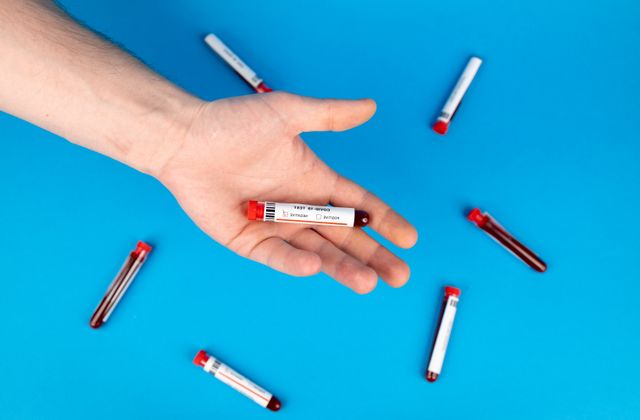
Bones do not send a reminder when they start thinning. A small vial of blood can. That is the whole argument of this day, every year, on 20 October: measure before the fall, not after it.
References
- USPSTF: Screening for Osteoporosis to Prevent Fractures (2025 recommendation update)
- Mayo Clinic Laboratories: Test Catalog: Calcium, Total, Serum; Alkaline Phosphatase, Serum; Bone Alkaline Phosphatase, Serum
- MedlinePlus (U.S. National Library of Medicine): Phosphorus blood test
- Endocrine Society / International Osteoporosis Foundation: 25-hydroxyvitamin D clinical cutoffs
Book these tests at home
Live prices · free home sample collection in Malad, Kandivali, Borivali & Goregaon
Bone Profile A
- Report in 48 hrs
- Free home collection
Calcium
- Report in 24 hrs
- Free home collection
Alkaline Phosphatase
- Report in 24 hrs
- Free home collection
25 OH Vitamin D
- Report in 24 hrs
- Free home collection
More tests related to this topic
Other Pathology tests you can book with free home sample collection.
17p Deletion p53 (MM, CLL), Heparin Bone Marrow
- Report in 24 hrs
- At our Malad West lab
24 Hours Urinary Phosphorous
- Report in 24 hrs
- Free home collection
5 - Hydroxy Indole Acetic Acid (5 - HIAA) - URINE
- Report in 24 hrs
- Free home collection
5q Deletion/Monosomy (MDS), Heparin Bone Marrow
- Report in 24 hrs
- At our Malad West lab
7q Deletion/Monosomy (MDS), Heparin Bone Marrow
- Report in 24 hrs
- At our Malad West lab
ABO Blood Group and Rh Type
- Report in 12 hrs
- Free home collection
Acetyl Choline Receptor Antibodies (AChRab)
- Report in 24 hrs
- Free home collection
Acid Fast Bacilli Smear
- Report in 24 hrs
- Free home collection
ACID PHOSPHATASE
- Report in 24 hrs
- Free home collection
Acid Phosphatase Total and prostatic fraction Serum
- Report in 24 hrs
- Free home collection
Adenosine Deaminase (ADA - Synovial Fluid)
- Report in 24 hrs
- At our Malad West lab
Adenosine Deaminase (ADA)
- Report in 24 hrs
- Free home collection
Get more from the same visit
Health packages that already include these tests, and tests people usually add.
Frequently asked questions
What is a bone profile test, exactly?
It is a blood panel that groups the markers your bones depend on: calcium, phosphorus, alkaline phosphatase and usually vitamin D. It reports bone chemistry, not bone density.
Is a bone profile the same as a bone density (DXA) scan?
No. The blood profile checks the chemistry behind bone health; the DXA scan images the hip and spine and reports a T-score. Doctors often order both together.
Do I need to fast for a bone profile?
Fasting is not required for this panel. A morning sample is still preferable, and you should mention any calcium or vitamin D supplements you take.
I am 55. Am I too young to check?
Not necessarily. Routine screening starts at 65 for women, but a fragility fracture, long-term steroid use, a parental hip fracture or height loss of 4 cm or more are all reasons to check sooner, at your doctor's advice.
My calcium is normal but my alkaline phosphatase is high. What does that mean?
It needs a follow-up, not panic. Normal calcium with raised alkaline phosphatase can come from bone turnover, a healing fracture or liver causes, and the rest of the report helps your doctor tell them apart.
Should men check their bones too?
Yes. Men fracture hips as well and fare worse afterward. Routine screening for men is a clinical decision with their doctor, commonly around 70 or with risk factors.
Does low vitamin D always mean weak bones?
It is a strong contributor, not the whole story. Bones need calcium, phosphorus, protein and mechanical loading too. Low vitamin D alone is correctable; low vitamin D with low calcium and high alkaline phosphatase needs a doctor's plan.
How often should the test be repeated?
Your doctor decides. Blood bone markers are often rechecked within a few months of starting treatment to see if the chemistry is responding; DXA scans typically repeat every two to three years.
Can bone loss be reversed?
It can be slowed, stabilised and partly reversed with calcium and vitamin D correction, weight-bearing and balance exercise, and medicines such as bisphosphonates in higher-risk patients.
Can I do this test at home?
Yes. A phlebotomist comes to your doorstep. Home collection is free across Malad, Kandivali, Borivali and Goregaon, and the lab runs 24x7. Bookings: 84250 40353.
HWP Diagnostic Editorial Team
Health guides written by the team at HWP Diagnostic, Mumbai, to help you understand your tests before you book. This article is for general education and is not a substitute for medical advice - reference ranges vary between labs, so always discuss your results with your doctor. Read our editorial policy. Photos: Pexels.