Key takeaways
- Congo's Ebola outbreak crossed 9,000 confirmed cases and 4,300 deaths on October 13, making it the largest and deadliest in the country's history.
- The outbreak is caused by the Bundibugyo strain, for which there is no approved vaccine or specific treatment yet; a vaccine trial is expected to start in Congo before the end of October.
- Kenya reported its first imported case on October 6, a traveler from Congo via Uganda who died in Nairobi; 293 samples tested since then showed no new infections.
- WHO rates the risk as very high within Congo, high for bordering countries and low globally, and advises against travel or trade restrictions.
- No Ebola case has been reported in India; the Health Ministry has active airport screening, an online self-declaration portal, and a travel advisory against non-essential travel to Congo, Uganda and South Sudan.
- Ebola spreads only through direct contact with blood or body fluids, not through air or casual contact, and people are not infectious until symptoms appear 2 to 21 days after exposure.
Book tests from this article
Sample collected at home - free
- Malaria Antigen Test
₹549₹79931% off
- Fever Profile
₹1,049₹1,39925% off
- Dengue NS1 Antigen
₹949₹1,44935% off
Free collection 24 hr reports
Ebola is back in the headlines for the worst possible reason. The outbreak raging through the Democratic Republic of Congo has now crossed 9,000 confirmed cases and 4,300 deaths, according to the latest situation report from the country's public health institute, released on October 13. That makes this the largest and deadliest Ebola outbreak Congo has ever seen, and the second-largest Ebola epidemic anywhere in the world.
To put it in perspective: the previous worst outbreak in the country's history, the Kivu epidemic of 2018 to 2020, recorded roughly 3,500 cases and 2,300 deaths. This one has nearly tripled the case count of that. Only the 2014-2016 West African epidemic, which infected more than 28,600 people and killed over 11,000 across Guinea, Liberia and Sierra Leone, ranks higher globally.
And it is still growing.
What the numbers look like right now
The October 13 figures from Congo's National Institute of Public Health (INSP): 9,066 confirmed Ebola cases, 4,381 deaths, and 2,389 recoveries. That is a case fatality rate of about 48 percent. Nearly one in two confirmed patients has died.
These numbers line up with the World Health Organization's own count. In its latest Disease Outbreak News report, published in early October, WHO put the tally at 8,728 confirmed cases and 4,205 deaths as of October 6, with an average of 72 new cases a day over the preceding week. In the most recent 24-hour period it tracked, 62 new cases were reported. The outbreak has spread to 64 health zones across seven provinces in the north and east of the country: Ituri, North Kivu, Haut-Uele, Tshopo, Bas-Uele, South Kivu and Sud-Ubangi.
Ituri remains the epicenter, with the bulk of cases and deaths. North Kivu follows and has the highest provincial fatality rate, at nearly 58 percent. A new health zone, Alimbongo in North Kivu, joined the list in early October, which tells you the geographic footprint is still expanding.
One number that should worry everyone: WHO reports that over a recent stretch, 264 of 372 reported deaths happened in communities, not in treatment centers. When people die at home instead of in care, it means cases are being found late, contacts are harder to trace, and the virus keeps moving. Contact tracing coverage has also been slipping below target, at around 80 percent against a goal of 85 percent. With roughly 29,500 contacts being followed at any given time, that gap leaves thousands of exposed people unmonitored each day.
A week of heavy developments
Several things happened in the past ten days that moved this story forward.
Kenya's first imported case. On October 5, a laboratory-confirmed case of Bundibugyo virus disease was detected in Nairobi, in a traveler who had come from Congo through Uganda. He had fallen ill about a month earlier, been treated at several hospitals in Congo, traveled by road to Kampala, and flown to Nairobi on October 3. Taken to Nairobi Hospital on arrival, he died on October 5. Kenya immediately started contact tracing, including for the international flight. WHO has been working with the Kenyan government on surveillance at points of entry. As of October 11, Kenyan authorities had tested 293 samples and found no new infections, covering 289 alerts plus the original case. That is good news so far, but the 21-day incubation clock keeps everyone watching.
A healthcare worker evacuated to the Netherlands. On October 1, the Netherlands reported the medical evacuation of a healthcare worker who tested positive for Bundibugyo virus by PCR while working on the outbreak response in Congo. The patient was repatriated under strict infection-prevention procedures and is being treated there. As WHO notes, such medically evacuated cases are not counted as local cases in the receiving country, and they pose essentially no risk to the public when handled this way.
The WHO chief's update. On October 11, WHO Director-General Tedros Adhanom Ghebreyesus reported strong progress in parts of the response. Twenty-five survivors were discharged from the WHO-supported Ebola Treatment Centre in Isiro, capital of Haut-Uele province, and a 10-bed extension took the center's capacity to 50 beds. More than 9,000 frontline health workers have now received the ERVEBO vaccine as part of the Congo government-led vaccination program. There is an important nuance here: ERVEBO is proven against the Ebola Zaire strain, and it is being studied to see whether it also protects against the Bundibugyo virus driving this outbreak. A dedicated clinical trial for a Bundibugyo-strain vaccine is expected to start in Congo before the end of October.
Uganda is out; surveillance continues. Uganda, which had reported 20 cases and two deaths earlier in the year linked to this outbreak, was declared Ebola-free in August after completing the standard countdown. The Kenya case, though, showed exactly how easily an infected traveler can cross borders before symptoms make the situation obvious.
What is Bundibugyo virus disease, exactly?
Most people have heard of Ebola as one thing. It is actually a family of viruses, and this outbreak is caused by one specific species: the Bundibugyo virus, or BDBV. It was first identified during a 2007 outbreak in Uganda, with a second outbreak in Congo in 2012. Those earlier outbreaks had case fatality rates of 30 and 50 percent respectively, so the current 48 percent is in line with what this virus has done before.
There is a fact that makes this outbreak particularly hard to fight: there is currently no approved vaccine and no specific treatment for Bundibugyo virus disease. The Ervebo vaccine that transformed the fight against the Zaire strain, the one used in the West African and Kivu outbreaks, may or may not work here. That is what the clinical trial launching this month is meant to find out. For now, outbreak control rests on the basics: rapid case identification, isolation and care, contact tracing, safe burials, and strong community engagement.
The virus spreads through direct contact with the blood or bodily fluids of an infected person, or contaminated surfaces and materials. Fruit bats are suspected to be the natural reservoir, and people can be infected initially through close contact with infected wildlife. It does not spread through the air. You cannot catch it by standing next to someone, sharing a meal, or breathing the same air in a room. Transmission gets amplified in healthcare settings when infection control breaks down, and during unsafe burial practices that involve direct contact with the deceased.
The incubation period is 2 to 21 days, and infected people are not infectious until symptoms start. Early symptoms are frustratingly ordinary: fever, fatigue, muscle pain, headache, sore throat. That is precisely what makes early detection so hard. Without laboratory confirmation, it is almost impossible to tell the difference between early Bundibugyo disease and malaria, dengue, or a bad bout of flu. The illness then progresses to gastrointestinal symptoms, organ dysfunction, and in some cases bleeding.
Why this outbreak keeps growing
This is not a story about a new super-virus. It is a story about a dangerous virus meeting impossible conditions.
Congo's affected provinces are remote, poor, and in some areas contested by armed groups. Travel is difficult and dangerous. Medical workers face not only the virus but community distrust, which has led to incidents targeting response teams in recent months. When people do not trust the treatment centers, they hide the sick, bury the dead in secret, and the virus spreads in the shadows. That is a big part of why so many deaths are happening outside treatment centers.
WHO declared this outbreak a Public Health Emergency of International Concern on May 17, 2026. In its August 14 reassessment, the agency rated the public health risk as very high within Congo, high for countries sharing land borders with it, and low for the rest of Africa and the world. It has advised against any restriction of travel to, or trade with, affected countries, arguing that surveillance and preparedness work better than borders closed in panic.
What does this mean for India, and for Mumbai?
No Ebola case has been reported in India. That bears repeating: surveillance has found nothing here, and WHO rates the global risk as low. This is not a panic story. It is a preparedness story, and India has been preparing since the outbreak was declared.
Here is what Indian authorities have put in place. Back in May, the Directorate General of Health Services, through the Airport Health Organisation, issued an advisory for passengers arriving from or transiting through Congo, Uganda and South Sudan. Travelers showing symptoms such as fever, vomiting, diarrhea, weakness, headache, sore throat, muscle pain or unexplained bleeding are told to report to airport health officers before immigration clearance. Anyone who had direct contact with the blood or body fluids of a suspected or confirmed patient must report at the airport health desks. Travelers who develop symptoms within 21 days of arrival are advised to seek immediate medical care and inform authorities of their travel history.
In June, the Ministry of Civil Aviation and Delhi International Airport launched Air Suvidha 2.0, an upgraded online health self-declaration portal for Ebola screening at points of entry. International arrivals submit their 21-day travel history, exposure history and any symptoms online before landing, with data flowing in real time to the airport health officer, the Bureau of Immigration, the IDSP and state surveillance officers. No physical forms, no fumbling at the counter.
And in May, the Ministry of Health and Family Welfare issued a travel advisory urging citizens to avoid non-essential travel to Congo, Uganda and South Sudan. That advisory is still the standing guidance.
For Mumbai readers, this matters in a concrete way. Chhatrapati Shivaji Maharaj International Airport is one of the busiest international gateways in the country, with significant business and diaspora traffic between India and Africa. If you, your family, or your employees travel to or through central Africa for work, mining, trade, missionary work or family visits, the Indian government's guidance applies directly to you.
If that is you, here is the practical list:
- Complete your health self-declaration before boarding when coming back, and show it at the international travel health desk or immigration counter.
- If you feel feverish, nauseous, achy or unusually weak at any point, alert the cabin crew or airport health authorities. Do not quietly walk through immigration hoping it passes.
- Watch yourself for 21 days after arrival. If fever, headache, sore throat, vomiting, diarrhea or unexplained bleeding shows up, seek medical care immediately and tell the doctor your full travel history.
- If you are still in Congo, Uganda or South Sudan, avoid contact with anyone showing these symptoms, avoid bushmeat and contact with bats or primates, and follow local health protocols.
How it is tested, and why early testing matters
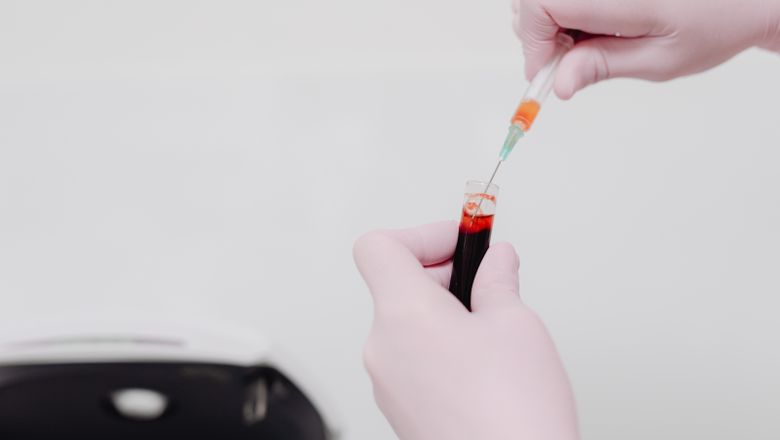
Ebola is confirmed by laboratory testing, typically RT-PCR on a blood sample, done at designated reference laboratories. It is not a test any local lab runs, and samples from suspected cases are handled under strict biosafety conditions. That is as it should be.
What local labs can do, and what matters enormously, is the first step of the ladder: sorting out ordinary febrile illness quickly. In India, a fever with headache and body ache is malaria, dengue, typhoid or flu far more often than it is anything exotic. When a traveler returns with a fever, the first job is to test for the common, treatable causes fast. A fever profile, which bundles the common suspects, a malaria antigen test, dengue NS1 in season, and markers of inflammation like CRP all help doctors rule things in and out quickly. The sooner ordinary causes are confirmed, the sooner the unusual ones get the attention they deserve.
That is the quiet lesson of this outbreak for a city like Mumbai. Early symptoms of Ebola look like everything else. The difference between a contained scare and a spreading chain is whether the first sick person gets identified, tested, and isolated fast.
What happens next
The coming weeks are critical. The vaccine trial for the Bundibugyo strain is expected to begin in Congo before the end of October, and its results will shape everything that follows. WHO and partners are scaling up treatment centers, training health workers, and pushing contact tracing coverage back above target. The question everyone is asking is whether the Kenya case stays an isolated import or becomes the start of a regional spread. Kenya's 293 negative tests are reassuring, but surveillance continues.
WHO will keep issuing its Disease Outbreak News updates, and we will keep watching them. If case counts shift materially, if another country reports an imported case, if the vaccine trial shows results, or if Indian authorities change their advisory, we will publish an update.
For now: no cases in India, screening active at the airports, a travel advisory in place, and a virus on the other side of the ocean that the world is finally taking seriously. The best thing you can do is know the facts, follow the travel guidance, and not confuse a distant epidemic with an immediate threat.
References
- World Health Organization, Disease Outbreak News: "Ebola disease caused by Bundibugyo virus - Democratic Republic of the Congo" (2026-DON619, early October 2026): situation figures, Kenya imported case, Netherlands medical evacuation, transmission facts, incubation, symptom progression, risk assessment, note that no approved vaccines or specific treatments exist for BVD.
- WHO Director-General's statement, October 11, 2026 (reported by NDTV): 25 survivors discharged in Isiro, treatment centre extension, 9,000+ frontline workers vaccinated with ERVEBO under study against Bundibugyo.
- Reuters / Arab News, October 13, 2026: Congo INSP situation report (9,066 confirmed cases, 4,381 deaths); outbreak is the largest and deadliest in Congo's history and second-largest globally after 2014-2016 West Africa; vaccine trial expected before end of October; Uganda declared Ebola-free in August; Kenya imported case.
- NDTV / syndicated health report, October 14, 2026: 9,066 cases and 4,381 deaths, 48.3% fatality rate, 2,389 recoveries, spread across seven provinces, 88 new cases in the latest reporting period.
- Ministry of Civil Aviation and Delhi International Airport Ltd press note, June 25, 2026 (via High Commission of India, Abuja): Air Suvidha 2.0 passenger health self-declaration portal for Ebola screening at points of entry.
- Economic Times TravelWorld: Airport Health Organisation advisory on symptom reporting and 21-day monitoring for travelers from Congo, Uganda and South Sudan.
- Bharat Horizon, May 2026: Ministry of Health and Family Welfare travel advisory against non-essential travel to DRC, Uganda and South Sudan following the WHO PHEIC declaration.
Book these tests at home
Live prices · free home sample collection in Malad, Kandivali, Borivali & Goregaon
Malaria Antigen Test
- Report in 12 hrs
- Free home collection
Fever Profile
- Report in 48 hrs
- Free home collection
Dengue NS1 Antigen
- Report in 12 hrs
- Free home collection
C - Reactive Protein (CRP)
- Report in 12 hrs
- Free home collection
More tests related to this topic
Other Fever tests you can book with free home sample collection.
Complete Blood Count (CBC)
- Report in 12 hrs
- Free home collection
CRP (C-Reactive Protein)
- Report in 12 hrs
- Free home collection
Anti - CHIKUNGUNYA IgG
- Report in 24 hrs
- Free home collection
Anti - CHIKUNGUNYA IgM
- Report in 24 hrs
- Free home collection
Chikungunya Combo Rapid Test
- Report in 24 hrs
- Free home collection
Chikungunya IgG Rapid antibody
- Report in 24 hrs
- Free home collection
Chikungunya IgM Rapid antibody
- Report in 24 hrs
- Free home collection
Chikungunya RNA Detection by Real Time PCR - EDTA Plasma
- Report in 48 hrs
- Free home collection
Chikungunya RNA Detection by Real Time PCR - Serum
- Report in 48 hrs
- Free home collection
Dengue - IgG (CLIA)
- Report in 24 hrs
- Free home collection
Dengue - IgG (ELISA)
- Report in 24 hrs
- Free home collection
Dengue - IgM (CLIA)
- Report in 24 hrs
- Free home collection
Get more from the same visit
Health packages that already include these tests, and tests people usually add.
Frequently asked questions
How many people has the Congo Ebola outbreak killed?
As of the October 13, 2026 report from Congo's National Institute of Public Health, 4,381 deaths out of 9,066 confirmed cases. That is a case fatality rate of about 48 percent, and it makes this the deadliest Ebola outbreak in Congo's history.
What strain of Ebola is causing this outbreak?
The Bundibugyo virus, one of the Ebola virus species. Unlike the better-known Zaire strain, there is currently no approved vaccine and no specific treatment for Bundibugyo virus disease. The Ervebo vaccine used against the Zaire strain is being studied to see if it also protects against Bundibugyo, and a dedicated vaccine trial is expected to begin in Congo before the end of October 2026.
Has Ebola reached Kenya or other countries?
Kenya reported its first imported case on October 6, 2026: a traveler who came from Congo through Uganda and died in Nairobi on October 5. Kenyan authorities tested 293 samples afterward and found no new infections. Uganda had cases earlier in 2026 but was declared Ebola-free in August. A healthcare worker was medically evacuated from Congo to the Netherlands on October 1; such evacuated cases are handled under strict precautions and are not counted as local cases.
Is there an Ebola case in India?
No. No Ebola case has been reported in India, and WHO assesses the global risk as low. India's Health Ministry has nonetheless activated airport screening for travelers from Congo, Uganda and South Sudan, launched the Air Suvidha 2.0 online health declaration portal, and advises against non-essential travel to those countries.
How does Ebola spread? Can I catch it from someone on a plane?
Ebola spreads only through direct contact with the blood or bodily fluids of an infected person, or contaminated surfaces and materials. It does not spread through the air, and you cannot catch it through casual contact like sitting near someone or sharing a meal. Infected people are not infectious until symptoms begin, 2 to 21 days after exposure.
What are the early symptoms of Ebola?
The early symptoms are fever, fatigue, muscle pain, headache and sore throat, which look almost exactly like malaria, dengue or flu. That is why laboratory confirmation is essential. The illness can then progress to vomiting, diarrhea, organ problems and, in some cases, bleeding.
What should I do if I am traveling to or from Congo?
Follow India's standing guidance: avoid non-essential travel to Congo, Uganda and South Sudan. On return, complete the health self-declaration before boarding, report any fever, headache, vomiting, diarrhea, weakness or unexplained bleeding to airport health officers before immigration, and watch your health for 21 days after arrival, seeking medical care immediately and mentioning your travel history if symptoms appear.
How is Ebola tested and treated?
Ebola is confirmed by laboratory testing, usually RT-PCR on a blood sample, done at designated reference laboratories under strict biosafety conditions. There is no specific cure for the Bundibugyo strain; treatment is supportive care such as fluids, oxygen and managing complications. Early supportive care improves the chances of survival.
HWP Diagnostic Editorial Team
Health guides written by the team at HWP Diagnostic, Mumbai, to help you understand your tests before you book. This article is for general education and is not a substitute for medical advice - reference ranges vary between labs, so always discuss your results with your doctor. Read our editorial policy. Photos: Pexels.