
Key takeaways
- ESR is a speed, not a score: it measures how far your red blood cells sink in a Westergren tube in one hour, reported in mm/hr.
- It is a flag, not a diagnosis. The number cannot say where inflammation is happening, why, or how serious it is.
- Always read your number against the reference range printed on your own report, since ranges vary between laboratories.
- Age, female sex, pregnancy, menstruation, and anemia can raise ESR entirely on their own.
- Sickle cell disease, spherocytosis, and polycythemia can give misleadingly low readings because the cells cannot stack or fall freely.
- CRP rises in hours and falls in days; ESR takes a day or two to rise and weeks to settle. Paired together they separate fresh inflammation from lingering inflammation.
- No fasting or prep needed. Free home collection across Malad, Kandivali, Borivali and Goregaon, reports in about 24 hours, lab open 24x7, bookings on 84250 40353.
Book tests from this article
Sample collected at home - free
- ESR (Erythrocyte Sedimentation Rate)
₹299₹49940% off
- Complete Blood Count (CBC)
₹199₹59967% off
- Ferritin
₹949₹1,29927% off
Free collection 24 hr reports
Thirty-eight millimeters per hour. That is the speed at which your red blood cells sank inside a glass tube, and that is all your ESR number ever was. Not a disease score. Not a countdown. Just cells, falling.
If the red flag on your report has been sitting in your head since morning, this guide will take it apart piece by piece: what the tube measures, why your age and sex move the goalposts, when a raised number means nothing, when it deserves a closer look, and why doctors keep ordering it next to its faster cousin, the CRP test.
Your number is just red blood cells, falling
ESR stands for erythrocyte sedimentation rate. Erythrocytes are your red blood cells. Sedimentation is them settling down, the way fine chai sediment collects at the bottom of the glass if the cup sits untouched.
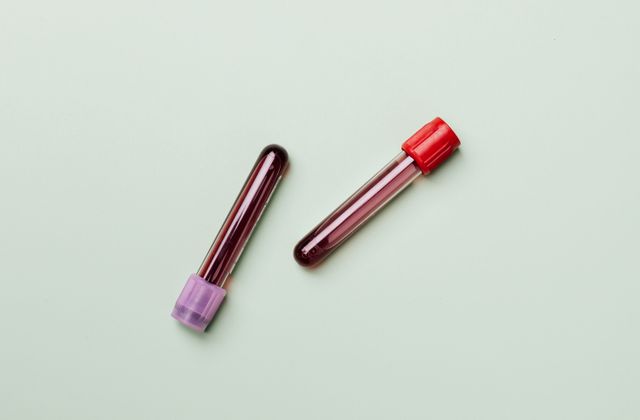
Here is what happens after the needle comes out of your arm. The lab mixes your blood with a small amount of anticoagulant so it cannot clot, fills a tall thin tube (the Westergren tube, about 200 millimeters long), stands it perfectly upright on the bench, and leaves it alone for exactly one hour. Gravity does the work. The red cells drift downward. The clear plasma stays on top. At the end of the hour, the technician measures the distance between the top of the blood column and the top of the settled red cells. That distance, in millimeters per hour, is your ESR test] result.
Healthy red cells carry a slight negative charge, so they repel each other and sink slowly, like leaves drifting down in still air. Now add inflammation. Your liver starts pouring out large, sticky proteins, chiefly fibrinogen, as part of the immune response. These proteins coat the red cells and cancel out that repulsion. The cells start stacking together face to face, in little rolls called rouleaux, a word borrowed from French for rolls of coins. A stack of coins sinks far faster than scattered coins would. So a faster fall is the lab's indirect way of saying: the immune system is busy somewhere. Which somewhere, and how serious, the tube cannot tell you. That is the single most important thing to understand about this test. It points. It never narrates.
One small detail worth knowing: CRP, the other famous inflammation marker, rises during inflammation too, but it does not itself make red cells stack faster. ESR is driven by the big sticky proteins, mainly fibrinogen and immunoglobulins. This is why the two markers can occasionally disagree, and why your doctor reads them side by side.
The test itself is older than antibiotics. A Swedish physician, Robin Fåhraeus, worked out the principle in the early 1920s, and Alf Westergren standardized the tube and the timing a few years later. Medicine has reinvented itself several times since, and the tall thin tube is still on the bench. There is a reason for that stubbornness. It is cheap, it needs no fancy reagents, and for tracking inflammation over time, it keeps giving the same honest, rough answer it gave a hundred years ago.

The range that actually applies to you
Before you compare your number with anything, find the reference range printed on your own report. That range is the one that counts. Laboratories differ in their tubes, their timing, and their machines, so a number that is "high" at one lab can be perfectly ordinary at another. MedlinePlus and the Cleveland Clinic publish the same widely used bands for the Westergren method, and most Indian labs land close to these:
- Men under 50: less than 15 mm/hr
- Men 50 and above: less than 20 mm/hr
- Women under 50: less than 20 mm/hr
- Women 50 and above: less than 30 mm/hr
- Newborns: 0 to 2 mm/hr
- Children up to puberty: 3 to 13 mm/hr
Some doctors use a quick mental formula instead of the fixed bands: for men, roughly your age divided by two; for women, roughly your age plus ten, divided by two. A 60-year-old woman gets about 35 by that math. It is only a rule of thumb, and your lab's printed range still wins, but it shows the same idea the fixed bands show: the older you are, the more room the number gets.
Notice the pattern. Women run higher than men, and the number creeps up with age in everyone. This matters more than people realize. A 68-year-old man with an ESR of 19 is sitting inside his band. A 28-year-old woman with the same 19 is also inside hers. Same number, same reassurance, completely different people. Judging your result against a single "normal up to 20" figure you saw online, without the age and sex brackets, is the most common way a harmless number turns into a sleepless night. And in older adults, the climb continues; quite a few healthy elderly people sit above the young-adult cutoffs, which is why doctors interpret ESR in the elderly with extra caution rather than extra alarm.
When the number is just noise
Here is the part that surprises most people at our Malad counter. A raised ESR, on its own, very often means nothing at all. The tube is sensitive, not specific, and plenty of ordinary things nudge it upward:
- Getting older. The gradual rise with age is one of the best documented things about this test. An ESR that would raise an eyebrow at 30 can be completely unremarkable at 70.
- Being a woman. Women run higher than men at every age bracket, and the gap widens after 50.
- Pregnancy. The number climbs during pregnancy as blood proteins and plasma volume shift. Doctors who order ESR in pregnant patients read it against that expectation, not the standard chart.
- Menstruation. The monthly cycle can nudge the reading slightly. It is a small effect, but it is real, and it is one reason a borderline reading sometimes gets repeated a week or two later.
- Anemia. This one catches people off guard. When you have fewer red cells, there is less crowding in the tube, so the cells that are there fall faster. The anemia itself raises the ESR. This is exactly why your doctor almost always orders a complete blood count] alongside: it helps untangle whether the ESR is up because of inflammation, or simply because the hemoglobin is low. If low iron is in the picture, a ferritin] check often follows.
- A recent or resolving infection. A cold you had last week, a throat infection that is nearly gone, the tail end of a fever. ESR is slow to rise and slow to fall, so it can stay elevated for weeks after you feel perfectly fine again.
That last point deserves emphasis, because it explains the most common "false alarm" we see. You feel fine, but your blood still remembers the flu from ten days ago. The tube is reporting history, not the present.
It helps to know what the line on your report actually looks like, because the formatting does half the scaring. You will see the test name, your result in mm/hr, the reference range beside it, and sometimes a small flag: H for high, an asterisk, or the number printed in red. None of that formatting is a medical judgment. It is the lab's software comparing your number with the range, nothing more. The interpretation, the part that matters, happens later, when your doctor reads that line in the context of everything else.
When the number deserves your attention
Now the other side. There are situations where a raised ESR is genuinely useful, and this is why the test has survived for over a century in an era of far fancier blood work. It does not diagnose any of these on its own, but it helps detect and track them:
- Rheumatoid arthritis and lupus. Autoimmune conditions where the immune system stays switched on. Doctors watch ESR over months to see whether the fire is calming down.
- Polymyalgia rheumatica. Stiff, aching shoulders and hips, usually after 50. ESR is typically high and usually falls once treatment starts working.
- Temporal (giant cell) arteritis. Inflammation of the arteries around the head, most often after 50, sometimes with a new kind of headache or tenderness at the temple. ESR here is often above 50, sometimes well into triple digits, and a reading that high is one of the clues that pushes doctors toward a temporal artery biopsy. But here is the honest caveat: in a meaningful minority of cases, the ESR can be normal even when the disease is present. A normal number does not rule it out when the symptoms fit. This is the test's humility built in.
- Tuberculosis and other chronic infections. ESR has been used for decades to follow the course of TB and similar long-running infections, watching the number settle as treatment takes hold.
- Bone infections and vasculitis. Inflammation of blood vessels, infections settled into bone. Both tend to push the number firmly upward.
- Inflammatory bowel disease. Crohn's disease and ulcerative colitis flares show up in the number.
- Multiple myeloma and related conditions. These pour extra immunoglobulins into the blood, and immunoglobulins are exactly the kind of large sticky proteins that speed up settling.
Notice what is missing from this list: a diagnosis. A raised ESR says "look closer," and the closer look is always something else: your symptoms, your history, your other blood results, sometimes imaging or a biopsy. MedlinePlus puts it plainly. The test is not used to diagnose a specific disorder. It is used to detect and monitor. Hold onto that sentence the next time the red asterisk tries to scare you.
ESR and CRP: the slow one and the fast one
Almost nobody gets an ESR alone. It travels with a CRP test], and understanding the pair is the fastest way to stop feeling confused by your report. They are both inflammation markers, but they move at completely different speeds.
CRP is a protein your liver manufactures directly in response to inflammatory signals. It can start climbing within hours of a trigger, peak in a day or two, and drop back within days once the trigger is gone. It is the sprinter.
ESR is the marathon runner. It depends on fibrinogen and other large proteins building up in the blood, which takes a day or two, and those proteins linger. After an infection clears, your CRP can be back to normal while your ESR is still sitting high for weeks. In one published study of bone infection, CRP had nearly normalized by day seven of proper antibiotic treatment while ESR stayed elevated for three months. Same patient, same recovery, two very different timelines.
What the pair tells your doctor, in three combinations:
- Both high: active inflammation, right now.
- CRP normal, ESR still high: the fire is probably out, but the embers are still warm. Very often this is just ESR's slowness, not a new problem.
- CRP climbing while ESR sits steady: something fresh may be starting, the kind of thing the slow marker would miss for days.
Ordered together, they let your doctor separate recent inflammation from lingering inflammation. If your report also has an asterisk next to the CRP row, our plain-English guide to reading your CRP number] walks through that line the same way.
Reading your band: a little over vs way over
Not all raised numbers are equal, and this is where a little calibration saves a lot of worry. Think in bands, not in binary normal-or-abnormal:
- A few points above your range. Say the top of your band is 20 and you are at 24 or 26. This is "slightly raised" territory. Without symptoms, doctors usually watch it or recheck it later rather than act on it. A borderline number on a day you had a mild cold brewing is the definition of noise.
- Clearly above, but not dramatic. Double the upper limit, give or take. This gets attention. Your doctor will want the story around it: any fever, joint pain, weight loss, fatigue that will not lift. The number plus your symptoms decides what happens next.
- Several times the upper limit, or over 100. Readings this high usually mean something active is going on: a significant infection, a strong inflammatory flare, or one of the protein-heavy conditions like myeloma. This is the band where doctors move promptly, not because the number itself is dangerous, but because of what it is flagging.
One rule beats all the bands: a number that matches how you feel carries more meaning than the number alone. An ESR of 45 in someone with months of aching, swollen joints tells a story. The same 45 in someone who feels perfectly well, had a cold two weeks ago, and is slightly anemic tells a very different one. The number points. Your symptoms narrate.
Times the tube tells a fib
A low ESR sounds like good news, and most of the time it is. But there are a few situations where the number quietly misleads, and they are worth knowing because they show how physical this test really is. It is not measuring inflammation directly. It is measuring falling cells. Anything that changes how cells fall changes the number, inflammation or not.
- Sickle cell disease. The red cells are stiff and crescent-shaped. They cannot stack into those neat coin rolls, so they settle slowly no matter how much inflammation is present. In sickle cell disease, ESR is simply not a reliable marker of illness, and doctors use other markers instead.
- Hereditary spherocytosis. Round, rigid cells that also refuse to stack. Same problem, same unreliability.
- Polycythemia. Too many red cells crowded into the tube. Crowded cells cannot fall freely, so the number stays low even when it should not.
Then there are the plain human errors, the kind every lab works hard to prevent:
- A tilted tube. The tube has to stand perfectly vertical. A tilt of just a few degrees can skew the result by a large margin, which is why technicians are fussy about the rack.
- An old sample. Blood that has waited too long changes shape-wise; the cells start looking like tiny spheres and settle oddly.
- Temperature swings. A cold room vs a warm bench shifts the reading.
- A clotted or bubbly sample. Clots trap cells; bubbles disrupt the fall.
None of this means you should distrust your report. It means the lab's fussiness is justified, and it explains why a result that makes no sense sometimes just gets redrawn. If your number looks wildly out of place next to how you feel, a repeat draw a few days later is a reasonable thing to ask your doctor about.
The draw itself, and the knock on your door
Here is the easiest part of the whole story. The ESR draw asks nothing of you. No fasting. No special preparation. No morning-only window. You can walk in after lunch, get it done, and walk out.
It is the standard blood draw you have done a hundred times. The phlebotomist ties a band around your upper arm, finds a vein in the inner elbow, and you feel a brief sting as the needle goes in, sometimes a little throbbing afterward. One small tube fills. A cotton ball gets taped to the spot, and you press on it for a minute or two. Three minutes, door to door, and you are done. A bit of bruising or soreness later in the day is common and harmless.
The question we hear most at our Malad counter is whether you should have come on an empty stomach. The answer is no, not for this test. The confusion is understandable, because ESR is so often ordered alongside tests that do need fasting, like blood sugar. If your doctor bundled those in, you will be doing the whole draw first thing in the morning anyway, but that is for the other tests. The ESR itself does not care what you had for breakfast.
This is the rare test with zero prep, so booking is about convenience, not fasting windows. Our phlebotomists do home collection across Malad, Kandivali, Borivali and Goregaon: the same tie-the-band, find-the-vein, fill-the-tube routine, done at your dining table in a few minutes, any time of day that suits you. Most reports reach you in about 24 hours. The lab stays open 24x7, and bookings run on 84250 40353.
Following the trend instead of the number
Here is where ESR earns its keep in modern medicine, not as a one-time verdict but as a serial measurement. For chronic inflammatory conditions, doctors are less interested in any single reading than in the direction of travel across readings taken weeks or months apart.
Take rheumatoid arthritis. A patient starts treatment, and over the following months the doctor watches the ESR slide down alongside the joint pain. That downward slope is the treatment working, confirmed in numbers. In polymyalgia rheumatica and temporal arteritis, the markers usually normalize swiftly once therapy begins, which is reassuring. But there is a subtlety rheumatologists are careful about: as medicines are tapered, the ESR or CRP can creep slightly above normal without any symptoms returning. In the absence of clinical symptoms, that small creep is usually not treated as active disease, and treatment is not escalated for a number alone. The lab value serves the patient, not the other way around.
This is also why retest timing matters. Because ESR rises slowly and falls slowly, repeating it after three days tells you almost nothing new. Doctors typically space repeats over weeks, long enough for the slow marker to actually move. If your doctor has put you on a monitoring schedule, the schedule is built around the test's personality. Trust it.
And when ESR is being tracked, it is rarely tracked alone. The same draw usually carries the CBC (to keep an eye on hemoglobin and white cells), the CRP (the fast marker for fresh changes), and sometimes ferritin if iron is part of the story. If your pattern looks like joint or autoimmune trouble, the Arthritis - Inflammation Panel] wraps ESR together with CRP and the other joint-related markers in a single draw. If low hemoglobin is part of your picture, the Anemia - Inflammation Panel] bundles both threads so neither gets missed. For anything broader, the full packages list] is worth a browse, or start from the tests page] if you only want the single test.
Your questions, answered
Do I need to fast before an ESR test? No. ESR needs no fasting and no special preparation, and you can get the draw done at any time of day. If your doctor combined it with fasting tests like blood sugar, you will go in the morning before breakfast, but that is for the other tests, not the ESR.
What is a normal ESR for my age? There is no single universal number, so use the reference range printed on your own report, since labs differ. As a general picture from MedlinePlus and the Cleveland Clinic: under 50 it is less than 15 mm/hr for men and less than 20 for women; at 50 and above it is less than 20 for men and less than 30 for women. Children run lower, newborns lowest of all.
My ESR is 38. Is that dangerous? The number itself is not dangerous; it is information. Whether 38 matters depends on your age and sex band, your symptoms, and your other results. A 38 in a young man is further above his band than a 38 in a 60-year-old woman, and a 38 with returning fever and aching joints means something different from a 38 in someone who feels fine and had a cold last week. Take the full picture to your doctor rather than the number alone.
Can my ESR be high even if nothing is wrong? Yes, and it happens often. Aging, being a woman, pregnancy, menstruation, anemia, and a recent mild infection can all push it up. That is why doctors treat a lone raised ESR as a reason to look further, never as a diagnosis.
ESR vs CRP: which one is the better test? Neither. They answer different questions. CRP rises within hours and falls within days, so it catches fresh inflammation and shows whether treatment is working right now. ESR rises over a day or two and stays up for weeks, so it is better at reflecting chronic, simmering inflammation. Ordered together, they tell your doctor whether the inflammation is recent or lingering.
My ESR came back normal but I still have symptoms. How? A normal ESR does not rule out disease. In temporal arteritis, for example, a meaningful minority of patients have a normal ESR despite active disease. Some conditions simply do not move this marker much, and technical factors can suppress it too. If symptoms persist, your doctor will lean on the clinical picture and other tests, not this one number.
How long does ESR stay high after an infection clears? Longer than you would expect. Because it depends on blood proteins that linger, ESR can stay elevated for weeks after you feel fully recovered. In one bone-infection study, it remained high for three months after treatment had worked. A high ESR a fortnight after a fever is usually the echo, not a new problem.
How often should ESR be repeated? Only your doctor can set that, but the principle is weeks to months, not days. The test moves too slowly for a three-day repeat to mean anything. In chronic conditions it is checked on a schedule to track the trend; for a one-off slightly raised reading, a single recheck after some weeks is the common pattern.
Can medicines affect my ESR? Some medicines can nudge inflammation markers, which is one more reason your doctor reads the number in context. Never stop or change a medicine because of a lab number. If you are on long-term treatment, mention it when the test is ordered so the result is interpreted with the full picture.
How do I book an ESR test at home in Mumbai? Book a home blood collection and a phlebotomist will visit your doorstep. Home collection is free across Malad, Kandivali, Borivali and Goregaon, reports arrive in about 24 hours, the lab is open 24x7, and bookings run on 84250 40353.
What to remember
- ESR is a speed, not a score. It measures how far your red blood cells sink in a Westergren tube in one hour, reported in mm/hr. Faster settling hints at inflammation somewhere in the body.
- It is a flag, not a diagnosis. The number cannot say where inflammation is happening, why, or how serious it is. Age, female sex, pregnancy, menstruation, and anemia can raise it entirely on their own.
- Read your number against your own report. Reference ranges vary between laboratories, so the range printed next to your result is the one that matters, not a chart from the internet.
- Some conditions make the number lie low. In sickle cell disease and spherocytosis the cells cannot stack, and in polycythemia they are too crowded to fall, so ESR is unreliable there.
- CRP is the sprinter, ESR the marathon runner. CRP rises in hours and falls in days; ESR takes a day or two to rise and weeks to settle. Together they separate fresh inflammation from lingering inflammation.
- Trends beat single readings. For chronic conditions, doctors watch the direction of the number across weeks and months. A small creep without symptoms is usually not treated as active disease.
- No fasting, no prep, no drama. It is a routine draw at any time of day. Free home collection runs across Malad, Kandivali, Borivali and Goregaon, reports in about 24 hours, the lab open 24x7. Book on 84250 40353.
References
- MedlinePlus Medical Encyclopedia (NIH), "ESR": test procedure, preparation, reference ranges by age and sex, and clinical uses.
- Cleveland Clinic, "Sedimentation Rate (ESR): What It Measures and Test Results": What It Measures and Test Results: Westergren method, reference ranges, and result interpretation.
- Frontiers in Physiology (2021), "Imaging Erythrocyte Sedimentation in Whole Blood": rouleaux mechanism, fibrinogen and zeta potential, and factors including cell shape that alter settling.
Book these tests at home
Live prices · free home sample collection in Malad, Kandivali, Borivali & Goregaon
ESR (Erythrocyte Sedimentation Rate)
- Report in 12 hrs
- Free home collection
Complete Blood Count (CBC)
- Report in 12 hrs
- Free home collection
Ferritin
- Report in 24 hrs
- Free home collection
C - Reactive Protein (CRP)
- Report in 12 hrs
- Free home collection
More tests related to this topic
Other Arthritis tests you can book with free home sample collection.
CRP (C-Reactive Protein)
- Report in 12 hrs
- Free home collection
ANA (Anti Nuclear Antibody)
- Report in 24 hrs
- Free home collection
ANA Blot
- Report in 24 hrs
- Free home collection
ANA Profile
- Report in 48 hrs
- Free home collection
ANA Screening by IFA
- Report in 48 hrs
- Free home collection
ANTI CCP (ACCP)
- Report in 24 hrs
- Free home collection
Anti Nuclear Antibodies (ANA)
- Report in 24 hrs
- Free home collection
Anti-CCP Test
- Report in 24 hrs
- Free home collection
Centromere Antibody, Serum
- Report in 24 hrs
- Free home collection
HLA B27 studies (PCR) - Qualitative
- Report in 48 hrs
- Free home collection
HLAB27
- Report in 24 hrs
- Free home collection
RA Factor (Rheumatoid Arthritis)
- Report in 24 hrs
- Free home collection
Get more from the same visit
Health packages that already include these tests, and tests people usually add.
Frequently asked questions
Do I need to fast before an ESR test?
No. ESR needs no fasting and no special preparation, and you can get the draw done at any time of day. If your doctor combined it with fasting tests like blood sugar, you will go in the morning before breakfast, but that is for the other tests, not the ESR.
What is a normal ESR for my age?
There is no single universal number, so use the reference range printed on your own report, since labs differ. As a general picture: under 50 it is less than 15 mm/hr for men and less than 20 for women; at 50 and above it is less than 20 for men and less than 30 for women. Children run lower, newborns lowest of all.
My ESR is 38. Is that dangerous?
The number itself is not dangerous; it is information. Whether 38 matters depends on your age and sex band, your symptoms, and your other results. A 38 with returning fever and aching joints means something different from a 38 in someone who feels fine and had a cold last week. Take the full picture to your doctor rather than the number alone.
Can my ESR be high even if nothing is wrong?
Yes, and it happens often. Aging, being a woman, pregnancy, menstruation, anemia, and a recent mild infection can all push it up. That is why doctors treat a lone raised ESR as a reason to look further, never as a diagnosis.
ESR vs CRP: which one is the better test?
Neither. They answer different questions. CRP rises within hours and falls within days, so it catches fresh inflammation. ESR rises over a day or two and stays up for weeks, so it reflects chronic, simmering inflammation. Ordered together, they tell your doctor whether the inflammation is recent or lingering.
My ESR came back normal but I still have symptoms. How?
A normal ESR does not rule out disease. In temporal arteritis, for example, a meaningful minority of patients have a normal ESR despite active disease. Some conditions simply do not move this marker much. If symptoms persist, your doctor will lean on the clinical picture and other tests, not this one number.
How long does ESR stay high after an infection clears?
Longer than you would expect. Because it depends on blood proteins that linger, ESR can stay elevated for weeks after you feel fully recovered. A high ESR a fortnight after a fever is usually the echo, not a new problem.
How often should ESR be repeated?
Only your doctor can set that, but the principle is weeks to months, not days. The test moves too slowly for a three-day repeat to mean anything. For a one-off slightly raised reading, a single recheck after some weeks is the common pattern.
Can medicines affect my ESR?
Some medicines can nudge inflammation markers, which is one more reason your doctor reads the number in context. Never stop or change a medicine because of a lab number. Mention long-term treatment when the test is ordered so the result is interpreted with the full picture.
How do I book an ESR test at home in Mumbai?
ESR needs no fasting and no special timing, so a home visit fits it perfectly. The phlebotomist comes to your door anywhere in Malad, Kandivali, Borivali or Goregaon, at no collection charge, and the sample goes straight to the lab the same day. Reports are ready in about 24 hours. To book, call 84250 40353.
HWP Diagnostic Editorial Team
Health guides written by the team at HWP Diagnostic, Mumbai, to help you understand your tests before you book. This article is for general education and is not a substitute for medical advice - reference ranges vary between labs, so always discuss your results with your doctor. Read our editorial policy. Photos: Pexels.