Key takeaways
- FBS measures your blood sugar after 8 to 12 hours without food; the ADA's minimum is 8 hours. It shows the baseline your body settles into overnight.
- The fast is the test: plain water is fine, everything else stops the clock. A broken fast means rescheduling, not faking it.
- Common cutoffs: under 100 is generally normal, 100 to 125 is the borderline band, 126 or above gets flagged. Ranges vary by laboratory, so read your own report.
- Morning readings run high for real reasons: dawn-phenomenon hormones, bad sleep, stress, illness, and steroids can all nudge the number.
- One reading never diagnoses anything. Doctors confirm with a repeat test, HbA1c, or an oral glucose tolerance test before concluding.
- The ADA recommends screening all adults from age 35, and earlier with overweight or obesity plus a risk factor.
- Free home collection across Malad, Kandivali, Borivali and Goregaon; reports in about 24 hours; bookings on 84250 40353.
Book tests from this article
Sample collected at home - free
- Fasting Blood Sugar (FBS)
₹99₹39975% off
- HbA1c (Glycated Haemoglobin)
₹649₹1,09941% off
- Fasting Insulin
₹899₹1,44938% off
Free collection 24 hr reports
What this test actually tells your doctor
Your body runs on glucose. Every meal sends a wave of it into the blood, and a hormone called insulin pushes it into your cells, where it becomes fuel. That wave rises and falls all day, like tide marks on a wall. The fasting blood sugar test ignores the waves and reads the quiet level in between: your blood sugar after 8 to 12 hours with no food at all.
Here's what makes that quiet level so useful. Overnight, while you sleep, your liver slowly releases stored glucose into the blood to keep your brain fed. Insulin acts as the brake on that release. When insulin is doing its job properly, the morning number stays low and steady. When cells have started ignoring insulin, or the pancreas can't make quite enough of it, the liver overshoots and the morning number creeps up. The fasting test catches exactly that. Not how sweet yesterday's dinner made you, but how well your system holds the line on its own, with nothing pushing it.
That's why doctors order it so often. One small morning blood draw shows the baseline your body settles into every night. If the baseline is fine, your system is probably handling sugar well. If it has drifted upward, it is an early signal, often years before symptoms show up, and early is when everything is easiest to fix. Roughly 101 million Indians have diabetes today, and the ICMR-INDIAB study found that more than half of them don't know it yet. That is the real job of a fasting sugar test: to find the people who feel completely fine and don't realize their numbers have moved.
Another thing worth understanding: the morning baseline is usually the first thing to drift. Insulin resistance creeps in gradually. For a long time, your pancreas compensates by making more insulin, and daytime numbers stay normal because food-driven insulin surges are powerful. But overnight, when insulin output is low and the liver is doing its slow glucose drip, the compensation starts to slip. That's why a fasting number can start climbing years before post-meal numbers look alarming. Catching it at the fasting stage means catching it at the stage where lifestyle changes still do the heavy lifting.
Why the morning, and why fasting matters more than the needle
A random blood sugar reading, taken whenever, is accurate but noisy. It's like weighing yourself right after lunch. The number is real, but it reflects that specific meal, that specific day. Fasting strips out the loudest variable, food, so what's left is the body's own baseline.
And the early-morning slot isn't just tradition. Many people notice their fasting reading runs higher than they'd expect, given they ate nothing all night. There's a reason, and it has a name: the dawn phenomenon. Between about 4 and 8 in the morning, your body releases a surge of hormones, growth hormone, cortisol, glucagon, and adrenaline, that prepare you to wake up. These hormones tell the liver to release extra glucose, and they temporarily make cells a bit more resistant to insulin. In most people, insulin rises to match and the morning reading barely moves. But when insulin response is already strained, the surge wins, and the fasting number comes out higher than the person feels they deserve.
This matters for a simple reason. If your doctor knows about the dawn effect and your reading is a little high, they read it with that in mind instead of sounding alarms. And if you're tracking your own numbers at home and see the morning creeping up despite good dinners, that's the mechanism behind it. It is biology, not a failure of willpower.
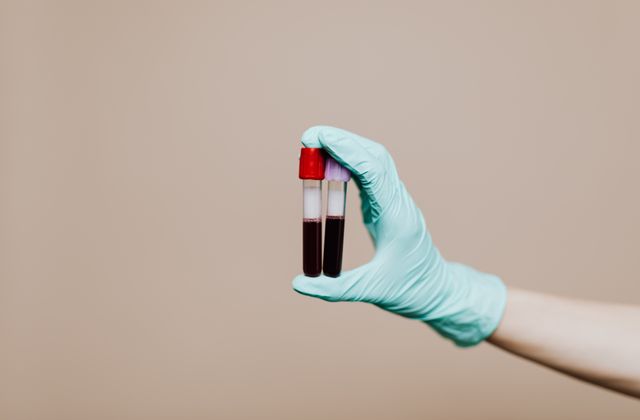
One more detail about the tube itself. If you notice the phlebotomist reaching for a grey-top tube, that is not random. Fasting glucose samples go into a tube containing fluoride, because fluoride stops the blood cells from consuming the glucose after the draw. Without it, the sugar in the sample would drift downward while the tube waits its turn, and the number on your report would be lower than the number in your veins. At the analyzer, the lab measures the glucose with an enzymatic method, most often glucose oxidase, which produces a colour change proportional to the sugar present. It is the same machinery that makes the result reproducible from one morning to the next, as long as the fast was the same.
Your report's numbers, translated line by line
Your report shows a value in mg/dL (milligrams per deciliter) next to the lab's reference range. The cutoffs most labs use are below. These are the common thresholds from the American Diabetes Association and the CDC; ranges vary by laboratory and method, so always read the range printed on your own report alongside these.
- Under 100: generally considered normal for a fasting reading in a non-pregnant adult.
- 100 to 125: the borderline or prediabetes zone. This is called impaired fasting glucose. It is not diabetes, but it means the baseline has started drifting, and your doctor will want to watch it.
- 126 or above: flagged. This reaches the diabetes threshold. But one flagged morning does not equal a diagnosis, more on that in a moment.
- Under 70: usually flagged as low. If you see this and you're not on diabetes medicines, mention it to your doctor; low readings have their own causes.
You may also see the number in mmol/L (millimoles per liter). The rough conversions: 100 mg/dL is about 5.6 mmol/L, 125 is about 6.9, and 126 is about 7.0. Same cutoffs, different units. Indian labs almost always report in mg/dL, so if yours shows mmol/L, the conversion is just a division by 18.
What does "flagged" actually look like on the page? Your report will typically print your value in bold or with a small H marker next to it, plus the reference interval the lab used. The phlebotomist or the person at the counter can't interpret it for you, and honestly they shouldn't. The number only gains meaning when your doctor reads it against your history, your other tests, and whether anything that morning might have skewed it.
Two things patients get wrong about these numbers, and both are worth saying plainly. First, the cutoffs are bands, not cliffs. A reading of 99 and a reading of 101 are practically the same blood. The line has to sit somewhere for screening purposes, but your doctor reads the trend across tests, not the drama of a single digit. Second, a single high reading is a question, not an answer. Sleep, stress, illness, and medicines can all move the number, which is why doctors confirm before they conclude anything.
Questions patients actually ask us
Do I really need the full 8 to 12 hours of fasting? Yes. The American Diabetes Association defines the test as blood drawn after at least 8 hours with no calories. A 6-hour fast is simply a different, noisier test. If you couldn't finish the fast, don't fake it. Tell the lab and reschedule.
Can I drink water during the fast? Yes. Plain water doesn't touch the reading. Stay hydrated, it also makes your veins easier to find in the morning.
What about black coffee or chai without sugar? Still no. Coffee and tea, even without sugar, can nudge glucose and affect some lab methods. If you'd like the full fasting rundown, our fasting guide covers the edge cases.
Should I take my regular medicines before the draw? Most daily medicines are fine, but don't guess. Some medicines, especially steroids and certain diabetes drugs, can shift blood sugar. Ask your doctor the day the test is ordered, not on test morning.
I forgot and ate something. Now what? Tell the lab and skip the draw as a fasting test. You'll reschedule for another morning. An eaten breakfast tested anyway gives you a meaningless number you'll have to retest anyway, so you're saving yourself a second morning.
My number was 104. Does that mean I have diabetes? No. A single 104 doesn't diagnose anything. It sits in the borderline band and means it's worth watching, retesting, and talking to your doctor. That's all it says.
Why is my fasting number high when I ate nothing all night? That's the dawn phenomenon at work. Your liver releases glucose in the early-morning hours under the influence of wake-up hormones. In people whose insulin response is strained, the surge shows up as a higher morning number. Your doctor reads this in context.
What's the difference between FBS, PPBS, random sugar, and HbA1c? FBS is the overnight-fasted morning reading: your baseline. PPBS (postprandial blood sugar) is taken 2 hours after a meal and shows how your body handles a food load. Random sugar is taken any time and only flags big problems. HbA1c is different from all three: it averages your sugar over the past 2 to 3 months.
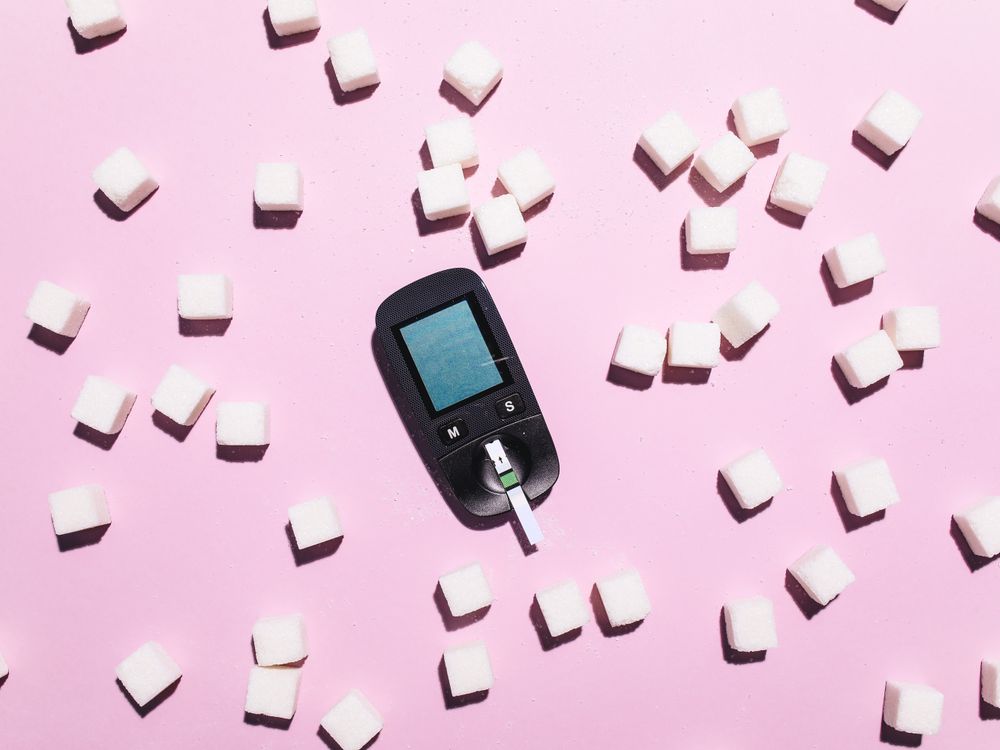
Is my home glucometer reading the same as a lab FBS? Not quite. A glucometer measures a drop of capillary blood from your fingertip and is great for daily tracking, but it's less precise than the lab's venous blood sample analyzed on lab equipment. Use the meter for patterns, the lab for decisions.
How often should I repeat this test? If your result is normal, the ADA suggests screening again at least every 3 years from age 35. If it's borderline, usually every year. If you're monitoring diabetes, your doctor sets the rhythm.
The fast itself: how the 8 to 12 hour rule works in practice
The fasting clock starts when you finish dinner. For an 8 a.m. draw, finish eating by 10 p.m. and you've done 10 hours; by midnight you've done 8. Most people choose dinner around 8 or 9, which lands them comfortably in the middle of the range without any real hunger. The ADA's minimum is 8 hours, and 8 to 12 is what labs commonly ask for, so aim for a normal dinner at a normal time and you'll be fine.
Water is the one thing that stays. Have it freely through the evening and on test morning. What stops the clock is anything with calories: food, milk, juice, that biscuit with your evening chai, the spoonful of something you taste while cooking. Sugar-free chewing gum is a gray area; skip it and keep the fast clean.
Here's the part people fumble: the accidental bite. You wake up at 6, half asleep, and take a sip of your spouse's tea. Don't pretend it didn't happen. A broken fast doesn't ruin your health, it just ruins the test, and testing anyway means paying for a number nobody can trust. Call the lab, reschedule, and do it properly the next morning. Labs deal with this every single day; nobody will judge you.
Shift workers get a special mention here, because the "overnight fast" assumes a normal night. If you work nights and sleep days, your fasting window is your main sleep block, whatever hours those are. Tell the lab your schedule when you book. The test needs 8 to 12 hours without food before the draw, not specifically a calendar night. What matters is the uninterrupted fast, ideally ending with the draw soon after you wake, so the dawn-effect hormones don't add extra hours of drift.
- Do: eat a normal dinner, finish it, and let the clock run while you sleep.
- Do: drink water through the evening and on test morning.
- Do: tell the lab about all your medicines when the test is ordered.
- Do: bring breakfast with you for right after the draw.
- Don't: have coffee, tea, milk, or juice during the fast.
- Don't: snack "just a little" and hope it doesn't matter.
- Don't: skip your medicines without asking your doctor first.
What the morning of the draw actually feels like
The fast is the hard part, not the needle. With home collection, the morning is almost boring, in the best way.
Our phlebotomists are out on rounds early, which suits the FBS test perfectly. You answer the door having eaten nothing since dinner. They'll ask which arm gives up a vein more easily. Tell them. People always hesitate, as if it's a trick question. It isn't; it genuinely saves everyone time. A tourniquet goes around your upper arm, the skin gets a swipe of antiseptic (cold, for a second), and then the prick. It feels like a sharp flick, over before you've finished reacting to it. One small tube fills, most FBS orders need just one, the needle comes out, and a cotton ball gets pressed and taped over the spot. Keep it on for about ten minutes. By afternoon there's a tiny dot where the needle went in.
First-timers always ask the same thing at the counter: is it really that quick? Yes. Door to door, a home draw takes a few minutes. If you're nervous, look away during the prick and keep breathing. People who faint at blood draws should mention it upfront; the phlebotomist will have you lie down and take it slower.
Eat breakfast right after. After 10 to 12 hours without food, you want that meal, and your body wants it too. Bring something with you, or have it ready in the kitchen. This is the part of test morning everyone enjoys. A normal breakfast is fine; there's no special "post-fast" meal rule, though most people find something warm and substantial hits the spot after the long wait.
The quiet things that can nudge your number
So why does a test that measures "fasting" care about your dinner, your sleep, and your week? Because fasting glucose is one morning's snapshot of a whole system, and plenty of quiet things tilt it.
- A bad night's sleep. Short or broken sleep raises cortisol and makes cells less responsive to insulin the next morning. One restless night can add a few points. Shift workers see this pattern constantly. Even a single night of poor sleep has been shown to measurably reduce insulin sensitivity the following day, which is why doctors take a rough week into account when they read your number.
- Stress. Emotional and physical stress both raise cortisol and adrenaline, the same hormones behind the dawn effect. A tense week, an exam, a family argument the night before, all of it can show up in the number.
- Illness and infection. When your body fights an infection, even a common cold, it releases stress hormones and glucose rises. If you're getting over the flu, mention it; your doctor may prefer to test another day.
- Steroids and some medicines. Corticosteroids are the big one; they reliably raise blood sugar. Certain antipsychotics, some blood pressure drugs, and some HIV medicines can also move it. This is why the medicines question matters at ordering time.
- A late, heavy dinner. The fast starts when eating stops, not when the clock says so. A midnight biryani before an 8 a.m. draw is a 8-hour fast on paper but a noisy one in practice.
- Alcohol. A drink or two the night before can push the morning number in either direction, and it can mess with your liver's overnight glucose handling. Skip it on fast night. Heavy drinking can also cause low morning readings in some people, which is another reason an honest fast night beats a clever one.
- Exercise timing. A hard workout the evening before can leave glucose a little lower the next morning; that's usually harmless. A morning run right before the draw isn't the fasted state your doctor wants, so skip it.
- Medication timing. If you take diabetes medicines, when you took the last dose relative to the draw matters. Note the timing for your doctor.
None of this means you should try to game the test into looking good. The opposite. The goal is a typical morning, not a perfect one, because the result is supposed to reflect your real life.
FBS, PPBS, random sugar, and HbA1c: when doctors reach for which
These four get mixed up constantly, and they're genuinely different tools. Here's how doctors think about them.
The fasting test is the screening workhorse. Cheap, simple, one draw, and it catches the baseline drift that shows up earliest. When a doctor writes "sugar test" on a routine checkup slip for someone over 35, this is usually the one they mean.
PPBS, the postprandial test, is taken exactly 2 hours after a meal. It answers a different question: how does your body handle a food load? A person can have a normal fasting number but spike badly after eating, and PPBS catches that. The CDC's commonly used 2-hour cutoffs: 140 or below normal, 140 to 199 borderline, 200 or above flagged.
Random sugar is the quick-and-dirty option. Taken any time, no fasting. It's useful in emergencies or when someone shows up with classic symptoms, extreme thirst, frequent urination, unexplained weight loss. A random reading of 200 or above with those symptoms is one of the diagnostic criteria. Without symptoms, it's just a data point. You'll sometimes see random sugar on a basic metabolic panel ordered for an unrelated reason; a high value there is usually what triggers the proper fasting test in the first place.
HbA1c is the long-view camera. Glucose sticks to haemoglobin in red blood cells, and since those cells live about 3 months, the HbA1c percentage reflects your average sugar over the past 2 to 3 months. No fasting needed. Normal is below 5.7%, 5.7 to 6.4% is the prediabetes range, 6.5% or above is the diabetes threshold. We wrote a full guide to reading it if you want the details.
Doctors often order FBS and HbA1c together, and for good reason. FBS shows this morning; HbA1c shows the last season. If both agree, the picture is clear. If they disagree, that's information too, and it usually leads to the oral glucose tolerance test, where you drink a measured glucose solution and get drawn at intervals. It takes longer, but it settles arguments between tests.
It's worth knowing why the two can disagree, because it confuses people. HbA1c depends on red blood cells living their normal 3-month lifespan. Anything that shortens or lengthens that life, anemia, recent blood loss, certain hemoglobin variants, can make HbA1c read higher or lower than your actual average sugar. Fasting glucose doesn't have that problem; it measures sugar directly, right now. Neither test is "wrong" when they differ. They're measuring different things, and your doctor weighs both.
Who usually gets this test ordered, and when
If you're over 35 and healthy, expect to see FBS on your annual checkup slip. The ADA recommends screening all adults from age 35, repeating at least every 3 years when results are normal. Below 35, doctors order it when there's a reason: overweight or obesity plus a risk factor like a parent with diabetes, high blood pressure, PCOS, or a previous borderline reading. For Asian adults the BMI threshold doctors watch is 23, lower than the general 25, because metabolic risk rises earlier. That lower threshold matters a lot in India, where people develop diabetes at lower body weights than Western charts assume.
Some orders come with a story attached. Women with a history of gestational diabetes get checked because pregnancy can unmask a tendency that returns later. Speaking of pregnancy: gestational diabetes screening usually happens between 24 and 28 weeks, and it uses a glucose tolerance test rather than a plain fasting draw, since pregnancy changes the rules.
Then there's monitoring. If you already have diabetes, FBS becomes a tracking tool. Your doctor compares fasting numbers over months to see whether the treatment plan is working. That's also where fasting insulin sometimes joins in: it shows how hard your body is working to keep that morning number in line, which tells a different story than the glucose number alone. A high fasting insulin with a normal fasting glucose, for instance, can reveal insulin resistance at a stage where sugar readings alone still look reassuring.
And sometimes the order has nothing to do with diabetes at all. Pre-surgery workups, insurance medicals, and executive health packages include FBS as a matter of routine. If your doctor ordered it and you feel fine, they're being careful, not worried. Screening is how problems get found while they're still cheap and easy to handle.
If your number came back high: what happens next
A flagged fasting number is not a diagnosis. It is the start of a short workup, and it usually goes like this.
Your doctor will almost certainly want a second data point before calling anything by its name. That might be a repeat fasting test on another morning, or it might be an HbA1c to see the 3-month average, or an oral glucose tolerance test if the picture is unclear. The ADA's rule is that diagnosis needs two abnormal results from the same sample or two separate samples, unless the numbers are unequivocally high with symptoms. One morning reading, however high, never decides anything by itself.
While you wait for the follow-up, the useful moves are boring and effective. Keep your meals regular, cut back on sugary drinks if they're a habit, walk after dinner, and sleep properly. None of this treats diabetes, and this post isn't medical advice, but these are the same habits every guideline recommends for borderline numbers, and they only help the retest reflect your real baseline.
What you should not do: spiral. Don't overhaul your entire diet based on one number, don't buy a glucometer and test yourself twelve times a day, and don't take anyone's medicines. The gap between "flagged" and "diagnosed" exists precisely so that a bad night's sleep or a brewing cold doesn't get mistaken for a disease. Let the confirmation tests do their job, then talk to your doctor about what the confirmed picture means.
And if the confirmation comes back in the borderline band, take it as the useful warning it is. Prediabetes is the stage where the trajectory is still genuinely changeable. The CDC's own framing is that lifestyle programs built around modest weight loss and regular activity cut progression risk substantially. A fasting number in the 100 to 125 band is not a sentence. It's an invitation to act while acting still works.
The tests FBS usually travels with
Doctors rarely order fasting sugar alone, because glucose never tells its story solo. The usual companion is the HbA1c test, the 2-to-3-month average that puts one morning's number in context. Sometimes fasting insulin comes along too, showing how much effort your body puts into holding that morning baseline. And when the tests disagree with each other, the oral glucose tolerance test settles it, measuring how your body handles a measured glucose drink over a couple of hours.
Since one needle prick covers a bundle as easily as a single test, doctors often order FBS inside a package. It comes bundled in the Diabetes Care Package, which wraps fasting sugar together with HbA1c and the other key diabetes markers in one draw. The Advanced Diabetes Screening Panel goes wider, adding kidney and lipid markers that start to matter once blood sugar begins drifting. If you'd rather assemble your own combination, browse all our packages or the full tests page. Either way, it's the same single tube of blood.
Getting it done on your schedule in Mumbai
A fasting test means an early-morning draw, so this one is built for home collection. Our phlebotomists start their rounds before breakfast across Malad, Kandivali, Borivali and Goregaon. Answer the door, give the sample, and you are eating minutes later; the fasting clock stops when the needle comes out. The report usually arrives the next day, and the lab processes samples round the clock. 84250 40353 is the booking line, or start from the home page if you are still deciding what you need.
References
- CDC, "Diabetes Testing": fasting blood sugar, A1C, glucose tolerance, and random test thresholds for prediabetes and diabetes.
- American Diabetes Association, Standards of Care in Diabetes, Section 2: Diagnosis and Classification of Diabetes: fasting plasma glucose criteria, 8-hour fasting definition, confirmation and screening recommendations.
- Mayo Clinic, "Prediabetes: Diagnosis and treatment" and "The dawn phenomenon: What can you do?": fasting test cutoffs and the early-morning hormonal glucose rise.
- Anjana RM et al., ICMR-INDIAB national cross-sectional study, The Lancet Diabetes & Endocrinology 2023: 101 million diabetes and 136 million prediabetes cases in India.
Book these tests at home
Live prices · free home sample collection in Malad, Kandivali, Borivali & Goregaon
Fasting Blood Sugar (FBS)
- Report in 12 hrs
- Free home collection
HbA1c (Glycated Haemoglobin)
- Report in 12 hrs
- Free home collection
Fasting Insulin
- Report in 24 hrs
- Free home collection
Glucose Tolerance Test - 2 Hrs (3 Samples)
- Report in 48 hrs
- Free home collection
More tests related to this topic
Other Diabetes tests you can book with free home sample collection.
Anti Chlamydia trachomatis Antibody Igg
- Report in 24 hrs
- Free home collection
Anti Chlamydia trachomatis Antibody Igm
- Report in 24 hrs
- Free home collection
Chlamydia Trachomatis DNA Detection by RT - PCR, Urine
- Report in 48 hrs
- Free home collection
Chlamydia Trachomatis IgA Antibody by ELISA
- Report in 24 hrs
- Free home collection
FLOW FOR LYMPHOMA/ CLPD / LYMPHOMA MRD
- Report in 24 hrs
- Free home collection
Fructosamine
- Report in 24 hrs
- Free home collection
G6PD (Glucose - 6 - Phosphate Dehydrogenase) EDTA Whole Blood
- Report in 12 hrs
- Free home collection
GAD 65 Antibody by IFA (for Paraneoplastic syndrome)
- Report in 24 hrs
- Free home collection
GAD Total Antibody
- Report in 24 hrs
- Free home collection
Glucose (Synovial Fluid)
- Report in 12 hrs
- At our Malad West lab
Glucose 3 hr (4 Samples)
- Report in 48 hrs
- Free home collection
Glucose Challenge Test (2hours after 75gm Glucose load)
- Report in 12 hrs
- Free home collection
Get more from the same visit
Health packages that already include these tests, and tests people usually add.
Frequently asked questions
Do I really need the full 8 to 12 hours of fasting?
Yes. The ADA defines the test as blood drawn after at least 8 hours with no calories. A 6-hour fast is a different, noisier test. If you couldn't finish the fast, tell the lab and reschedule rather than testing anyway.
Can I drink water during the fast?
Yes. Plain water does not affect the reading, and staying hydrated makes your veins easier to find in the morning. Skip everything else: coffee, tea, milk, juice.
What about black coffee or chai without sugar?
Still no. Coffee and tea, even without sugar, can nudge glucose and affect some lab methods. Keep the fast clean until after the draw.
Should I take my regular medicines before the draw?
Most daily medicines are fine, but do not guess. Steroids and some diabetes drugs can shift blood sugar, so ask your doctor when the test is ordered, not on test morning.
I forgot and ate something. Now what?
Tell the lab and skip the draw as a fasting test. You will reschedule for another morning. An eaten breakfast tested anyway gives you a meaningless number you'd have to retest.
My number was 104. Does that mean I have diabetes?
No. A single 104 does not diagnose anything. It sits in the borderline band and means it is worth watching, retesting, and talking to your doctor. That is all it says.
Why is my fasting number high when I ate nothing all night?
That is usually the dawn phenomenon. Wake-up hormones like cortisol and growth hormone tell your liver to release glucose in the early-morning hours. When insulin response is strained, the surge shows up as a higher morning number.
What is the difference between FBS, PPBS, random sugar, and HbA1c?
FBS is the overnight-fasted morning baseline. PPBS is taken 2 hours after a meal and shows how your body handles a food load. Random sugar is taken any time and only flags big problems. HbA1c averages your sugar over the past 2 to 3 months.
Is my home glucometer reading the same as a lab FBS?
Not quite. A glucometer measures capillary blood from a fingertip and is great for daily tracking, but it is less precise than the lab's venous blood sample. Use the meter for patterns, the lab for decisions.
How often should I repeat this test?
If normal, the ADA suggests screening again at least every 3 years from age 35. If borderline, usually every year. If you are monitoring diabetes, your doctor sets the rhythm.
HWP Diagnostic Editorial Team
Health guides written by the team at HWP Diagnostic, Mumbai, to help you understand your tests before you book. This article is for general education and is not a substitute for medical advice - reference ranges vary between labs, so always discuss your results with your doctor. Read our editorial policy. Photos: Pexels.