
Key takeaways
- Symptoms plus two low morning readings make the diagnosis, never one number alone
- Book the 7-10am slot: testosterone peaks in the morning and slides all day
- Ranges vary by laboratory; 264-916 ng/dL is the widely cited harmonized reference
- Only about 2% of testosterone floats free; SHBG decides how much is usable
- Weight is the biggest reversible lever: around half of men with obesity run low
- LH, FSH and prolactin sort testicle problems from brain-signal problems
- A normal number with real symptoms still deserves a doctor's look, not a shrug
Book tests from this article
Sample collected at home - free
- Testosterone Total Test
₹949₹4,29978% off
- Luteinizing Hormone (LH)
₹599₹79925% off
- Prolactin
₹699₹94926% off
Free collection 24 hr reports
The straight answer first
Low testosterone is two opposite problems wearing the same name. On the internet, every tired man has it and a clinic will sell him the cure before the blood has dried. In real clinics, plenty of men with genuinely low levels walk around for years blaming stress, age, and a bad mattress. Both stories are broken.
Here is the honest middle, the way an endocrinologist would frame it. Low testosterone is a real, diagnosable condition. Its symptoms are mostly vague, so feelings alone never settle the question. The diagnosis needs symptoms plus two low morning blood results, measured the same careful way, twice. And when it is real, the cause often sits somewhere fixable: weight, sleep, a medicine your doctor can review, or a hormone pathway that needs a specialist's eye.
This guide is written for men in Mumbai who keep wondering if testosterone is the reason they feel flat. It covers what the hormone does in an adult man, which symptoms deserve a test and which are look-alikes, why the lab insists on a morning sample, how to read the number without spiralling, what your doctor orders next, and what usually moves the number before any medicine talk. No stories about fictional patients. Just the knowledge, the way a lab educator would explain it over chai.
What testosterone actually does in an adult man
Forget the gym-bro version. Testosterone is not just the muscle and libido hormone, though it is both of those. In an adult man it is closer to a maintenance system running quietly in the background, touching more of your day than you probably realize.
It keeps your sex drive switched on and supports the mechanics of erections, including the morning ones most men take for granted until they fade. It maintains muscle mass and strength, and it works against the slow drift of fat toward the belly. It protects bone density, which is why severe, long-standing low testosterone raises the risk of osteoporosis, yes, in men too. It supports red blood cell production, which is one reason doctors sometimes raise an eyebrow at unexplained anaemia. And it has a hand in mood, motivation, and the ability to concentrate. Men with genuinely low levels describe a particular flatness: not sadness exactly, more like the volume knob on everything got turned down.
None of this means every dip in energy is a testosterone problem. The hormone matters precisely because it touches so much, which also means its symptoms overlap with about a dozen other conditions. That overlap is the whole reason testing exists.
There is one more effect worth naming, because men mention it long before any lab test enters the picture. Things that used to excite them, a project at work, a weekend plan, a match on Sunday, start feeling slightly grey. Not depressing. Just flat. Appetite for life dulls the way appetite for food does when you are coming down with something. It is easy to file that under stress or a busy quarter. Sometimes it is stress. Sometimes the blood work says otherwise.
The morning blood draw, and why timing is everything
Here is the single most practical thing in this entire article. Testosterone follows a daily rhythm. It peaks in the early morning, somewhere around sunrise, and slides down through the day. A sample drawn at 8am can read meaningfully higher than the same man's blood drawn at 6pm. That is not lab error. That is biology.
Guidelines are specific about this. The Endocrine Society asks for samples collected between 7 and 10 in the morning, fasting, on two separate days. The NHS guidance lands in the same place, recommending a sample around 9am and noting the hormone's circadian rhythm with its peak near 6 in the morning. Your doctor is not being fussy. An afternoon sample that reads low may tell you nothing at all.
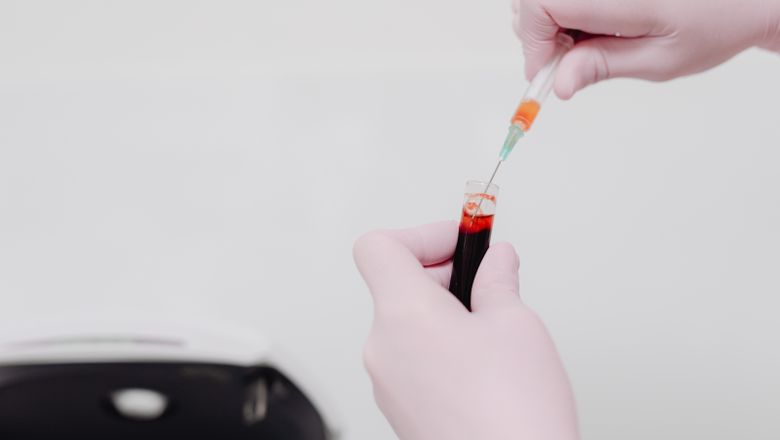
So when you book, book the morning slot. Our free home collection across Malad, Kandivali, Borivali and Goregaon runs through the morning, and a testosterone blood test is exactly the kind of test where the phlebotomist arriving at your door at 8am gives a truer result than a walk-in at 3pm. The draw itself is the usual small venous sample, a few millilitres into a vacuum tube. The needle prick is the quick sting you know, then the cotton ball pressed to the crook of your arm while the tube gets labeled and read back twice. Reports reach you in about a day.
One more timing point. If your first result comes back low, do not assume the verdict is in. Transient illness, a week of terrible sleep, a stressful month, all of these can pull a single reading down. That is why the second morning sample exists. Two low mornings, plus symptoms, is the diagnosis. One low afternoon number is just a number.
A word on the fasting part, since it confuses people. Fasting means no food for 8 to 12 hours overnight, water is fine, and the morning chai is not. The milk and sugar in it are exactly what fasting is meant to exclude. If you slipped and had something, do not cancel in a panic. Tell the phlebotomist or the lab when you book. For some tests the meal barely matters; for hormone panels drawn to guideline standards, your doctor would rather have the clean sample. Honesty at booking beats a quietly compromised result.
Reading your number without spiralling
Your report will show a line for total testosterone, a reference range beside it, and possibly a small flag if you fall outside the range. The temptation is to treat the range like a pass-or-fail grade. Resist it.
Here is what the science actually says. The most widely cited reference, from a harmonization project backed by the Endocrine Society, puts the normal range for healthy, non-obese young men at 264 to 916 ng/dL (9.2 to 31.8 nmol/L, since some Indian labs report in nmol/L). Major labs land in the same neighbourhood but not on the same numbers. You will see 250 to 827 here, 264 to 916 there, 275 to 781 somewhere else. Assays differ, the men used to set the range differ, and calibrations differ.
Ranges vary by laboratory. That sentence is doing real work. Your own report's printed range is the one that counts for your result, because it matches the method that measured your blood. Comparing your number to a range you found on the internet is how confusion starts.
Also remember what the range describes: healthy young men. It is not age-adjusted, and most men reading this are not 25. Testosterone declines gradually with age, roughly one percent a year from the thirties onward. A man at 55 will, on average, sit lower than he did at 30, and that can be entirely normal. The American Urological Association uses a cutoff below 300 ng/dL in support of a diagnosis when symptoms are present. Below that, plus real symptoms, the conversation with your doctor gets serious. Well inside the range, the number alone rarely explains anything.
If your report uses nmol/L instead of ng/dL, the conversion is simple. Divide the harmonized reference range by the factor and you get roughly 9.2 to 31.8 nmol/L, which matches what the Endocrine Society prints. A result of, say, 12 nmol/L sits around 346 ng/dL, comfortably inside the range. Do not do this math to second-guess the lab. The report already did it. The conversion is just so the two unit systems stop looking like different languages.
Total vs free testosterone: the SHBG twist
Your report measures total testosterone. But here is the part most men never hear. Only about two percent of the testosterone in your blood floats around free, biologically available to your tissues. The rest rides on carrier proteins, and the important one is called sex hormone binding globulin, or SHBG. SHBG grips testosterone tightly. What SHBG holds, your body mostly cannot use.
This is where it gets interesting, and where a plain total number can mislead in both directions. SHBG rises with age and with an overactive thyroid, and it falls with obesity, type 2 diabetes, and insulin resistance. Picture two men with the exact same total testosterone reading. The older, lean man with high SHBG has less usable hormone than his number suggests. The younger man with obesity and low SHBG has more usable hormone than his number suggests, even though his total reads lower. Same total, different realities.
Clinicians handle this by measuring SHBG alongside total testosterone when the picture is murky, then calculating free testosterone from total, SHBG, and albumin. The calculated approach is considered more reliable than the inexpensive direct free-testosterone assays sold on many consumer panels. So if your report shows a borderline total and no SHBG anywhere on the page, that is not a finished evaluation. It is a first draft, and your doctor may ask for the missing piece.
Albumin plays a small supporting role in that calculation. It binds testosterone too, but loosely, so most of the albumin-bound portion is still considered usable. In practice your doctor needs three numbers, total testosterone, SHBG, and albumin, and a formula does the rest. If your lab does not offer SHBG on the standard panel, ask. It is the difference between reading the headline and reading the article.
There is one honest caveat. At least one study of men with near-normal total testosterone found that symptom severity did not differ much between men with low versus normal free testosterone. Free testosterone adds a useful diagnostic layer, but it is not a magic decoder ring for symptoms. Symptoms remain stubbornly human.
The symptoms doctors take seriously, and the look-alikes
Clinicians divide low-testosterone symptoms into two piles. The specific ones point at hormones: decreased libido, fewer spontaneous erections (including the morning kind), erectile difficulty, diminished facial and body hair growth, loss of muscle bulk, and in long-standing cases, breast tissue growth. The nonspecific ones are the pile everyone knows: fatigue, low energy, poor concentration, low mood, broken sleep.
The problem is that the nonspecific pile is where most men live. Fatigue has a hundred parents. This is why doctors do not diagnose on symptoms, and why the Endocrine Society actually recommends against screening men in the general population who feel fine. Testing is for men with signs and symptoms of deficiency, or men in high-risk groups: diabetes with suggestive symptoms, osteoporosis or a fragility fracture, erectile dysfunction alongside other symptoms, infertility, long-term opioid or steroid therapy, chronic kidney disease on dialysis, and unexplained anaemia.
The look-alikes deserve their own mention because they are so common. Sleep apnoea, the kind with loud snoring and daytime drowsiness, drags testosterone down and mimics its symptoms, and the relationship runs both ways. Depression flattens libido, energy, and motivation in ways that feel hormonal but are not. Thyroid disorders, heavy alcohol use, and some long-term prescription medicines can all suppress testosterone. A good doctor sorts these before reaching for a hormone verdict. If your main complaint is tired mornings and broken sleep, our guide on night cramps, poor sleep and tired mornings covers the deficiency and sleep angles that often sit underneath the fatigue.
One pattern we see at the counter: the man who has already ruled out everything in his head except hormones. He has read enough to know the symptom list by heart, and he arrives certain. Then the morning samples come back normal, and the real work begins, thyroid, sleep, mood, the boring unglamorous suspects. A normal testosterone result is not a dead end. It is a redirect, and a useful one, because it stops you chasing the wrong fix.
Age deserves a plain sentence. Testosterone falls about one percent a year after your thirties. At 50, you are running a different engine than at 30. Some of what men call low testosterone at 55 is ordinary ageing, and some of it is not. The blood work exists precisely to tell the difference.
What gets checked after a low result
Suppose your two morning samples both come back low and your symptoms fit. Your doctor's next step is not treatment. It is about locating the breakdown.
Testosterone production is a chain of command. The hypothalamus in the brain signals the pituitary gland, the pituitary releases luteinizing hormone (LH) and follicle stimulating hormone (FSH), and LH tells the testes to make testosterone. A low result can mean the testes are failing despite being shouted at, or it can mean the shouting never arrived.
A luteinizing hormone (LH) test, paired with FSH, tells the two apart. High LH and FSH with low testosterone point to the testes themselves, what doctors call primary hypogonadism. The classic inherited cause is Klinefelter syndrome, where a man carries an extra X chromosome; it affects roughly two in a thousand men and often goes undiagnosed. Low or inappropriately normal LH with low testosterone points upstream, to the pituitary or hypothalamus, called secondary hypogonadism. The common reversible drivers here are obesity, severe illness, and certain medicines.
Then there is prolactin. A high prolactin test result can suppress the whole chain from the top, and a pituitary issue behind high prolactin is one of the things doctors want to rule out. This is why the follow-up draw often bundles several hormones at once. The FSH, LH and prolactin panel wraps the three key follow-ups into a single morning draw, which is usually what your doctor orders after a low testosterone pair. One draw, the full command chain on one page.
What the counter hears
At our lab in Malad, the testosterone test gets booked in a particular way. The man rarely says the word libido first. He talks about energy. He is tired in a way sleep does not fix. He has stopped feeling like getting to the gym, and the mornings feel flat. Sometimes it is his wife on the phone, booking for him, describing the same thing in different words.
There is often a small pause before the booking question, the one about whether the test needs any special preparation, asked a beat too carefully. It does not, beyond the morning timing. No special diet, no dramatic prep. Just the morning slot and, ideally, a reasonably normal week behind you.
And the morning visits have their own rhythm. The phlebotomist knocks while the building is still quiet, finds the vein in the morning light, and the whole thing is over before the kettle boils. Men are usually surprised at how unremarkable it is. The cotton ball taped to the arm, the tube labeled and read back twice, the report on the phone by the next day. That is the entire procedure.
The follow-up call, when it comes, is usually short. The man reads the number off his screen, asks what it means, and listens. Most of the time the answer is reassurance plus a next step. Occasionally it is the start of a proper workup. Either way, he hangs up knowing more than he did yesterday, which is the entire point of testing.
Questions patients actually ask us
Is low testosterone just a normal part of ageing? Partly, yes, and partly no. Levels fall about one percent a year from your thirties onward, so a 55-year-old running lower than his 30-year-old self is normal. But genuine deficiency, symptoms plus clearly low numbers, is a medical condition at any age, not a birthday. The blood work tells the two apart.
Do I need to fast for a testosterone test? Guidelines specify fasting morning samples, and most labs list the test as fasting. An overnight fast of 8 to 12 hours is the safe default. If you have eaten, tell the lab; your doctor will decide whether the result still counts.
Why does the lab insist on a morning sample? Because of the daily rhythm. Testosterone peaks near sunrise and falls through the day. A 4pm sample can read low in a man whose mornings are perfectly normal. The 7 to 10am window exists to make your result comparable to the reference range, which was built on morning samples.
My report says 320 ng/dL, in range, but I feel terrible. Now what? Do not treat the range as a verdict. Three hundred and twenty sits inside the common harmonized reference, but the range describes healthy young men, and symptoms plus context matter more than a single number. Your doctor may check SHBG and calculate free testosterone, review sleep and medicines, and look at the look-alikes. A normal number with real symptoms deserves a doctor's look, not a shrug.
Can one blood test diagnose low testosterone? No. The diagnosis needs symptoms plus two low morning readings on separate days. One low result can reflect a bad week, an illness, or a mistimed sample. The second sample is what separates a signal from noise.
Does testosterone testing affect fertility planning? The test itself changes nothing. But the broader topic matters: if you and your partner are trying to conceive, tell your doctor before any treatment discussion, because testosterone therapy suppresses sperm production. That is a planning conversation, not a reason to avoid testing.
Will my levels be lower if I drink regularly or take long-term medicines? Both can drag levels down. Heavy alcohol use is a known suppressor, and several classes of long-term prescription medicines can lower testosterone. Bring a full medicine and supplement list to your appointment. Your doctor needs the whole picture before interpreting the number.
How is a man's testosterone test different from the hormone tests women get? The molecule is the same; the context is different. In men, the test evaluates deficiency against a well-defined male reference range. In women, testosterone is measured at much lower levels for different questions, like excess-androgen conditions. Same blood test, different clinical story.
The dos and don'ts of getting tested
The blood draw itself
Do: book the 7 to 10am slot, whether at the lab or through home collection. Morning timing is the single biggest controllable factor in getting a meaningful result. A phlebotomist at your door at 8am, with the tube labeled and read back twice, is how a proper testosterone workup starts.
Don't: walk in at 4pm because the morning was busy, then panic at a low number. An afternoon sample that reads low proves nothing except that testosterone falls through the day, which it does in every man alive.
The days before
Do: aim for a reasonably normal week: your usual sleep, your usual routine, no crash dieting or brutal new workout block right before the draw. The test should reflect your real life, not an extreme week.
Don't: get tested in the middle of a fever, a bad flu, or a week of three-hours-a-night sleep and expect the number to mean something. Acute illness and severe sleep deprivation both pull testosterone down temporarily. Wait until you are back to baseline.
Talking to your doctor about symptoms
Do: describe what you actually feel, in plain words, even the awkward parts. Libido, morning erections, energy, mood, concentration: these are clinical data, and doctors hear them all day. Vague complaints get vague answers.
Don't: arrive with a diagnosis you bought from the internet and a demand for treatment. A low number without symptoms does not establish deficiency, and symptoms without a proper morning workup do not either. Let the two morning samples do their job.
The fix-first list
When the diagnosis is real, doctors usually start with the reversible stuff, because the biggest lever is also the most ordinary one. Obesity is the single most common reversible driver of low testosterone in adult men. About half of men with obesity run reduced total testosterone, and meaningful weight loss often lifts the number significantly. This is not a lecture about willpower. It is physiology: excess fat tissue alters the hormone balance, and it also drags SHBG down, which complicates the picture further.
Sleep comes next, and it is chronically underestimated. Testosterone production is tied to sleep, particularly the deep stretches, and sleep apnoea is one of the most common fellow travelers of low testosterone. Men who snore heavily, gasp in their sleep, or wake unrefreshed despite long hours in bed should get the snoring evaluated alongside the hormones. Fixing sleep sometimes fixes the number. The men who push back on this, the ones who say they function fine on five hours, are usually the same men whose partners describe the snoring in vivid detail. Believe the partner.
Alcohol is the third lever. Regular heavy drinking suppresses testosterone production, and cutting back is one of the faster ways to see a change. Then the medicine review: several long-term prescription classes can lower levels, which is why your doctor wants the complete list, supplements included. None of this is about naming specific drugs or doses here; that is a conversation for your doctor, who can weigh alternatives you and I cannot.
Exercise helps, with a footnote. Regular moderate training supports healthy levels. Punishing overtraining, the kind with chronic fatigue and no recovery days, can push them down. If you doubled your training load the month before your test, mention it.
When the number is normal and you still feel flat
This is the outcome nobody writes about, and it is common. Two morning samples, both inside the range, and you still wake up tired with no drive and no spark. So what do you do with a normal number and a very real problem?
You keep looking. A normal testosterone result rules out one cause; it does not certify that everything is fine. The look-alikes from earlier in this guide, sleep apnoea, depression, thyroid trouble, anaemia, vitamin deficiencies, chronic stress, are all still on the table. This is also where a broader workup earns its keep. If you are past 35 and already getting blood drawn, the Full Body Checkup - Essential wraps sugar, lipids, thyroid, kidney and liver markers into the same morning, which is often how the real culprit gets found. Our guide to what's inside a full body checkup walks through what each of those markers actually tells you.
And keep one more possibility in mind. Reference ranges describe populations, not individuals. A man who lived at 700 ng/dL for twenty years and now sits at 310 may feel the drop even though 310 clears the range floor. Doctors know this. Bring your old reports if you have them; a personal trend tells a richer story than a single flag.
The wrap: seven things worth carrying
- Symptoms plus two low morning numbers make the diagnosis. Never one number alone, never symptoms alone.
- The 7 to 10am window matters more than almost anything else about the test. Afternoon results can mislead.
- Ranges vary by laboratory. The widely cited harmonized reference is 264 to 916 ng/dL, but your own report's range is the one that counts.
- Only about two percent of testosterone floats free. SHBG decides how much of your total is actually usable, which is why borderline totals sometimes need a second look.
- Weight is the biggest reversible lever. Around half of men with obesity run low, and meaningful weight loss often lifts the number.
- LH, FSH and prolactin sort testicle problems from brain-signal problems. The follow-up panel exists for a reason.
- A normal number with real symptoms still deserves a doctor's look, not a shrug. Keep the old reports; trends beat flags.
Book a morning slot for the testosterone blood test, or browse the full tests page and health packages if you want the broader picture in one draw. Free home collection across Malad, Kandivali, Borivali and Goregaon, reports in about a day, bookings on 84250 40353. The lab runs round the clock, but for this one test, the morning is the whole point.
References
Endocrine Society Clinical Practice Guideline: Testosterone Therapy in Men With Hypogonadism (Bhasin et al, 2018) Mayo Clinic: Male hypogonadism, symptoms and causes NHS formulary guidance: Testosterone for Hypogonadism in Males Cleveland Clinic ConsultQD: Managing Testosterone Deficiency
Book these tests at home
Live prices · free home sample collection in Malad, Kandivali, Borivali & Goregaon
Testosterone Total Test
- Report in 14 hrs
- Free home collection
Luteinizing Hormone (LH)
- Report in 24 hrs
- Free home collection
Prolactin
- Report in 24 hrs
- Free home collection
FSH, LH & Prolactin
- Report in 24 hrs
- Free home collection
More tests related to this topic
Other Hormones tests you can book with free home sample collection.
Thyroid Profile (T3, T4, TSH)
- Report in 24 hrs
- Free home collection
25 OH Vitamin D
- Report in 24 hrs
- Free home collection
ACTH (Adreno Corticotropic Hormone)
- Report in 24 hrs
- Free home collection
ADH (Anti Diuretic Hormone Vasopressin), EDTA Plasma
- Report in 24 hrs
- Free home collection
Aldosterone
- Report in 24 hrs
- Free home collection
Aldosterone Urine 24H
- Report in 24 hrs
- Free home collection
Aldosterone/Direct Renin Ratio
- Report in 48 hrs
- Free home collection
Androstenedione (A4)
- Report in 24 hrs
- Free home collection
Anti Mullerian Hormone (AMH)
- Report in 24 hrs
- Free home collection
Calcitonin
- Report in 24 hrs
- Free home collection
Catecholamines (Adrenaline and Nor – adrenaline) – 24 Hours Urine
- Report in 24 hrs
- Free home collection
CATECHOLAMINES(Adrenaline and Nor - Adrenaline)
- Report in 24 hrs
- Free home collection
Get more from the same visit
Health packages that already include these tests, and tests people usually add.
Frequently asked questions
Is low testosterone just a normal part of ageing?
Levels fall about 1% a year from your 30s, so some decline is ordinary. But deficiency (symptoms plus clearly low morning numbers) is a medical condition at any age. The blood work tells the two apart.
Do I need to fast for a testosterone test?
Guidelines specify fasting morning samples. An overnight fast of 8-12 hours is the safe default; water is fine, morning chai is not.
Why does the lab insist on a morning sample?
Testosterone peaks near sunrise and falls through the day. A 4pm sample can read low in a man whose mornings are normal. The 7-10am window keeps your result comparable to the reference range.
My report says 320 ng/dL, in range, but I feel terrible. Now what?
The range describes healthy young men; symptoms and context matter more than one number. Your doctor may check SHBG, review sleep and medicines, and investigate look-alikes such as thyroid trouble, sleep apnoea, or low mood.
Can one blood test diagnose low testosterone?
No. Diagnosis needs symptoms plus two low morning readings on separate days. One low result can reflect illness, bad sleep, or a mistimed sample.
Does testosterone testing affect fertility planning?
The test itself changes nothing, but tell your doctor if you are trying to conceive before any treatment discussion: testosterone therapy suppresses sperm production.
Will my levels be lower if I drink regularly or take long-term medicines?
Both can suppress testosterone. Bring a full medicine and supplement list to your appointment so your doctor interprets the number in context.
How is a man's testosterone test different from the hormone tests women get?
Same molecule, different questions. In men it evaluates deficiency against a male reference range; in women it is measured at much lower levels for different clinical reasons.
Is a home collection sample as reliable as a lab visit?
Yes, if drawn in the 7-10am window. The sample is the same venous draw; what matters is the timing, not the location.
How long does the blood draw take?
A few minutes: one small venous sample into a vacuum tube, a cotton ball pressed to the arm, and the tube labeled and read back twice.
HWP Diagnostic Editorial Team
Health guides written by the team at HWP Diagnostic, Mumbai, to help you understand your tests before you book. This article is for general education and is not a substitute for medical advice - reference ranges vary between labs, so always discuss your results with your doctor. Read our editorial policy. Photos: Pexels.