Key takeaways
- The heel prick is a sorting test, not a diagnosis: it finds the few babies who need a second look, in the first days of life.
- Timing varies by country: 24 to 48 hours in the US, day 5 in the UK, usually 48 to 72 hours in Indian hospitals.
- In India, the must-screen shortlist is congenital hypothyroidism, congenital adrenal hyperplasia, and G6PD deficiency.
- CH affects roughly 1 in 1,000 to 1,200 Indian newborns and is fixed by a daily thyroid medicine started within two weeks.
- Yellow skin in the first 24 hours is never ordinary newborn jaundice: call the pediatrician the same day.
- Missed the screen? Ask your pediatrician. For most conditions, screening after the first week still counts.
- Keep mothballs and camphor tablets away from the baby's bedding and clothes.
Book tests from this article
Sample collected at home - free
- G6PD (Glucose - 6 - Phosphate Dehydrogenase) EDTA Whole Blood
₹1,249₹1,64924% off
- TSH (Thyroid Stimulating Hormone)
₹449₹59925% off
- Bilirubin Total
₹149₹19925% off
Free collection 24 hr reports
Your baby's first blood test, in plain words
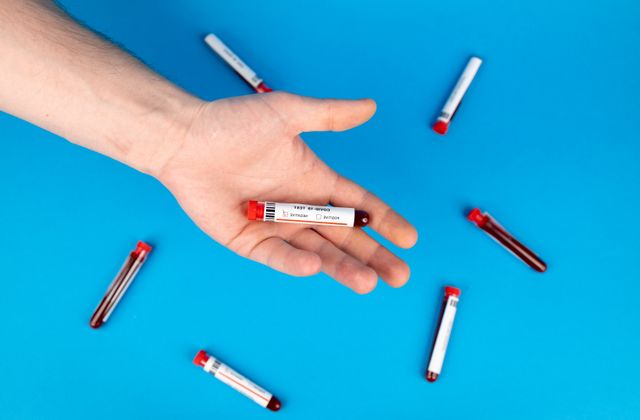
In the first day or two after your baby is born, a nurse will do something that looks small and feels big. She warms your baby's foot, wipes the heel clean, and presses a tiny spring-loaded lancet against the side of the heel. One quick prick. A bead of blood wells up. She touches it to circles printed on a stiff filter-paper card, one circle at a time, until each is soaked through. A bit of cotton wool, a minute of gentle pressure, and it is done. Most babies cry for a few seconds and forget it by the next feed.
That card has a name you will hear at the hospital: the newborn screening card. In the UK they call it the blood spot test. In the US it is the newborn screen, or the PKU test after the first condition it ever caught back in the 1960s. The names change by country. The idea does not. A few drops of blood, taken before you leave the hospital, get tested for a short list of serious conditions that are treatable when they are caught early.
Once the spots dry, the card travels to a specialized lab. Modern labs can run the whole panel from those few dried drops, which is why one heel prick covers so many conditions at once. Results go back to your pediatrician, usually within days. You will most likely never hear about yours again, because no news is the expected news.
Timing varies by country and hospital. In the US the first screen is drawn 24 to 48 hours after birth, and some states do a second one at 8 to 14 days. In the UK it happens on day 5, counting the day of birth as day 0. Indian hospitals generally aim for 48 to 72 hours. The exact hour matters less than the principle behind it: the baby's own body needs a day or so of running on its own before the chemistry in the blood means anything. Test too early and you get noise. Test in the window and you get signal.
One thing to fix in your head from the start. This is a screening test, not a diagnosis. Screening sorts babies into two piles: almost certainly fine, and worth a second look. A "positive" screen does not mean your baby has the condition. It means the lab wants a second, more specific test. Most recalls turn out to be nothing. The whole system is built around that second look.

Why a healthy-looking baby gets tested at all
Here is the uncomfortable truth behind the heel prick. Every baby on the screening list looks perfectly healthy at birth. That is exactly why the test exists.
Before birth, the placenta does a lot of quiet work. It clears away the chemical byproducts your baby's body makes, so even a baby with a metabolic disorder arrives looking pink and fine. After birth, that support is gone. The baby's own liver, thyroid, and adrenal glands take over, and if one of them cannot do its job, the damage starts quietly. By the time you can see it, some of it cannot be undone.
Take the thyroid. Thyroxine is the hormone that drives brain development in the first weeks of life: the wiring, the insulation around the nerves, the connections forming. A baby born without a working thyroid looks completely normal on day one. Miss the window, and the result can be permanent intellectual disability. Catch it in the first two weeks, start a daily thyroid hormone medicine, and that same baby grows up normally. If everything looks fine, why put a newborn through a blood test? Because "looks fine" is the one thing these conditions all have in common, and the treatment windows are measured in days, not months.
The heel prick costs the baby a few seconds of crying. What it buys is time.
What the filter card is actually checking
No two countries screen for exactly the same list. The US federal panel covers more than thirty core conditions. The UK screens nine. What they share is the logic for picking them: the condition must be serious, it must be treatable when caught early, and there must be a reliable test for it. Those rules come from a WHO framework for screening programs published back in 1968, and they still decide what makes the card.
In India, the practical shortlist that pediatric bodies and public-health experts push for is three conditions: congenital hypothyroidism, congenital adrenal hyperplasia, and G6PD deficiency. Private hospitals in metros sometimes screen a longer list. The government has no universal mandatory program yet, which means the card your baby gets depends on where you deliver. Ask the hospital which conditions their panel covers. It is a fair question, and a good hospital will answer it plainly.
The conditions fall into a few families. Thyroid and adrenal disorders, where a missing hormone can be replaced with medicine. Metabolic disorders like galactosemia and phenylketonuria, where the baby cannot process a normal part of milk or food, and a special diet started early prevents damage. Enzyme deficiencies like G6PD, where red blood cells break down too easily. And blood disorders like sickle cell disease, which matters a great deal in parts of India. We will walk through the three Indian priority conditions one by one, because those are the ones most likely to appear on your baby's card.
The thyroid condition India worries about most
Congenital hypothyroidism, usually shortened to CH, is the single most common condition on newborn screening cards worldwide, and India has more of it than most countries. Globally it affects roughly 1 in 2,500 to 3,000 newborns. Indian studies keep finding higher numbers: an ICMR multicentric study found close to 1 in 1,200, and several hospital studies from the south report between 1 in 700 and 1 in 1,200. With about 26 million births a year, that works out to roughly 10,000 babies born with CH in India every year. Twenty-seven a day. More than one every hour. Ranges vary by region and by study, which is why you will see different numbers quoted, but every Indian study lands well above the global average.
The biology is straightforward. The thyroid gland makes thyroxine, and in the first weeks of life thyroxine is doing construction work on the brain. A baby with CH is usually born with a thyroid that is missing, underdeveloped, or unable to do its job. Nothing about the baby looks wrong. Feeding seems okay. The baby sleeps, cries, and wets diapers like any other. The damage is invisible and, past the first weeks, permanent: stunted growth, hearing problems, and intellectual disability that no amount of later treatment can reverse.
The fix is almost embarrassingly simple next to the stakes. A daily thyroid hormone medicine, started within the first two weeks of life, lets the brain develop normally. The medicine costs a few rupees a day. Children treated early grow up indistinguishable from their peers. This is why doctors call CH the most preventable cause of intellectual disability there is. A cheap blood-spot test and a medicine that costs less than the auto ride home, standing between a child and a lifetime of disability.
The screening test measures TSH, thyroid stimulating hormone, from the dried blood spot. A high TSH on the card does not diagnose anything by itself. It triggers a confirmatory venous blood test, and if that confirms CH, treatment starts right away. If your pediatrician ever orders a thyroid check later, the usual follow-up is a TSH blood test, and we have a plain-words guide to reading thyroid reports at /blog/thyroid-test-t3-t4-tsh-normal-range/.
India's screening coverage is the painful part of this story. Roughly 3 in 100 newborns in the country get screened. The rest leave the hospital without the card ever being filled. If you are reading this before your delivery, put one question on your hospital list: do you do newborn thyroid screening, and when?
The salt crisis nobody warns new parents about
Congenital adrenal hyperplasia, or CAH, is the second name on India's minimum screening list, and it is the one that can turn into an emergency fastest. About 1 in 15,000 newborns has it. The adrenal glands sit on top of the kidneys and make cortisol and aldosterone, two hormones the body cannot run without. Cortisol manages stress and blood sugar. Aldosterone tells the kidneys to hold on to salt.
In the commonest form of CAH, a missing enzyme means the adrenals cannot make either hormone properly. The body, sensing the shortage, keeps shouting at the adrenals to work harder, and they swell up trying. That swelling is the "hyperplasia" in the name. The crisis comes from the salt. Without aldosterone, a newborn starts losing salt in the urine within days. Salt takes water with it. The baby feeds poorly, vomits, gets dehydrated, and the blood chemistry slides: sodium falls, potassium climbs, blood pressure drops. Doctors call this a salt-wasting crisis, and in the second week of life it can kill.
Here is the cruel detail. Girls with CAH often show a visible clue at birth because the extra androgens change the appearance of the genitals. Boys usually look completely normal. A family can take home a baby boy who seems perfect, and the crisis arrives at home, far from help. That asymmetry is a large part of why CAH sits on the screening card instead of being left to clinical judgment.
Treatment is daily hormone medicine for life, with extra doses during illness or surgery, and children who are treated do well. The screening test measures a hormone called 17-hydroxyprogesterone from the blood spot. One honest caveat: stress, prematurity, and very early sampling can push that marker up in babies who do not have CAH. A positive screen means a prompt confirmatory workup, not a verdict. False alarms are part of every screening program. The alternative, missing a salt-wasting crisis at home, is worse.
The enzyme, the mothballs, and the yellow baby
Glucose-6-phosphate dehydrogenase deficiency has the longest name on the card and the most everyday relevance in an Indian home. G6PD is an enzyme that protects red blood cells from damage. Without enough of it, red blood cells break down too easily, a process called hemolysis. When red cells break, they release bilirubin, the yellow pigment behind jaundice. That is why G6PD deficiency is one of the major risk factors for severe jaundice in newborns, and why it sits on India's screening shortlist.
It is common. Studies across India put G6PD deficiency at roughly 2 to 8 in every 100 people, with much higher rates in some tribal communities. It is passed down on the X chromosome, which means boys are affected far more often than girls. About 400 million people carry it worldwide, most of them never knowing.
In newborns, the signature is jaundice that arrives early and lingers. Ordinary newborn jaundice usually shows up on day two or three. G6PD-related jaundice often appears within the first 24 hours, and it can climb fast enough to need treatment. If your baby turns yellow on day one, that is not a wait-and-watch situation. It is a same-day call to the pediatrician, and a bilirubin blood test, which brings us to the jaundice section below.
Later in life, most people with G6PD deficiency have no symptoms at all. Trouble comes from triggers that stress red blood cells: certain infections, some medicines, fava beans, and chemicals like naphthalene. That last one matters in Indian households more than people realize. Naphthalene is the active ingredient in many mothballs and camphor balls, the white tablets people tuck into cupboards, suitcases, and sometimes a baby's bedding to keep insects away. A G6PD-deficient newborn sleeping near them can start breaking down red cells within a day or three of exposure. Keep mothballs away from the baby's room entirely. It is a small change with an outsized payoff.
The G6PD blood test itself is a simple blood draw, and it is one of the follow-up tests we do most often when a baby's jaundice needs explaining. One practical note: if the test is done during or just after a hemolytic episode, the result can read falsely normal, because the oldest and most fragile red cells have already broken down and the young ones left behind carry more enzyme. A careful doctor may repeat the test a few weeks later to be sure. If your family is from a community where G6PD runs common, or there is a family history of it, mention that at the hospital before delivery. It takes ten seconds and it changes what the team watches for.
Questions parents actually ask us
Does the heel prick hurt the baby? Briefly. The lancet makes a small puncture on the side of the heel, and most babies cry for a few seconds and settle. Nurses warm the foot first, because warm feet bleed more easily and the draw goes faster. Feeding or cuddling your baby during or right after helps a lot. Afterwards there is a small piece of cotton wool pressed on the spot for a minute. That is the whole of it.
When exactly is the test done? It depends on the program. American guidance says 24 to 48 hours after birth, with some states repeating the draw at 8 to 14 days. The UK does it on day 5. Indian hospitals generally aim for 48 to 72 hours. The common thread is that the baby needs roughly a day of independent metabolism before the blood chemistry is meaningful. If your hospital discharges mothers within 24 hours, ask specifically when the sample will be taken.
We were discharged before any test. What now? Call your pediatrician and ask for newborn screening. Most of the conditions can still be picked up after the first days; in the UK, for example, babies can be screened for most of the panel up to their first birthday. Do not assume it was done because blood was taken. Ask, and get the answer in words.
Is newborn screening compulsory in India? No. India has no universal mandatory program, and only about 3 in 100 newborns are screened nationally. In practice, most private hospitals in cities offer it and many include it in delivery packages. Government hospitals vary. The gap is why parent awareness matters more here than in countries where the card is automatic.
The result came back "screen positive". Does my baby have the disease? Almost certainly not, and that is worth saying plainly. Screening is designed to be sensitive, which means it flags more babies than turn out to have anything. Recall rates are low single digits, and most recalled babies are cleared by the confirmatory test. What a positive screen does mean is: do the follow-up promptly, do not skip it, and do not panic while you wait.
Our baby was born at home. Can she still be screened? Yes. The WHO's 2024 guidance for the region says screening should happen at the first postnatal contact after a home birth. Your pediatrician or the nearest hospital can arrange the dried blood spot card. The timing matters less than getting it done.
What does G6PD have to do with jaundice? G6PD deficiency makes red blood cells fragile, fragile cells break, and broken cells release bilirubin. That is the direct line from the enzyme to the yellow skin. It is also why a baby whose jaundice appears in the first 24 hours, or whose jaundice is severe, often gets a G6PD test as part of the workup.
Can I keep breastfeeding if my baby is jaundiced? In most cases, yes, and frequent feeding actually helps clear bilirubin. Breastfed babies should feed 8 to 12 times a day in the first days. Only during intensified phototherapy, the stronger hospital light treatment, is breastfeeding usually paused, and even then you can express milk to keep supply going. Your pediatrician will tell you if your situation is the exception.
How much does the screening cost? It varies too much by hospital and city to quote a number here, and we would rather link you to the test page than guess. Ask the hospital for the panel price before delivery so it is not a surprise on the bill. The individual follow-up tests, like G6PD and bilirubin, are listed with live prices on their test pages.
The other thing everyone watches: newborn jaundice
If the heel prick is the test parents do not expect, jaundice is the thing they cannot stop watching for. Some yellowing of the skin and eyes in the first week is one of the commonest things in newborn care. It happens because the newborn liver is still learning to clear bilirubin, the pigment left over when old red blood cells are recycled. Most babies born after 35 weeks need no treatment for it at all.
Here is the home check pediatricians teach, from Mayo Clinic's guidance. In good light, daylight if you can get it, press gently on your baby's forehead or nose with a fingertip. If the skin looks yellow where you pressed, that is likely mild jaundice. If it just looks a shade paler for a moment, probably not. Check once or twice a day in the first week. You are not diagnosing anything. You are deciding whether to call.
Ordinary newborn jaundice follows a timetable. It usually appears on day two to four, peaks around day three to five, and fades within two weeks for a full-term baby, up to three for a premature one. Anything outside that timetable deserves a call. Yellow within the first 24 hours is never ordinary. Jaundice that is still visible after two weeks in a full-term baby needs a structured look, not reassurance. And yellowing that is deepening, or spreading down to the belly, arms, and legs, is a same-day call.
When a doctor decides the level needs measuring, it is a bilirubin blood test, sometimes a split one that separates the direct and indirect fractions. A transcutaneous meter, the little device pressed on the forehead, gives a quick estimate, but the blood test is the number treatment decisions rest on. If the level crosses the treatment line for the baby's age in hours, the usual answer is phototherapy: the baby lies under blue-green light, eyes covered with soft patches, while the light converts bilirubin in the skin into a form the body can pass in stool and urine. During phototherapy the bilirubin gets rechecked every 4 to 6 hours at first, then less often as it falls. One more blood test 12 to 18 hours after the lights come off makes sure the level is not climbing back.
Two warning signs deserve their own paragraph, because they point past ordinary jaundice. If the stools turn pale, cream-colored, or chalky white while the urine looks dark yellow or brown, that combination suggests bilirubin is not draining from the liver properly, and it needs prompt assessment. And if jaundice comes with poor feeding, unusual sleepiness, a high-pitched cry, or floppiness, that is an emergency visit, not a next-morning appointment.
Most jaundice stories end boringly, which is the best kind of ending. The yellow fades, the feeds continue, and the only souvenir is a photo where the baby looks faintly golden. The babies who need more are exactly the ones the watching is for.
If your baby never got the heel prick
This section is for the parents reading with a sinking feeling. Early discharge, a home birth, a hospital that never mentioned it, a delivery in a town without a screening lab. It happens more often than the system admits, and it is fixable.
Start with your pediatrician. Say the words "newborn screening" and ask which conditions were covered, if any. Bring the discharge summary if you have one. If nothing was done, ask for the dried blood spot card to be arranged. For most conditions on the panel, screening after the first week still has value, so a missed day-two window is not a missed chance. In India, some hospitals also offer cord-blood screening collected at delivery, which sidesteps the timing problem for babies discharged within a day. It is worth asking whether your hospital does that.
While you are at it, this is a good moment to get the baby's baseline records in order. Later in the first year, parents often ask us about broader health packages for the family, and the same free home-collection service that brings a phlebotomist to your door for a G6PD test works for those too. Our blood test at home guide walks through how a home visit actually works, down to the vein-finding and the cotton ball taped to the arm. For a newborn, though, the screening card itself belongs at the hospital or the pediatrician's clinic. The card needs a specialized lab, and that part is not a home job.
One small practical note from our counter in Malad: parents sometimes call us worried because the baby "looks a bit yellow" on day three and want a bilirubin test done at home the same evening. We do run home collection across Malad, Kandivali, Borivali, and Goregaon, the lab works round the clock, and reports usually land within about 24 hours. But for a newborn with new jaundice, the pediatrician sees the baby first and the test follows their advice. The number means little without the clinical picture around it. Bookings are on 84250 40353 whenever you need us.
A small corner of dos and don'ts for the first week
Watching the yellow
Do: check your baby's skin in natural daylight once or twice a day during the first week, using the gentle press on the forehead or nose. Note when the yellow first appeared and whether it is spreading downward. That timeline is the single most useful thing you can tell the pediatrician.
Don't: try to judge jaundice under warm indoor bulbs at midnight. Yellow lighting hides yellow skin. If you are worried at 2 AM, check again in morning daylight and call then, unless the baby is also feeding poorly or unusually sleepy, in which case do not wait for daylight.
Feeding in the first week
Do: feed often. Eight to twelve breastfeeds a day in the first days keeps the gut moving, and a moving gut clears bilirubin. Count wet diapers. They are the quiet proof that feeding is working.
Don't: stop breastfeeding because someone said the milk is causing the jaundice. Breast milk jaundice is a real, harmless thing that can linger for weeks, but the decision to pause or supplement belongs to the pediatrician after other causes are ruled out, not to well-meaning relatives.
Calling the pediatrician
Do: call the same day for yellowing in the first 24 hours, deepening yellow, yellow spreading to the belly and limbs, pale stools with dark urine, poor feeding, or jaundice still visible after two weeks. Bring the timing: when you first noticed it is the question you will be asked first.
Don't: wait for the next scheduled visit if any of those are happening. Screening programs and follow-up schedules assume someone is watching between visits. That someone is you.
The follow-up tests
Do: complete every confirmatory test after a screen-positive result, and keep the appointment even if the baby looks fine. Looking fine is the default state of every condition on the card. That is the entire point of the program.
Don't: order extra tests on your own from the lab menu out of anxiety. A TSH test or a bilirubin recheck is useful when the pediatrician asks for it. Without a clinical question behind it, a number without context only buys worry. If you are unsure what to book, browse the tests page with your pediatrician's advice in hand, or start at the home page and work from there.
The takeaway list for your fridge
- The heel prick is a sorting test, not a diagnosis. It finds the few babies who need a second look, in the first days of life.
- Timing varies by country: 24 to 48 hours in the US, day 5 in the UK, usually 48 to 72 hours in Indian hospitals. The principle matters more than the hour.
- In India, the must-screen shortlist is congenital hypothyroidism, congenital adrenal hyperplasia, and G6PD deficiency. Ask your hospital which panel they run.
- CH affects roughly 1 in 1,000 to 1,200 Indian newborns and is fixed by a daily thyroid medicine started within two weeks. Only about 3 in 100 babies here get screened.
- Yellow skin in the first 24 hours is never ordinary newborn jaundice. Call the pediatrician the same day.
- Missed the screen? Ask your pediatrician. For most conditions, screening after the first week still counts.
- Keep mothballs and camphor tablets away from the baby's bedding and clothes. If G6PD deficiency runs in the family, say so before delivery.
References
WHO Regional Office for South-East Asia: Universal newborn screening, Implementation guidance (2024) CDC: Newborn screening (heel stick timing, dried blood spots, result reporting) NHS: Newborn blood spot test (day 5 screening, the nine conditions) Mayo Clinic: Infant jaundice (symptoms, home check, when to seek care)
Book these tests at home
Live prices · free home sample collection in Malad, Kandivali, Borivali & Goregaon
G6PD (Glucose - 6 - Phosphate Dehydrogenase) EDTA Whole Blood
- Report in 12 hrs
- Free home collection
TSH (Thyroid Stimulating Hormone)
- Report in 24 hrs
- Free home collection
Bilirubin Total
- Report in 24 hrs
- Free home collection
More tests related to this topic
Other Anemia tests you can book with free home sample collection.
Complete Blood Count (CBC)
- Report in 12 hrs
- Free home collection
Iron Studies
- Report in 24 hrs
- Free home collection
Alpha thalassemia gene analysis
- Report in 168 hrs
- Free home collection
Beta - Thalassemia Screenig
- Report in 24 hrs
- Free home collection
Beta - Thalassemia Screenig with Graph
- Report in 24 hrs
- Free home collection
CBC & Pheripheral Blood Smear
- Report in 48 hrs
- Free home collection
CBC - Complete Hemogram Test(28)
- Report in 12 hrs
- Free home collection
Ferritin
- Report in 24 hrs
- Free home collection
Haptoglobin Serum
- Report in 24 hrs
- Free home collection
Hemoglobin
- Report in 24 hrs
- Free home collection
Hemoglobin - Free, Urine
- Report in 24 hrs
- Free home collection
Hemoglobinopathies Profile - HbF/HbS
- Report in 48 hrs
- Free home collection
Get more from the same visit
Health packages that already include these tests, and tests people usually add.
Frequently asked questions
Does the heel prick hurt the baby?
Only briefly. The lancet makes a small puncture on the side of the heel; warming the foot first makes the draw faster, and feeding or cuddling the baby right after helps them settle.
When exactly is newborn screening done?
It varies: 24 to 48 hours after birth in the US (some states repeat at 8 to 14 days), day 5 in the UK, and usually 48 to 72 hours in Indian hospitals. Ask your hospital for their timing.
We were discharged before any test. What now?
Call your pediatrician and ask for newborn screening. Most conditions can still be picked up after the first days; for example, in the UK most of the panel can be screened up to the first birthday.
Is newborn screening compulsory in India?
No. India has no universal mandatory program and only about 3 in 100 newborns are screened nationally. Most private city hospitals offer it; ask yours directly.
The result came back 'screen positive'. Does my baby have the disease?
Almost certainly not. Screening is designed to be sensitive, so it flags more babies than turn out to have anything. A positive screen means: do the confirmatory follow-up promptly.
Our baby was born at home. Can she still be screened?
Yes. WHO guidance says screening should happen at the first postnatal contact after a home birth; your pediatrician or the nearest hospital can arrange the dried blood spot card.
What does G6PD deficiency have to do with jaundice?
G6PD deficiency makes red blood cells fragile; when they break they release bilirubin, the yellow pigment. It is one of the major risk factors for severe neonatal jaundice, often appearing within the first 24 hours.
Can I keep breastfeeding if my baby is jaundiced?
In most cases yes, and frequent feeding (8 to 12 times a day in the first days) helps clear bilirubin. Breastfeeding is usually paused only during intensified hospital phototherapy.
How much does newborn screening cost?
It varies too much by hospital and city to quote here. Ask the hospital for the panel price before delivery. Follow-up tests like G6PD and bilirubin show live prices on their test pages.
HWP Diagnostic Editorial Team
Health guides written by the team at HWP Diagnostic, Mumbai, to help you understand your tests before you book. This article is for general education and is not a substitute for medical advice - reference ranges vary between labs, so always discuss your results with your doctor. Read our editorial policy. Photos: Pexels.