
Key takeaways
- Troponin is a heart-muscle protein and the most trusted blood test for confirming a heart attack.
- It takes a few hours to rise after injury and can stay elevated for up to two weeks, which is why hospitals draw it more than once.
- A single number means little; the rising or falling pattern across serial tests is what diagnoses or rules out an event.
- Raised troponin without a heart attack is common, with causes from kidney disease and heart failure to extreme exertion.
- CK-MB, echocardiogram, stress testing and angiography each answer a different question in the workup after chest pain.
- Chest pain is an emergency: go to a hospital. Home sample collection is for follow-up tests, not the event itself.
Book tests from this article
Sample collected at home - free
- Troponin I (Cardiac)
₹899₹1,44938% off
- High Sensitive Troponin I
₹2,299₹3,04925% off
- Lipid Profile
₹799₹1,14930% off
Free collection 24 hr reports
First things first: if your chest hurts right now, skip this article
Put your phone down, call an ambulance or get someone to take you to the nearest hospital. Do not Google your way through chest pain. Do not wait for a home-collection phlebotomist. Do not finish reading this post first.
That's not a scare tactic. It's the one fact that matters more than everything else on this page. Heart attacks kill heart muscle by the minute, and the treatments that save lives work best when they start early. The blood tests I'll explain below are done in the hospital, on arrival, usually before you've even found a chair in the emergency room. Everything here is for the before and after: understanding what happened, reading your report once you're stable, and deciding what to book once you're home.
Okay. If you're reading this calmly, with no pain, a cup of chai nearby, let's talk about what actually happens after chest pain and why one tiny blood protein called troponin has become the most trusted witness in heart medicine.

The ECG comes first, the blood test comes next
Walk into any emergency room in Mumbai with chest pain and the order of events is almost always the same. A nurse sits you down, sticks small electrodes on your chest, arms and legs, and runs an ECG. That takes minutes. The ECG shows the electrical activity of your heart right now: whether it's beating in rhythm, whether the electrical pattern looks like a blockage is choking off part of the muscle.
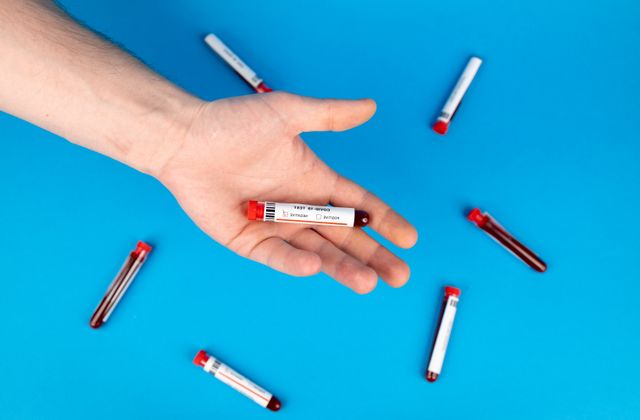
The blood test comes next. A needle goes into a vein in your arm, a few tubes fill up, and the lab starts measuring cardiac markers: proteins and enzymes that leak into your blood when heart muscle cells are injured. The most important of them is troponin I (Cardiac). Doctors consider it the most accurate blood test for confirming a heart attack, because troponin is specific to heart muscle. Skeletal muscle damage from a workout, an injection, or an accident doesn't move troponin the way it moves other markers. That's what makes it special.
The two tests answer different questions. The ECG asks "what is the heart doing this second?" Troponin asks "has any heart muscle died in the last few hours?" Both are needed. A normal ECG doesn't rule out a heart attack, and a normal early troponin doesn't either, which is why you'll usually get both, and why the blood test gets repeated.
What troponin actually is (two-minute biology)
Every heart muscle cell contains a tiny protein complex that helps the muscle fibres contract in rhythm. Troponin is part of that machinery. It comes in three subunits, but the two that matter for testing are troponin I and troponin T. In a healthy heart, almost none of it floats free in the blood. The amount is so small that older lab tests simply read it as zero.
When heart muscle cells are starved of oxygen, they start to die. As their membranes break down, troponin spills out of the cells and into the bloodstream. The more cells die, the more troponin shows up. That's the entire logic of the test: troponin in the blood means injured heart muscle, and the amount roughly tracks the extent of the injury.
There are two generations of the test. The conventional troponin test measures down to a modest floor. The high-sensitivity version, the High Sensitive Troponin I assay, measures far smaller amounts. Because it can see such tiny changes, it can rule a heart attack out (or in) within one to three hours of arrival, instead of making you wait half the night for a second draw. Most big hospitals now use the high-sensitivity version.
What counts as normal? Labs define their cutoffs from reference populations, and guidelines from the American College of Cardiology and American Heart Association endorse the 99th percentile of the upper reference limit as the threshold for heart injury. In practice, conventional troponin I is usually quoted around 0 to 0.04 ng/mL, and high-sensitivity troponin generally sits below about 14 ng/L. But these numbers genuinely differ between laboratories and between men and women, so treat any figure here as a guide and read your own report's printed reference range. Ranges vary by laboratory, and that line will appear on every report for a reason.
The wait: when troponin shows up after the damage starts
Here's the part that surprises people. Troponin does not jump the moment pain starts. After heart muscle begins to die, it takes a few hours for the protein to reach measurable levels in the blood. Most sources put the first detectable rise at about 3 to 6 hours after the injury begins, with levels peaking around 24 hours. Once up, troponin hangs around: it stays elevated for days, often up to two weeks after a heart attack.
That timeline explains almost everything about how the test is used:
- Arrive at the hospital an hour after pain starts and your first troponin can easily be normal. The doctor will not send you home on that number. They'll draw again in a few hours and look for a change.
- The typical sequence is a draw at arrival, then repeat draws at set intervals: one to three hours with a high-sensitivity assay, or three to six hours with a conventional one. Some hospitals go further with later draws.
- Because it stays high for so long, a troponin result two weeks later can't tell you whether the event happened on Tuesday or Thursday. It's a yes-or-no witness with a long memory, not a clock.
What do those waiting hours feel like? If you've ever sat in a hospital corridor while a relative is inside, you know. The patient is usually on a monitor, a nurse checks in every so often, and the family replays the evening on loop: was it the stairs, the spicy food, the argument? The second blood draw feels like an eternity to everyone except the lab, where the analyser needs its fixed incubation time no matter how urgently you stare at the clock. High-sensitivity assays have genuinely shortened this ordeal in modern emergency rooms, from the better part of a night to a couple of hours. But the wait between draws is still the hardest part of the whole process, and knowing why you're waiting makes it slightly easier to bear.
Patients often ask us at the counter why the hospital took blood three times through the night for "the same test". This is why. A single value is a snapshot; the story lives in the movement between snapshots.
One number tells you almost nothing. The pattern tells you everything.
This is the single most misunderstood thing about troponin, and it matters because it decides whether you get treated, observed, or sent home.
Cardiology guidelines don't diagnose a heart attack from an elevated troponin alone. They need evidence of acute heart injury: a rising or falling pattern across serial measurements, plus clinical signs that the heart is in trouble. Those signs can be the symptoms you walked in with, new ECG changes, imaging that shows a new patch of dead muscle, or a clot seen on angiography. Elevated troponin plus one of those equals a heart attack diagnosis. Elevated troponin alone equals "heart muscle is injured; now find out why".
That's also why a mildly raised value on a routine report is not a five-alarm fire by itself. If the number is flat across two draws taken hours apart, it's a chronic elevation, not an acute event. If it's climbing, that's an emergency unfolding in real time. The direction matters more than the digit.
A concrete example makes this click. Picture two reports side by side. Report A shows troponin at 22 ng/L on arrival and 24 ng/L three hours later, no chest pain, normal ECG. That's a flat mild elevation: something to investigate calmly, not an emergency. Report B shows 18 ng/L on arrival and 340 ng/L three hours later, with pressure in the chest and ST changes on the ECG. Nearly the same starting point, completely different story. The second patient is having a heart attack; the first needs a workup for the other causes on the list. Doctors read the delta, the gap between the two draws, the way you'd read a fever chart rather than a single thermometer reading. This is also why "my troponin was normal at the hospital and high later" isn't a lab error. The first draw was simply too early, and the repeat caught the rise. Frustrating to hear at 4 am, but it's the system working as designed.
Another quirk: you can't compare a troponin number from one hospital with a number from another lab. Different manufacturers' assays measure differently, and values from one troponin assay cannot be compared with another. So if you were tested at a hospital in Andheri and want a follow-up at our lab in Malad, bring the original report. We read our own reference range, your doctor reads both, and nobody pretends the two numbers sit on the same scale.
A high troponin without a heart attack: the other reasons it rises
Troponin is specific to cardiac muscle injury, not to heart attacks. That distinction sounds academic until it shows up on your report. Plenty of conditions injure heart muscle without blocking a coronary artery:
- Fast, chaotic heart rhythms like atrial fibrillation strain the muscle.
- Heart failure keeps the muscle under constant pressure.
- Inflammation of the heart muscle itself, myocarditis, or of its lining, pericarditis.
- A blood clot in the lungs, a pulmonary embolism, overloads the right side of the heart.
- Long-standing kidney disease; troponin clears slowly when the kidneys aren't filtering well, so people with chronic kidney disease often run a mildly raised baseline.
- Chest infections that strain the whole system, severe COPD flare-ups.
- Certain chemotherapy drugs, the anthracycline family, are known to be hard on the heart.
- Takotsubo cardiomyopathy, the "broken heart syndrome" triggered by extreme stress, where part of the heart balloons and weakens temporarily.
- Recent heart surgery or angioplasty, where some troponin release is expected and watched.
A markedly raised value, several times above the upper limit, still points strongly at a type 1 heart attack in most studies. But a small bump? That could be any of the above, or nothing at all. One genuinely confused man at our counter last year had a slightly raised troponin and a perfectly normal heart; it turned out he'd done an intense gym session the evening before the draw. Extreme exertion can nudge the number. Context decides, not the digit alone.
Things you're allowed to ask at 2 in the morning
Emergency rooms run on this test at odd hours, and the questions below are the ones families actually whisper to each other in waiting areas. Straight answers, no hedging.
Can I just book a troponin test at home instead of going to the hospital? No. If chest pain is happening, you need an emergency room, not a home-collection slot. Troponin is only one piece of the puzzle; you also need an ECG, monitoring, and a doctor who can act on the results within minutes. We do offer troponin at home, and it's genuinely useful, but for follow-up draws after discharge, for pre-surgery cardiac clearance, or when your doctor wants to track a known elevation. Not during the event.
My report says troponin is slightly above normal, but I feel completely fine. Did I have a heart attack? Almost certainly not a new one. Silent heart attacks exist, but a mild, flat elevation is far more likely to be one of the non-heart-attack causes above, a chronic baseline (common in kidney disease), or assay noise. Your doctor will compare it against your symptoms, ECG, and a repeat draw. Don't try to interpret a single mild elevation alone.
How fast does troponin rise? Can it be negative early and positive later? Yes, that's exactly why hospitals repeat it. Tested within the first couple of hours, it can be normal and turn positive on the next draw. A very early negative result rules out nothing. High-sensitivity assays shorten this window to about one to three hours.
What's the difference between troponin I and troponin T? They're two subunits of the same protein complex. Both indicate the same kind of injury, and different laboratories simply use one or the other. There is no clinically important reason for a patient to prefer one. Just don't compare an I number with a T number.
My doctor ordered the high-sensitive version. Why? Because it sees smaller amounts and detects changes faster. With a conventional assay you might wait three to six hours for a meaningful repeat; with high-sensitivity, clinicians can often rule a heart attack in or out within one to three hours. Faster answers, less time on a stretcher in a corridor.
Do I need to fast before a troponin test? No. There's no preparation, no fasting, no special timing. It isn't affected by food. When it's ordered in an emergency, nobody asks when you last ate.
Does every heart attack raise troponin? Nearly every completed one, given enough time. But unstable angina, where blood flow drops without actual muscle death, can leave troponin normal. And a tiny event caught extremely early might not have released enough protein yet. Timing and repeat testing cover both gaps.
How long after a heart attack does troponin stay high? Days, often up to two weeks. That long tail is useful for diagnosis but useless for dating the event precisely. If your doctor suspects a second heart attack days after the first, they usually switch to CK-MB, which clears within two to three days, so a fresh rise stands out clearly.
Can stress or a workout raise troponin? Extreme exertion, like a marathon or an all-out gym session, can nudge it up slightly. Ordinary daily stress, the worrying-about-bills kind, does not. And any bump from exercise settles; it doesn't keep climbing the way an acute injury does.
I have kidney disease and my troponin is always a little high. Should I worry? Your doctor already knows this pattern. Failing kidneys clear troponin slowly, so a stable mild elevation becomes your personal baseline. What matters is change: a new rise above your usual baseline is what triggers action. Always tell any new doctor about the kidney history before they read the number.
Getting the blood draws right
Troponin needs no preparation, but the circumstances around the draws matter. Paired notes from years of watching this test ordered, drawn, and misread.
At the hospital, during the event
Do: let them draw at arrival and at whatever intervals they set, even if the first result was normal. The repeats are the test. The first draw is just the opening frame.
Don't: refuse a repeat draw because "you already took blood". A single early troponin rules out almost nothing, and the rising or falling pattern is what diagnoses or clears you.
For follow-up draws after discharge
Do: get them done at the same lab when your doctor wants to compare numbers across days. Troponin assays differ between manufacturers, and same-lab serial values are the only ones that line up neatly.
Don't: compare a number from the hospital's lab with a number from another lab and panic over the difference. Bring both reports and let your doctor read them side by side.
Talking to the doctor about the report
Do: mention kidney disease, recent infections, recent surgery, chemotherapy, and intense exercise before the draw. Every one of these can move troponin, and your doctor interprets the number through that history.
Don't: fixate on whether your value is "a little high" or "very high" without asking about the pattern. A flat mild elevation and a climbing mild elevation are two completely different situations.
The rest of the crew: CK-MB, echo, stress test, and what each one adds
Troponin gets the headlines, but it never works alone. Understanding the supporting cast helps you read a discharge summary without feeling lost.
CK-MB is the heart-specific slice of an enzyme called creatine kinase. It rises within 4 to 6 hours of muscle damage, peaks at 12 to 24 hours, and returns to normal within 48 to 72 hours. Because it clears fast, it's the go-to test when doctors suspect a second heart attack on top of a recent one: troponin would still be high from the first event and couldn't show a fresh rise, but CK-MB would spike again clearly. It's also used to watch reperfusion after clot-busting treatment and to check for heart injury after cardiac surgery. Less specific than troponin, but the timeline is its superpower.
Myoglobin rises earliest of all, sometimes within an hour or two, but it's the least specific: any muscle injury moves it. It has mostly faded from routine use now that high-sensitivity troponin is so fast.
The echocardiogram is an ultrasound of the heart. It shows which walls of the muscle are moving weakly or not at all, how strongly the heart pumps, and whether valves are working. Where troponin says "muscle died", the echo shows where and how much.
The stress test (treadmill or medicine-induced) comes later, once you're stable. It looks for areas of the heart that don't get enough blood under load, which points at narrowed arteries that might need a stent or bypass.
The angiogram is the definitive look: dye injected into the coronary arteries under X-ray, showing the exact blockage. Not everyone needs one, but when troponin and ECG both say heart attack, it's usually the next step.
Notice what's missing from this list: the lipid profile. Cholesterol numbers don't diagnose a heart attack. They explain why it happened and they guide everything after. Which brings us to the part of the story most people skip.
After discharge: the tests that keep watching your heart
Surviving the event is the first victory. The second is making sure it doesn't happen again, and that's where blood tests move from the emergency room to your routine.
The lipid profile becomes your most important regular test. It breaks cholesterol into its components: LDL, the particle that drives artery clogging; HDL, which carries cholesterol away; triglycerides; and total cholesterol. Your cardiologist will want these numbers down to targets far lower than the general population's "normal". If you want the plain-English version of each line on that report, our guides on the lipid profile test price and normal range, LDL cholesterol, HDL cholesterol, and total cholesterol walk through them one by one. One practical note from the lab's own protocol: at HWP, fasting of 9 to 12 hours is required for a lipid profile and its components, including triglycerides and LDL. Book a morning slot.
CRP, the inflammation marker, has earned a supporting role in cardiac risk. Chronic low-grade inflammation tracks with artery disease, and a high-sensitivity CRP reading helps cardiologists fine-tune risk in people sitting between risk categories. Our CRP test guide explains the normal range and what a high reading means outside of infections.
The Cardiac Profile - A bundles several heart markers into one draw, which is convenient when your doctor wants a broad recheck without ordering five separate tests. If your cardiologist mentions a "cardiac panel", this is usually what they mean.
Kidney function and HbA1c ride along on most post-heart-attack checklists too. Many heart medicines are dosed around kidney numbers, and undiagnosed diabetes is one of the commonest unwelcome discoveries after a cardiac event. The two conditions feed each other, so both get watched.
Expect a rhythm to settle in over the first year. A lipid profile every few months until the numbers hit target, then twice a year. Blood pressure checks at every visit. An annual review where the cardiologist looks at the whole panel and adjusts medicines. It sounds like a lot of needles, but each draw is quick, and most of it can be done at home between the hospital visits. The patients who do best after a heart attack are usually the ones who treat follow-up testing as routine maintenance, like servicing a car after a breakdown, rather than as a reminder of a scary night.
And troponin itself? Once you're home and stable, your doctor may order one more draw a few days out, just to confirm the number is falling as expected. That's a perfectly reasonable thing to get done at home: one tube, no fasting, no hospital corridor. The needle prick is the usual quick sting, a cotton ball gets taped to your arm, and the report lands in about 24 hours.
Booking heart tests in Mumbai: what comes to your doorstep, what needs a hospital
Let's be blunt about the division of labour, because mixing the two up is dangerous.
Anything acute, chest pain, breathlessness, cold sweat, pain spreading to the arm or jaw, belongs in a hospital emergency room. Call an ambulance. Mumbai's big hospitals run the first ECG within minutes of arrival and the first troponin within the hour. No home-collection service on earth substitutes for that, and anyone who tells you otherwise is selling something.
Everything around the event, though, is fair game for home collection. The follow-up troponin your doctor ordered for day five. The lipid profile three months after the statins started. The quarterly cardiac profile your cardiologist wants. The CRP recheck. Our phlebotomists do these draws at home across Malad, Kandivali, Borivali and Goregaon, free of charge, and the lab itself runs 24x7 in Malad so a sample drawn at your doorstep at 8 in the morning is processed the same day. Reports usually reach you within about 24 hours. Bookings run on 84250 40353, and if you'd rather browse first, the full test list and the health packages page cover the cardiac bundles in one place. You can also start from the home page if you're not sure what to book.
Six things to carry away from all of this. Troponin is the most trusted blood test for confirming a heart attack because it comes only from heart muscle. It takes a few hours to rise, peaks around a day, and can stay up for up to two weeks, which is why hospitals draw it more than once. A single number means little; the rising or falling pattern across draws is what diagnoses or clears you. A raised troponin without a heart attack is common and has a long list of explanations, from kidney disease to a hard workout. The other tests each have a job: CK-MB catches a second event, the echo shows the damage, the lipid profile and CRP guard the future. And the line that matters most: chest pain means hospital, now; the home-collection tests are for everything around it.
One last practical note for the home draws. Tell the phlebotomist which tests are follow-ups and show the previous report. When we know a troponin is a day-five recheck after a hospital event, the sample gets flagged for the doctor's comparison properly, and your cardiologist gets numbers they can actually line up against the hospital's.
References
- American College of Cardiology / American Heart Association guidance on acute coronary syndromes, summarised in American Family Physician, "High-Sensitivity Troponin in the Diagnosis of Acute Coronary Syndrome" (2024): 99th percentile upper reference limit as the injury threshold; troponin plus clinical signs defines acute MI.
- Massachusetts General Hospital, Advances in Cardiology, on high-sensitivity troponin testing: high-sensitivity assays resolving rule-in/rule-out within one to three hours; the value of the rise-and-fall pattern.
- StayWell health library, "Troponin" patient information: conventional troponin I reference around 0–0.04 ng/mL, high-sensitivity generally below ~14 ng/L; causes of non-MI elevation; blood-draw risks.
- American Heart Association, "Warning Signs of a Heart Attack": chest discomfort lasting minutes, pain in arms/back/neck/jaw/stomach, shortness of breath, cold sweat, nausea, lightheadedness; women more likely to present with breathlessness, nausea/vomiting, and back or jaw pain.
Book these tests at home
Live prices · free home sample collection in Malad, Kandivali, Borivali & Goregaon
Troponin I (Cardiac)
- Report in 6 hrs
- Free home collection
High Sensitive Troponin I
- Report in 24 hrs
- Free home collection
Lipid Profile
- Report in 48 hrs
- Free home collection
Cardiac Profile - A
- Report in 48 hrs
- Free home collection
More tests related to this topic
Other Heart tests you can book with free home sample collection.
CRP (C-Reactive Protein)
- Report in 12 hrs
- Free home collection
Anti Phospholipid Antibody (APL) - IgG
- Report in 24 hrs
- Free home collection
Anti Phospholipid Antibody (APL) - IgM
- Report in 24 hrs
- Free home collection
Antiphospolipid Syndrome Panel
- Report in 48 hrs
- Free home collection
Apolipoprotein - A1
- Report in 24 hrs
- Free home collection
Apolipoprotein - B
- Report in 24 hrs
- Free home collection
Cardiac Profile - B
- Report in 48 hrs
- Free home collection
Cardiac Profile - C
- Report in 48 hrs
- Free home collection
Cardiac Profile - M
- Report in 48 hrs
- Free home collection
Cardiac Risk Markers
- Report in 48 hrs
- Free home collection
Creatinine Phospho Kinase (CPK) - Total
- Report in 24 hrs
- Free home collection
GD Wellness Cardiac Risk Marker (5 Parameters)
- Report in 24 hrs
- Free home collection
Get more from the same visit
Health packages that already include these tests, and tests people usually add.
Frequently asked questions
Can I book a troponin test at home instead of going to the hospital for chest pain?
No. Chest pain needs an emergency room with ECG, monitoring and a doctor who can act fast. Home troponin is for follow-up draws after discharge, pre-surgery clearance, or tracking a known elevation.
My troponin is slightly above normal but I feel fine. Did I have a heart attack?
Very unlikely to be a new one. A mild flat elevation usually points to other causes such as kidney disease, heart strain, or assay variation. Your doctor will check symptoms, ECG and a repeat draw before concluding anything.
How soon after a heart attack does troponin rise?
Usually within 3 to 6 hours of the injury, peaking around 24 hours. A very early draw can be normal and turn positive later, which is why hospitals repeat the test.
What is the difference between troponin I and troponin T?
They are two subunits of the same heart-muscle protein complex. Both indicate the same kind of injury; labs simply use one or the other. Never compare an I number with a T number.
Why did my doctor order the high-sensitive troponin test?
It detects much smaller amounts, so clinicians can often rule a heart attack in or out within one to three hours instead of waiting most of the night for a repeat draw.
Do I need to fast before a troponin test?
No. Troponin needs no preparation and is not affected by food.
Does every heart attack raise troponin?
Nearly every completed one, given enough time. Unstable angina without actual muscle death can leave it normal, and an extremely early draw can miss the rise. Repeat testing covers both gaps.
How long does troponin stay high after a heart attack?
Days, often up to two weeks. The long tail helps diagnosis but cannot date the event precisely. For a suspected second heart attack days later, doctors use CK-MB, which clears within two to three days.
Can stress or exercise raise troponin?
Extreme exertion such as a marathon can nudge it up slightly. Ordinary daily stress does not. An exercise bump settles; an acute injury keeps climbing.
My troponin is always slightly high because of kidney disease. Should I worry?
A stable mild elevation is a known baseline in chronic kidney disease, since troponin clears slowly. What matters is change: a new rise above your usual baseline is what triggers action.
HWP Diagnostic Editorial Team
Health guides written by the team at HWP Diagnostic, Mumbai, to help you understand your tests before you book. This article is for general education and is not a substitute for medical advice - reference ranges vary between labs, so always discuss your results with your doctor. Read our editorial policy. Photos: Pexels.