
Key takeaways
- A high ALP is a mixed signal from liver, bone, intestines and placenta; isoenzyme electrophoresis splits the total so the source can be traced.
- Fast 8 to 12 hours before the draw. A fatty meal can raise the intestinal fraction by up to about 20 percent and blur the pattern.
- Read the fraction pattern, not any single number. Reference ranges vary by laboratory, so compare only against your own report.
- GGT is the quick tie-breaker: high ALP with normal GGT points toward bone; high ALP with high GGT points toward liver or bile ducts.
- Growing children and third-trimester pregnancies naturally raise ALP without disease; the pattern shows growth or placenta, not illness.
- This is a follow-up test ordered after a raised total ALP. Reports take about 24 hours; free home collection across Malad, Kandivali, Borivali and Goregaon; book on 84250 40353.
Book tests from this article
Sample collected at home - free
- Alkaline Phosphatase Isoenzymes Electrophoresis, Serum
₹6,349₹8,49925% off
- Alkaline Phosphatase
₹249₹34929% off
- Gamma Glutamyl Transferase (GGT)
₹299₹39925% off
Free collection 24 hr reports
The short answer: this test names the sender behind your high ALP
Your blood report flagged one line: alkaline phosphatase, high. You read up on it and found the same word attached to the liver, the bones, the gut, and pregnancy. Everything and nothing, which leaves exactly one real question hanging. Which one of those raised your number?
That is what this test is for. Alkaline phosphatase isoenzymes electrophoresis does not measure your ALP again. Your regular total alkaline phosphatase test already did that, and repeating it would only hand you the same mixed number.
The isoenzyme test takes that one total and splits it into its parts: a liver fraction, a bone fraction, an intestinal fraction, and, during pregnancy, a placental fraction. Whichever band stands tallest tells your doctor where the extra ALP is coming from.
Think of it as the difference between a single bill and an itemised one. The bill alone says you owe money. The itemised version says what for, and that changes everything about what you do next.
This is a follow-up test, never a first test. Nobody orders it cold. It follows a raised total ALP that needs explaining, and it exists for one job: direction. Liver direction or bone direction, and sometimes the gloriously boring answer that dinner was too close to the blood draw.
The ordering doctor is usually the same one who saw the raised total ALP first: your physician, sometimes a gastroenterologist if the liver is under suspicion, sometimes an orthopaedic doctor if the bones are. The prescription rarely arrives alone. It usually comes with a GGT, a repeat liver panel, or a calcium level, because the fractions are read as part of a picture, never as a solo act. If you have ever wondered why the doctor asked for three tests when you only worried about one line on the report, this is why.

Why one ALP number is never the whole story
ALP, alkaline phosphatase, is an enzyme that lives on cell membranes all over your body. Its day job is stripping phosphate groups off molecules, and it shows up wherever tissue is growing, turning over, or working hard. The liver makes a lot of it. Bone-forming cells, the osteoblasts, make a lot of it too. The intestines chip in, the kidneys make some, and during pregnancy the placenta adds its own large share.
So the ALP on your report is a total. It is the sum of several streams pouring into the same river. An adult's normal range usually sits somewhere around 44–147 IU/L, though different labs use slightly different cutoffs, so compare your number only with the range printed on your own report. Above that, the list of suspects is wide: blocked bile ducts, liver inflammation, scarring, a healing fracture, overactive parathyroid glands, bone disease, vitamin D deficiency, pregnancy. Low values, which this test does not chase, point in a different direction entirely: malnutrition, certain deficiencies, rare bone conditions.
Here is the detail most people miss. ALP is mainly a marker of cholestasis, the slowing or blocking of bile flow, and of bone turnover. It is not really a marker of liver cell damage the way the transaminases (ALT, AST) are. That is why your doctor can look at a high ALP next to a normal bilirubin and still suspect the liver, or look at the same high ALP next to normal liver enzymes and suspect the bones. The total number alone cannot settle the argument. It never could.
This is where the confusion patients feel is genuinely shared by doctors. A single number, four possible senders, and a treatment path that forks completely depending on the answer.
The isoenzyme test is the tool that untangles it.
What happens to your blood sample inside the lab
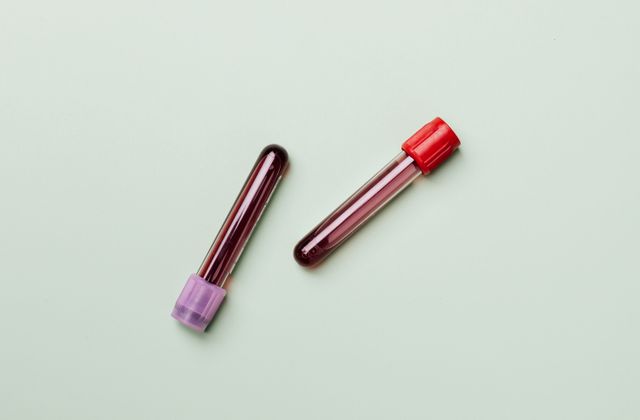
The blood draw is the same one you have had before. You sit in the chair, a tourniquet tightens around your upper arm, and the phlebotomist feels for the vein at your elbow. The needle is a quick sting, the tube fills in seconds, and a cotton ball goes over the spot with a bit of tape. Two minutes, done. There is nothing special about the sample itself; it is plain serum, the same tube as a routine chemistry test.
The interesting part starts on the bench. The lab runs your serum through electrophoresis, which is a separation technique, not a second measurement. Your sample is placed on a gel and an electric current is applied. The different ALP fractions carry slightly different charges, so they migrate at different speeds and settle into separate bands, like runners sorting themselves out along a track. The liver and bone fractions, strictly speaking, are isoforms of the same tissue-nonspecific enzyme that differ in their sugar coating, but the lab treats them as separate fractions because they behave separately on the gel.
The machine then stains the bands and reads how much of the total each one accounts for. Your report will show the total ALP up top and the fractions underneath, usually as percentages or as their own activity values in U/L. Some labs also offer alternative ways to separate the fractions, using heat or urea to inactivate specific ones (the placental fraction is famously heat-stable, which is a useful identifying trait), but electrophoresis is the standard approach.
One practical note: electrophoresis is manual, step-by-step bench work. Nobody presses a button and gets bands in ten minutes. That is why the report for this test takes about a day at our lab, where a routine automated panel is turned around much faster. Plan on roughly 24 hours, and don't mistake the wait for a problem.
There is also a strictness about the sample that routine tests do not have. The lab rejects a non-fasting sample for this test, full stop, because an intestinal band from breakfast makes the pattern unreadable. A haemolysed sample, where the red cells have broken and tinted the serum pink, gets rejected too, since it interferes with the reading. If the phlebotomist ever redraws because the first tube looked off, that is the reason. It is better than a report you cannot trust.
The four fractions, band by band
This is the heart of the report, so it is worth meeting each fraction properly.
The liver fraction. This is the one doctors expect to lead most often. When the total ALP is raised, the liver fraction is the usual suspect, and an elevated liver fraction is associated with a wide spread of conditions: acute hepatitis, fatty liver, drug-induced liver injury, scarring, blockage of bile flow, bile duct strictures, primary biliary conditions, and cancer that has spread to the liver. Here is the subtlety worth knowing: in cholestasis, ALP rises because the liver starts making more of the enzyme and shedding it from hepatocyte membranes under pressure, not because the enzyme is trapped and cannot drain out. That is also why ALP can be clearly raised while bilirubin stays completely normal, especially when only part of the liver is affected, as with infiltrative disease. A raised ALP with a normal bilirubin is not a contradiction. It is a pattern with a mechanism behind it.
The bone fraction. This one comes from osteoblasts, the cells that build bone, so it tracks bone turnover. It runs high whenever bone is growing or remodelling fast: growing children and teenagers, a healing fracture, and conditions like Paget's disease of bone, where turnover is highest of all, plus osteomalacia, bone tumours, cancer spread to bone, and overactive parathyroid glands. One curious exception the reviews note: ALP is not raised in osteomyelitis, a bone infection, even though the bone is clearly in trouble. The enzyme follows building activity, not infection. And because bone and liver fractions are the two heavyweights in serum, most fraction patterns come down to a contest between these two bands.
The intestinal fraction. This is the fleeting one. It is barely detectable in a fasting sample because it is cleared from the blood within about an hour, but a fatty meal releases it into the intestinal lymphatics and can push the total ALP up by as much as 20 percent, peaking a couple of hours after eating. It shows up in only about a fifth of samples, and more often in people with blood group O or B. This fraction is the main reason the test demands fasting, and it is also the reason a surprising report should always be checked against what you ate before the draw.
The placental fraction. In a non-pregnant adult this band is essentially absent. Through pregnancy it climbs steadily, and near term it can become the dominant fraction, pushing total ALP several-fold above the usual range. Because it lingers in the blood for days rather than hours, the placental contribution is smooth and sustained, not the brief post-meal flicker of the intestinal fraction. During pregnancy, a towering placental band on the report is usually the answer to the whole mystery. The fraction that dominates the page simply tells you the placenta is doing what it is supposed to.
Reports sometimes show extra characters beyond the main four. Techniques fine enough can reveal a dozen or more sub-forms, and one named oddity is a high-molecular-weight or vesicular ALP that travels with membrane fragments. These rarely change the clinical story, but they are part of why the test is read by pattern rather than by arithmetic.
Why GGT usually gets checked first
Before anyone orders electrophoresis, most doctors reach for a cheaper, faster tie-breaker: GGT, gamma glutamyl transferase. GGT lives in the liver and bile ducts but not in bone, which makes it the perfect sorting hat for a high ALP. If your ALP is high and your GGT is high too, the liver or bile ducts are the likely source. If your ALP is high and your GGT is normal, attention swings toward bone or the other non-liver sources. This pairing is so useful that many clinicians call it one of the most valuable moves in liver testing.
That leaves a fair question about why the isoenzyme test exists at all, if GGT answers things. The honest answer is that sometimes GGT cannot. Some patients have a GGT that sits in the grey zone, or a GGT that is raised by drinking or by medicines even when the liver is not the ALP source. Some clinical situations need the actual fractions on paper, not an inference. The isoenzyme test is the confirmatory step for when the shortcut leaves doubt. If your doctor ordered GGT alongside or just before this test, that is exactly the reasoning at work, and you can read more about it with a GGT test of its own.
There is also a lesser-known marker called 5'-nucleotidase that plays the same sorting role as GGT. It rises with liver and bile duct problems and stays quiet with bone disease. It is ordered far less often, mostly because GGT is cheaper and more widely available, but if you ever see it on a report next to a high ALP, it is doing the same job: asking whether the liver is the sender.
Preparing so your result stays readable
The one preparation rule for this test matters more than it does for most blood work, so take it seriously.
Fast for 8 to 12 hours before the draw. Plain water is fine and encouraged. The reason is the intestinal fraction: a fatty meal can lift it enough to blur the whole pattern, and the worst outcome is a report nobody can read, followed by a repeat needle. This is not a casual suggestion. Labs list a non-fasting sample as a reason to reject the test outright, because the intestinal band can make the pattern uninterpretable. An overnight fast followed by a morning draw is the cleanest setup, and if you book home collection, ask for the morning slot so the fasting part costs you nothing but sleep.
Blood group plays a small supporting role here. People with blood group O or B are more likely to show a post-meal intestinal rise, sometimes noticeably, about two hours after a fatty meal. You cannot change your blood group, obviously, but it is one more reason the overnight fast is non-negotiable rather than optional.
Medicines deserve a mention too. Some drugs push ALP up and others nudge it down; birth control pills and certain medicines are known to lower it, while others raise it. Do not stop anything on your own, but do tell the doctor ordering the test what you take, so an unexpected fraction has context.
The human details help set expectations. There is no special position, no dye, no long wait. You fast overnight, the phlebotomist arrives or you walk into the lab, two minutes of needle, and you are eating breakfast by the time the cotton ball comes off. The only part that takes patience is the report, which needs about a day because of the manual separation step.
Questions people ask us at the counter
My ALP is high and I'm pregnant. Should I worry?
Not automatically, and usually not at all. The placental fraction climbs naturally through pregnancy and near term it can dominate the whole result, pushing the total ALP several times above the usual range. This is physiology, not disease. The fraction pattern is exactly what proves it: a tall placental band with quiet liver and bone bands is the classic reassuring picture. Your doctor still reads it alongside everything else in the pregnancy, but the pattern itself is one of the calmest answers this test gives.
Can children take this test?
Yes, and children are one of the groups it helps most. Growing bones push the bone fraction up naturally, and during the pubertal growth spurt the total ALP can look alarming to a parent reading a report. The fractions show the rise is skeletal growth, not disease. There is also a benign childhood condition called transient hyperphosphatasemia, seen in children under five, where ALP can run three to twenty times the usual range with no illness behind it and settles back to normal within weeks or months. A fraction pattern that is mostly bone, in a well child, is the kind of answer that saves everyone a lot of worry.
How long do results take?
About a day at our lab. Electrophoresis separates the fractions band by band on a gel, which is careful manual bench work, not the automated chemistry that churns out a routine panel. If your report is taking the full 24 hours, that is the test working as designed, not a delay.
Do I really need to fast for this one?
Yes, if you want a result worth reading. Food, especially anything oily or heavy, lifts the intestinal fraction for a few hours after eating. A non-fasting sample can produce a pattern that means nothing, and nobody wants a second needle because of breakfast. Eight to twelve hours, water allowed, morning draw.
Will I have to repeat the draw if the pattern is unclear?
Sometimes, and it is not a failure. If the fast was not strict, or if the pattern shows two fractions neck and neck with no clear leader, the doctor may ask for one clean fasting repeat before going further. The repeat is cheap information compared with the scans and referrals that a muddled pattern might otherwise trigger.
The three groups who raise ALP without being ill
Some of the most useful work this test does is ruling things out, and three groups of people generate most of that work.
First, children and teenagers. Bone growth is osteoblast work, and osteoblasts make the bone fraction. During the growth spurt, ALP levels run higher than adult ranges, which is normal for the age. The isoenzyme pattern simply confirms what the birth certificate already suggests.
Second, pregnant women. The placenta manufactures its own ALP, the fraction rises steadily through the months, and by the third trimester it often predominates, driving the total well above the standard range. MedlinePlus lists pregnancy as one of the standard non-disease reasons for high ALP, and the fraction test turns that general knowledge into a specific, readable answer.
Third, the post-meal effect, which is not a group of people so much as a timing mistake. Anyone who eats a fatty meal within a few hours of the draw can show an intestinal bump. It clears fast, within about an hour or two, which is precisely why the overnight fast erases it. If your report ever shows an unexpected intestinal band, the first question is always when you last ate.
Patients often ask us at the counter whether a single high ALP means something is seriously wrong. We see this pattern in reports regularly: a mildly raised total, a fraction pattern that points at growth, pregnancy, or dinner, and a doctor who closes the file with relief. The test earns its keep as often by preventing a workup as by starting one.
When the pattern surprises the doctor too
Most fraction patterns are straightforward: liver leads, bone leads, or the answer is pregnancy, growth, or breakfast. But the test occasionally throws a curveball, and knowing these exist keeps a strange report from causing panic.
One is the Regan isoenzyme, a placental-like ALP that can appear in adults who are not pregnant. Its presence does not diagnose anything by itself, but it is unusual enough that doctors take it as a prompt to look further rather than file the report away. If your report mentions a placental-like band and you are not pregnant, expect follow-up questions, not conclusions.
Another is the mixed pattern, where liver and bone fractions rise together with no clear winner. This usually means the clinical picture needs more data, not that the test failed. Your doctor may pair it with your liver function test, your calcium level, and your symptoms before deciding anything. A mixed pattern is a "gather more evidence" result, and it is more common than people think.
A third surprise is how long fractions linger. The intestinal fraction clears from blood within about an hour. The bone fraction takes far longer, and the placental fraction can circulate for days. That is why a post-meal blip vanishes by morning while a pregnancy-related rise stays put for the whole third trimester. The report is a snapshot, and each band in it has its own clock.
Finally, there is the odd case of a very high ALP with completely normal bilirubin and transaminases. Patients read this as a contradiction and assume the lab made an error. It is usually not an error. As the physiology reviews explain, cholestasis raises ALP through new enzyme synthesis at the hepatocyte membrane, while bilirubin rises only when excretion actually fails. When part of the liver is obstructed or infiltrated and the rest works fine, the obstructed part pours out ALP while the healthy part clears bilirubin normally. The fractions then confirm the liver is the source, and the workup moves to imaging rather than repeat bloods.
Dos and don'ts around your blood draw
Before the draw
- Do: finish dinner early enough for a true 8 to 12 hour fast, and take the morning slot.
- Do: drink plain water normally; it does not affect the fractions.
- Do: tell the doctor about all medicines and supplements, including birth control pills, since some shift ALP levels.
- Do: mention if you are pregnant or breastfeeding, so the placental fraction is read in context.
- Don't: eat a late, oily dinner or a midnight snack before a morning draw; the intestinal fraction will show it.
- Don't: assume a cup of tea with milk and sugar is harmless; keep the fast to water only.
- Don't: schedule the draw for the afternoon after a full day of eating and expect a clean pattern.
Reading the report
- Do: compare your numbers only with the range printed on your own report; reference ranges vary by laboratory.
- Do: read the pattern across all four fractions, not the single tallest number in isolation.
- Do: bring the earlier total-ALP report along, so the doctor can see what changed.
- Don't: diagnose yourself from the bone fraction alone; growing teenagers and healing fractures raise it without disease.
- Don't: panic at a mixed or unclear pattern; it usually means one clean repeat, not a serious illness.
More questions before you book
Is this the same as the regular ALP test?
No. The regular ALP test measures the total, every source mixed together. This test separates that total into liver, bone, intestinal and placental fractions. One gives you a number; the other tells you where the number came from. They are ordered in sequence for exactly that reason.
Does my blood group really change the result?
It can nudge it. People with blood group O or B are more likely to show a post-meal rise in the intestinal fraction, sometimes a visible one about two hours after a fatty meal. It does not invalidate the test; it is one more reason the overnight fast is part of the protocol. Your blood group is printed on many lab records, so the doctor reading the pattern will usually know.
Can I get this done at home?
Yes. The sample is a routine serum draw, so home collection works exactly like a lab visit: the phlebotomist comes with the same tubes, finds the vein at your elbow, and the cotton ball and tape routine is identical. Take the morning slot so the fasting is effortless. Free home collection runs across Malad, Kandivali, Borivali and Goregaon.
What does it mean if no fraction is clearly dominant?
It means the answer needs one more piece of data. A flat or mixed pattern can come from a non-strict fast, from two genuine mild elevations, or from early disease that has not declared itself. The usual next step is a single clean fasting repeat, sometimes with GGT and the rest of the liver panel alongside. Most of the time the repeat settles it.
What does a placental-like band mean in someone who isn't pregnant?
It is uncommon, and it is a flag for further investigation rather than a diagnosis. The lab name for it is the Regan isoenzyme, a placental-type ALP that occasionally appears in adults. Your doctor will decide what, if anything, needs to follow. Do not read it as an emergency on your own; bring it to the consultation and let the pattern be read in full clinical context.
What your doctor does with the answer, and how to book
This is a test that gives direction, not a diagnosis. No fraction pattern, however clear, names a disease by itself. What it does is aim the workup. If the liver fraction leads, the next steps stay on the liver side: imaging of the bile ducts, a medication review, and the broader liver panel bundled into one booking, which is what the Complete Liver Health Panel is built for. If the bone fraction leads, attention shifts to bones and minerals: calcium, vitamin D, parathyroid hormone, and the Bone and Joint Health Panel, which wraps that side into a single draw. If the pattern says pregnancy, growth, or dinner, the workup often ends right there, which is a perfectly good outcome for a blood test.
Practical bits for booking, since this is the part people actually call about. Ring 84250 40353 and ask for a morning home-collection slot, or start from the tests page if you are comparing options first. The overnight fast is what makes an early draw painless, and there is no extra charge for collection anywhere in Malad, Kandivali, Borivali or Goregaon. The lab runs round the clock, but the report still takes about 24 hours, because the electrophoresis step is done by hand on the bench rather than by an analyser.
One last habit that helps: keep the earlier total-ALP report handy when you book. Mention the total value and the date when you call, so the lab can match the fraction result against it. And if the LFT report itself is the confusing part, this walkthrough of the liver function test report breaks down each line in plain language. The first test link your doctor cares about is the isoenzymes electrophoresis test itself; everything else in this article is context for reading what comes back.
References
- Mayo Clinic Laboratories: Alkaline Phosphatase Isoenzymes, Serum (test definitions ALPI/ALKP): adult fraction reference ranges, fasting requirement, postprandial intestinal ALP rise in blood group O/B, transient hyperphosphatasemia of infancy
- MedlinePlus (U.S. National Library of Medicine): Alkaline Phosphatase: effects of pregnancy, childhood growth, fatty meals, and medicines on ALP levels
- Sharma U, Pal D, Prasad R. Alkaline phosphatase: overview of isoenzyme physiology (Clinical and Experimental Gastroenterology, Dove Medical Press): four human isoenzymes and tissue-nonspecific isoforms, isoform half-lives, cholestasis mechanism, bone ALP in Paget's disease and fractures
- NHS BNSSG Remedy: Alkaline Phosphatase guidance: isolated raised ALP workup, GGT as the hepatic vs non-hepatic discriminator
Book these tests at home
Live prices · free home sample collection in Malad, Kandivali, Borivali & Goregaon
Alkaline Phosphatase Isoenzymes Electrophoresis, Serum
- Report in 24 hrs
- Free home collection
Alkaline Phosphatase
- Report in 24 hrs
- Free home collection
Gamma Glutamyl Transferase (GGT)
- Report in 24 hrs
- Free home collection
Liver Function Test (LFT)
- Report in 24 hrs
- Free home collection
Calcium
- Report in 24 hrs
- Free home collection
More tests related to this topic
Other Liver tests you can book with free home sample collection.
24 hour Albumin creatinine ratio (ACR)
- Report in 24 hrs
- Free home collection
Alanine Transaminase (SGPT)
- Report in 24 hrs
- Free home collection
Albumin
- Report in 24 hrs
- Free home collection
Albumin creatinine ratio (ACR) - Spot sample
- Report in 24 hrs
- Free home collection
Anti - Hepatitis B Surface antibodies (Anti - HBs titre)
- Report in 24 hrs
- Free home collection
Anti HCV IgM
- Report in 24 hrs
- Free home collection
Anti Hepatitis A Virus (ANTI HAV) - IgG
- Report in 24 hrs
- Free home collection
Anti Hepatitis A Virus (ANTI HAV) - IgM
- Report in 24 hrs
- Free home collection
Anti Hepatitis B Core Antibody (AHBC) - IGM
- Report in 24 hrs
- Free home collection
Anti Hepatitis B Core Antibody (AHBc) - Total
- Report in 24 hrs
- Free home collection
Anti Hepatitis B Envelope Antibody (AHBe) - Total
- Report in 24 hrs
- Free home collection
Anti Hepatitis C Virus (HCV) - Total
- Report in 24 hrs
- Free home collection
Get more from the same visit
Health packages that already include these tests, and tests people usually add.
Frequently asked questions
My ALP is high and I'm pregnant. Should I worry?
Not automatically, and usually not at all. The placental fraction climbs naturally through pregnancy and near term it can dominate the whole result, pushing total ALP several times above the usual range. A tall placental band with quiet liver and bone bands is the classic reassuring picture, and your doctor reads it alongside everything else in the pregnancy.
Can children take this test?
Yes, and children are one of the groups it helps most. Growing bones push the bone fraction up naturally, and during the growth spurt the total ALP can look alarming on a report. The fractions show the rise is skeletal growth, not disease. There is also a benign condition, transient hyperphosphatasemia, seen in under-fives where ALP runs very high with no illness behind it and settles within weeks or months.
How long do results take?
About a day at our lab. Electrophoresis separates the fractions band by band on a gel, which is careful manual bench work, not the automated chemistry that churns out a routine panel. The full 24 hours is the test working as designed, not a delay.
Do I really need to fast for this one?
Yes, if you want a result worth reading. Food, especially anything oily or heavy, lifts the intestinal fraction for a few hours after eating. A non-fasting sample can produce a pattern that means nothing, and labs may reject it outright. Eight to twelve hours, water allowed, morning draw.
Will I have to repeat the draw if the pattern is unclear?
Sometimes, and it is not a failure. If the fast was not strict, or if two fractions rise together with no clear leader, the doctor may ask for one clean fasting repeat before going further. The repeat is cheap information compared with the scans and referrals a muddled pattern might otherwise trigger.
Is this the same as the regular ALP test?
No. The regular ALP test measures the total, every source mixed together. This test separates that total into liver, bone, intestinal and placental fractions. One gives you a number; the other tells you where the number came from. They are ordered in sequence for exactly that reason.
Does my blood group really change the result?
It can nudge it. People with blood group O or B are more likely to show a post-meal rise in the intestinal fraction, sometimes a visible one about two hours after a fatty meal. It does not invalidate the test; it is one more reason the overnight fast is part of the protocol.
Can I get this done at home?
Yes. The sample is a routine serum draw, so home collection works exactly like a lab visit. Take the morning slot so the fasting is effortless. Free home collection runs across Malad, Kandivali, Borivali and Goregaon, and the lab works 24x7.
What does it mean if no fraction is clearly dominant?
It means the answer needs one more piece of data. A flat or mixed pattern can come from a non-strict fast, from two genuine mild elevations, or from early disease that has not declared itself. The usual next step is a single clean fasting repeat, sometimes with GGT and the rest of the liver panel alongside.
What does a placental-like band mean in someone who isn't pregnant?
It is uncommon, and it is a flag for further investigation rather than a diagnosis. The lab name for it is the Regan isoenzyme, a placental-type ALP that occasionally appears in adults. Your doctor will decide what, if anything, needs to follow. Bring it to the consultation rather than reading it as an emergency on your own.
HWP Diagnostic Editorial Team
Health guides written by the team at HWP Diagnostic, Mumbai, to help you understand your tests before you book. This article is for general education and is not a substitute for medical advice - reference ranges vary between labs, so always discuss your results with your doctor. Read our editorial policy. Photos: Pexels.