
Key takeaways
- The letter marks the bundle version, not a severity grade: C is the most extensive anemia panel in the series.
- One blood draw covers red-cell indices (MCV, MCH, RDW), iron studies (serum iron, TIBC, transferrin saturation), ferritin, vitamin B12 and folate.
- Ranges vary by laboratory: always read your numbers against the range printed on your report.
- Usually a morning fasting sample; morning is preferred because serum iron shifts through the day; skip iron supplements for 24 hours before.
- Report in about 24 hours; free home collection across Malad, Kandivali, Borivali and Goregaon; bookings on 84250 40353.
- Book the letter your doctor wrote; call 84250 40353 if the slip is unclear.
Book tests from this article
Sample collected at home - free
- Complete Blood Count (CBC)
₹199₹59967% off
- Iron Studies
₹599₹1,29954% off
- Ferritin
₹949₹1,29927% off
Free collection 24 hr reports
Ferritin falls first. Haemoglobin falls last. This panel exists for the gap in between.
Iron deficiency moves in stages. First the stores drain and ferritin drops, while haemoglobin and cell size still look fine. Then the transport markers shift: serum iron slides, TIBC climbs, saturation falls. Only in the final stage do the red cells come out small and the haemoglobin drops. Profile C, the fullest bundle in the lab's anemia series, measures every one of those stages in a single morning draw, so nothing hides in the gaps between separate tests.
Now the letter, since patients ask us on the helpline almost every week: "Is the C the dangerous one? My neighbour had Profile A and mine says C." The letter is not a grade, and it is not telling you how sick you are. It is a menu choice. Labs sell anemia workups as a series of pre-packed bundles, A, B and C, and the letter your doctor circles decides how many markers get measured from your single blood draw. That is the whole mystery of the letter, and everything else in this article follows from it.

The letter is a menu choice, not a medical grade
Think of the profiles the way you think of thali sizes at a restaurant. A is the small plate: the basics, enough for a first look. B is the bigger plate. C is the full thali: the red-cell measurements, the iron markers, the storage iron, and the two vitamins involved in making red blood cells, all in one sitting.
Your doctor picks the letter based on how much ground they want covered in a single visit. A doctor who already suspects straightforward iron deficiency might order A. A doctor who wants every common cause ruled out in one go, fewer repeat draws, fewer return visits, orders C. The letter says nothing about your severity. It says a lot about your doctor's thoroughness and about how much time they want to save you.
This matters because patients read their slips with anxiety. We have had callers whisper the word "C" like it was a cancer stage. It is not. If anything, C is the most convenient option on the menu: one tube of blood, every question answered.
What "comprehensive" buys you: the marker inventory
So what does the fullest bundle actually contain? Let us go marker by marker, because once you know what each one measures, the whole panel stops feeling like alphabet soup and starts feeling like a well-planned investigation.
It starts with the complete blood count. A CBC measures your haemoglobin first, the protein inside red cells that carries oxygen. The World Health Organization treats anaemia as haemoglobin below 13 g/dL in adult men and below 12 g/dL in adult non-pregnant women (pregnant women have their own, lower cutoff). These are the standard cutoffs labs around the world use, though your report will print its own ranges, and those printed ranges are the ones that count for you.
Alongside haemoglobin, the CBC prints the red-cell indices, which are the real detectives of the panel:
- Haemoglobin and haematocrit: how much oxygen-carrying capacity your blood has, expressed directly and as the fraction of blood the cells occupy.
- MCV (mean corpuscular volume): the average size of your red cells, in femtolitres. Small cells (roughly below 80) suggest iron deficiency or an inherited trait like thalassemia; big cells (roughly above 100) point toward vitamin B12 or folate deficiency. Between those bands, the cells are normal-sized.
- MCH (mean corpuscular haemoglobin): how much haemoglobin each cell carries on average. It usually moves with MCV, so it mostly confirms what MCV already suggested.
- MCHC (mean corpuscular haemoglobin concentration): how densely packed the haemoglobin is. Pale, underfilled cells are classic in iron deficiency.
- RDW (red cell distribution width): how much your red cells vary in size from one another. This one deserves its own section later, because it is the marker patients notice least and doctors lean on most.
- RBC count and platelets: the headcount. Low RBC count with low haemoglobin is anaemia by definition; platelets sometimes run high when bleeding is the cause, because the body is busy patching.
Then come the iron studies: serum iron, TIBC, and transferrin saturation. Then ferritin, the storage marker. Then vitamin B12 and folate. Each group answers a different question, and the panel earns its "comprehensive" label by asking all of them at once.
A note the pathology folks would want us to make: the exact parameter list is printed on the test page and on your report header. Bundles get tweaked over time, so check the live list when you book. What follows is how to understand the markers, not a promise of every single one.
Iron studies: the four numbers that argue with each other
Iron studies are where patients get the most confused, because the numbers seem to contradict each other. Serum iron looks normal but ferritin is low. TIBC is high while the iron itself looks fine. Here is why the panel measures all of them instead of just one: no single iron number tells the truth on its own.
Serum iron is the iron currently floating in your blood, the delivery trucks on the road right now. It jumps around through the day (higher in the morning, lower by evening) and after meals.
This is exactly why the panel is usually drawn in the morning after an overnight fast: it removes the noise of the day from the reading. Mayo Clinic's laboratory guidance says the same thing: morning draw after an overnight fast keeps diurnal variation and post-meal effects out of the picture.
TIBC (total iron-binding capacity) is the opposite idea: how much carrying capacity your blood has in total, the size of the truck fleet. In iron deficiency, the body builds more carriers, so TIBC goes UP while serum iron goes down. That inverse movement is the classic fingerprint.
Transferrin saturation ties the two together: it is serum iron divided by TIBC, times a hundred. It tells you what fraction of your carrying capacity is actually being used. Below about 20 percent suggests iron deficiency. This number is especially useful when the picture is muddy, which brings us to ferritin's little problem.
Ferritin is the storage tank: the iron your body has put aside for future use. Here is the important sequence that labs teach every trainee: when iron runs short, ferritin falls FIRST, long before haemoglobin drops. You can have low ferritin with perfectly normal haemoglobin. That is not a lab error; it is the earliest warning sign, the stage where iron stores are depleting but the body is still managing to make red cells. Catching it here is the whole point of screening.
One more honest caveat, straight from the guidelines: serum iron on its own is unreliable as the primary test for iron deficiency. Mayo Clinic's lab guidance says the recommended primary test is ferritin, with iron, TIBC and percent saturation playing supporting roles. Your doctor knows this. The panel includes all four precisely so the doctor can read them as a chorus instead of a solo.
The ferritin trap: why the storage-tank reading needs context
Ferritin has one famous flaw, and this panel is built to work around it. Ferritin is what doctors call an acute-phase reactant: it rises during inflammation, infection and liver stress, independently of how much iron you actually have in storage.
So picture this: someone with a lingering infection or a chronic inflammatory condition gets their blood drawn. Their iron stores are genuinely low. But the inflammation pushes ferritin up into the "normal" range, and the low stores hide behind the inflammation.
This is why reading ferritin alone, without the rest of the panel, can mislead.
Here is how the numbers break down, honestly, because guidelines give different cutoffs for different situations:
- Ferritin below about 30 ng/mL confirms iron deficiency in an otherwise healthy person. This is the standard line used in current guidance.
- Ferritin between 30 and 100 with inflammation around: iron deficiency is still very possible. In people with chronic disease, guidelines suggest treating ferritin below 100, or a transferrin saturation below 20 percent, as a signal of deficiency.
- Ferritin very low (below 12 to 15): diagnostic of depleted stores, full stop. Almost nothing else drives ferritin that low.
- Ferritin high: usually NOT iron deficiency, but high ferritin on its own means many things, inflammation, liver issues, other conditions, and your doctor interprets it in context.
The practical upshot for your report: if your ferritin looks fine but your transferrin saturation is low and your red cells are small, your doctor will not be fooled by the single normal number. The panel's design is the defence against exactly this trap. And this is also why the iron studies ride along in the same tube: they are the witnesses that keep ferritin honest.
One question this raises at our counter deserves an answer here. "If inflammation can fake a normal ferritin, why not just skip ferritin and read the other markers?" Because in most people there is no inflammation around, and then ferritin is the single best marker of iron stores that exists. Skipping it would throw away the most informative number in the panel just to guard against the trickiest case. The panel's answer is better: measure everything, and let the doctor spot the disagreement when it appears.
B12 and folate: the other two deficiencies in the same tube
Iron is the famous cause of anaemia. But red blood cells need more than iron to be built correctly: they also need vitamin B12 and folate, which do the DNA-copying work inside the cell as it matures. Without enough of either, the bone marrow produces oversized, clumsy red cells that do not carry oxygen well. The result is a different kind of anaemia, the macrocytic kind, big cells instead of small ones.
This is why Profile C includes both vitamins. The symptoms can look identical on the surface, tiredness, breathlessness, pale skin, but the lab signature is the mirror image: MCV above 100 instead of below 80. And the dietary backstory in India makes these two especially worth checking: strictly vegetarian diets run low on B12 over time, since the vitamin comes almost entirely from animal foods, and folate deficiency can develop faster than B12 deficiency when diets are poor in greens and legumes or when the body's demand rises.
The numbers, cross-checked across guidelines:
- Vitamin B12: below about 200 pg/mL is deficient; 200 to 300 is the borderline zone where doctors often dig deeper (Mayo's lab guidance puts its lower reference limit around 180 and notes that a normal blood level does not fully rule out deficiency at the tissue level, which is why symptomatic borderline cases get follow-up testing).
- Folate: below about 4 ng/mL suggests deficiency; some guidelines use 3 as the line. Ranges vary by laboratory, so your report's printed range is the one that governs.
One detail worth knowing: B12 deficiency can also bring numbness or tingling in the hands and feet and a sore, smooth tongue, because the vitamin does nerve work as well as blood work. Folate deficiency is the one doctors watch most closely in pregnancy, for reasons that belong in a conversation with your own doctor, not a blog post.
When a panel comes back with low iron markers AND low B12, that is not a mistake either. Mixed deficiencies happen, and they are one more reason the full C exists: a smaller panel might have found the iron problem and stopped, never noticing the B12 one hiding behind it.
Reading your flags like a pattern, not a panic
Your report lands in about 24 hours, usually as a PDF, and every line carries its own reference range with little L and H letters beside values that fall outside it. The first rule of reading it: those letters are not grades. An H next to RDW is not "high risk." It is a flag that says "look at me alongside the other numbers."
Doctors read the panel as patterns, not as isolated flags. Here are the main ones, so the report feels less like a code:
- Low haemoglobin, low MCV, high RDW, low ferritin: the classic iron deficiency signature. Cells are small because iron ran out, and they vary in size because cells made during the slide into deficiency are progressively smaller than older ones. This is the pattern that sends a doctor looking for the reason behind the iron loss: heavy periods, gut bleeding, poor intake, or a worm load, the usual suspects get investigated one by one.
- Low haemoglobin, low MCV, but RDW normal and iron studies fine: this is where doctors pause. Uniformly small cells with normal iron stores lean toward thalassemia trait, an inherited condition where red cells are simply made small. It needs no iron treatment; in fact, taking iron for it does nothing and can confuse later testing. In parts of India where thalassemia trait is common, this distinction earns its keep.
- Low haemoglobin, high MCV: the macrocytic pattern. Check B12 and folate first, then think about thyroid and liver, which can also enlarge cells.
- Low haemoglobin, normal MCV: the normocytic pattern. This is the "keep looking" pattern: chronic disease, kidney function, inflammation markers, and a careful history about bleeding. The panel covers the nutritional angles; your doctor decides what else the story needs.
- RDW high after treatment started: a happy one. When iron or B12 replacement begins, new correctly-sized cells enter circulation while the old wrongly-sized ones have not retired yet. The population temporarily becomes MORE varied. If your RDW climbs a month into treatment, that is usually the sound of recovery, not relapse.
Two cautions that belong here. First, no single flagged line diagnoses anything on its own. The report is written for the doctor who ordered it, not for search-engine detective work at 1 AM. Second, blood transfusions scramble the picture temporarily: donor cells mix with yours and the indices reflect two populations for weeks. If you have had a transfusion recently, tell your doctor before the draw, because the report needs that context.
What the needle actually feels like, and the home draw step by step
Most people picture a clinic queue. Here is what actually happens when you book the sample collection at home, because the unknown part of the process is where the anxiety lives.
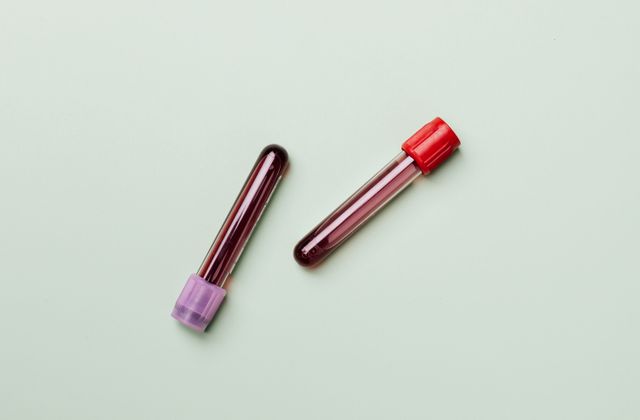
The phlebotomist arrives with a sealed kit and confirms your name before touching anything. You sit down, they tie a band around your upper arm and tap the crook of your elbow to coax a vein into view. The needle prick is a sharp pinch that lasts about two seconds, then a dull pressure while the tubes fill one after another. A full panel like Profile C needs a few tubes, but it is still one needle insertion, not one per test: the blood gets divided among the tubes at the lab's end. When the band comes off, a cotton ball goes on the spot and tape holds it down. Five minutes, start to finish. The tubes get labelled in front of you, with your name on each, and off they go to the lab.
Two practical tips from our counter staff. First, drink water before the draw. Hydrated veins are easier to find, and the whole thing goes faster. Second, if you tend to feel woozy around needles, say so upfront. Nobody at a lab judges that; we hear it daily, and sitting for an extra minute with the cotton ball taped on beats a wobbly walk to the door.
Afterwards, keep the cotton ball pressed on for ten minutes or so, and skip heavy lifting with that arm for the rest of the day. A small bruise at the puncture site is common and fades within days; a little tenderness the next morning is normal too. What is not normal is swelling that keeps growing or bleeding that will not stop with pressure, in which case call the lab the same day. These sound dramatic written down, but in practice almost everyone walks out, forgets about the arm within an hour, and remembers only when the PDF arrives.
The morning-fast question, answered straight
"Do I need to fast?" is probably the second most asked question after the letter mystery, and the answer for Profile C is: usually yes, morning fasting.
There are two reasons, and both are about accuracy rather than ritual. First, serum iron has a daily rhythm: it runs higher in the morning and drifts down through the day. A morning draw after an overnight fast gives the most stable, most comparable reading. Second, a recent meal, and especially any iron or multivitamin tablet taken that morning, can push the numbers around. Laboratory guidance says to skip iron supplements for 24 hours before the draw for exactly this reason.
So the routine is simple: nothing to eat after dinner, plain water is fine, and take your regular medicines only if your doctor said to. If you forget and eat breakfast, call us before the draw rather than after. A rescheduled morning beats a wasted sample, and nobody minds; it happens every week.
One edge case: if your doctor ordered the panel urgently, mid-day, without fasting, that is also fine. The numbers still work; the doctor just reads them with the timing in mind. Fasting is the preferred condition, not a magic requirement.
Who gets the biggest panel (and who doesn't need it)
Not everyone with low haemoglobin needs the full C. Honesty first: if your last three reports all showed the same mild iron deficiency and you are already on the treatment plan, your doctor will likely monitor you with a smaller panel. The full C earns its keep in specific situations:
- The cause is not obvious. Haemoglobin is low, but nothing in the history points clearly at iron, B12, or folate. C checks every road at once instead of guessing one road at a time.
- Borderline reports that never resolve. Months of "slightly low" readings where each follow-up visit orders one more test. C ends that slow drip of appointments.
- Mixed symptoms. Fatigue plus tingling hands pushes the question toward B12; heavy periods plus breathlessness pushes it toward iron. When the body is telling two stories, C reads both.
- Before a planned treatment course. Doctors sometimes want the complete baseline on record: where iron, B12 and folate each stood before anything was corrected, so follow-up reports can be compared marker to marker.
- Pregnancy planning or early pregnancy. Demand for all three nutrients rises, and folate status in particular matters early. Your doctor decides the timing.
And who can skip it? If your doctor wrote A or B on the slip, book A or B. The letters are not ranks to climb; they are options matched to the clinical question. Booking C when the doctor asked for A wastes your money and answers questions nobody asked. Book the letter on the slip. If the slip is unclear, a two-minute call to 84250 40353 settles it.
Two bundle upgrades worth knowing about
A quick word on packaging, because the site lists a few things that look similar and the names blur together.
The markers in Profile C also come wrapped inside broader health checkups. If your doctor's question goes beyond anaemia, if they want the anaemia markers plus a general health sweep, the Anemia Profile package and the Comprehensive Anemia Profile package bundle these same markers into wider screening. Think of it this way: Profile C is the deep dive on one question; the packages are the deep dive plus the neighbourhood. Which one fits depends on what your doctor is investigating, and the packages page lays out exactly what each includes.
You can browse the full list of health checkups on our packages page, or the tests page if you want to compare individual tests instead. And if you are comparing the letters themselves, our write-ups on Anemia Profile - A and Anemia Profile - B cover what the smaller bundles include, so you can see exactly what each extra letter buys.
What it costs and how to book in Mumbai
We do not print prices in articles because they change, so check the live price on the Anemia Profile - C test page before you book. That page also lists the exact parameters in the bundle, which is worth a glance so you know precisely what your tube will cover.
Booking is straightforward: call or message 84250 40353 and mention the letter on your slip. Bring the doctor's slip if you have it, or just tell us the letter; either way we book exactly what was ordered, nothing more. The lab runs 24x7, the report lands in about 24 hours as a PDF, and home collection is free across Malad, Kandivali, Borivali and Goregaon.
A small request from the people who answer the phones: if your slip has handwriting that could be a B or a C (it happens more than you would think), read it out to us before you book. Two minutes of confirmation beats a redraw.
Quick answers to the questions we hear most
Does the C mean my anaemia is the severe kind? No. The letter marks which bundle your doctor picked, not how serious your condition is. C is the most extensive bundle in the series: more markers, not more danger.
Do I need to fast before Profile C? Usually yes, morning fasting. Skip food after dinner, plain water is fine, and avoid iron or multivitamin tablets for 24 hours before. If you ate by mistake, call before the draw and we will reschedule the morning.
How much blood do they take for the full panel? A few small tubes from a single needle insertion, roughly a few teaspoons in total. Your body replaces that volume within hours; drink water and eat normally afterwards.
How soon will I get the report? About 24 hours, delivered as a PDF. Every line carries its own reference range printed next to it.
Can the sample be collected at home? Yes. Free home collection across Malad, Kandivali, Borivali and Goregaon. The phlebotomist brings a sealed kit, labels your tubes in front of you, and the draw takes about five minutes.
My doctor wrote Profile B but I see A and C too. Which do I book? Book exactly the letter on the slip. The letters are options matched to the clinical question, not ranks to climb. If the slip is unclear, call 84250 40353 and we will help you read it.
Will iron pills I am already taking change my results? They can, especially serum iron and ferritin. Tell your doctor what you are taking before the draw; laboratory guidance is to skip iron supplements for 24 hours before, but follow your doctor's instruction over a general rule.
My ferritin came back normal but I am still tired. What gives? Ferritin rises during inflammation and infection even when iron stores are low, so a "normal" ferritin does not close the case. That is why the panel also measures transferrin saturation and the red-cell indices: your doctor reads the pattern, and low transferrin saturation with small red cells can reveal deficiency hiding behind a normal ferritin.
Is this panel okay during pregnancy? Doctors order anaemia panels in pregnancy often, since demand for iron and folate rises. Ranges and cutoffs shift in pregnancy, so your doctor interprets the report against pregnancy-appropriate references. Mention the pregnancy when you book.
Can men need Profile C too, or is this mostly a women's test? Men get it too. Gut bleeding, poor absorption, vegetarian diets low in B12, and chronic disease do not check gender. The haemoglobin cutoff differs for men, but the panel's logic is the same.
The short list to carry home
The letter names the bundle. The numbers name the condition. One morning draw, fasting, covers your red-cell indices, your iron studies, your storage iron, your B12 and your folate. Read every number against the range printed on your own report, because ranges vary by laboratory.
A single flag is a hint, never a diagnosis. The pattern across the markers is what your doctor uses, and if the slip says C, you are getting the version that answers every question at once, which is the most convenient kind of thorough.
References
- WHO: Haemoglobin thresholds for anaemia (adult men <13 g/dL, adult non-pregnant women <12 g/dL, pregnant women <11 g/dL), and iron-status indicators guidance.
- Mayo Clinic Laboratories: Iron and Total Iron-Binding Capacity test definition (ferritin as primary test for iron deficiency; 8-hour fasting preferred; avoid iron supplements 24 hours before; morning draw preferred); Vitamin B12 and Folate test definition (B12 reference 180–914 ng/L, <150 evidence of deficiency; folate ≥4.0 mcg/L).
- BJGP Open 2024: Threshold values for defining anaemia, iron, B12 and folate deficiency (MCV bands; serum ferritin <30 ng/mL for absolute iron deficiency; B12 <200 pg/mL; folate <3 ng/mL).
- Deranged Physiology: Interpretation of abnormal iron studies (iron deficiency pattern: low MCV/MCHC, low serum iron, low ferritin, high transferrin/TIBC, transferrin saturation <20%; ferritin as acute-phase reactant).
Book these tests at home
Live prices · free home sample collection in Malad, Kandivali, Borivali & Goregaon
Complete Blood Count (CBC)
- Report in 12 hrs
- Free home collection
Iron Studies
- Report in 24 hrs
- Free home collection
Ferritin
- Report in 24 hrs
- Free home collection
Vitamin B12
- Report in 24 hrs
- Free home collection
Folate (Folic Acid)
- Report in 24 hrs
- Free home collection
More tests related to this topic
Other Anemia tests you can book with free home sample collection.
Alpha thalassemia gene analysis
- Report in 168 hrs
- Free home collection
Beta - Thalassemia Screenig
- Report in 24 hrs
- Free home collection
Beta - Thalassemia Screenig with Graph
- Report in 24 hrs
- Free home collection
CBC & Pheripheral Blood Smear
- Report in 48 hrs
- Free home collection
CBC - Complete Hemogram Test(28)
- Report in 12 hrs
- Free home collection
G6PD (Glucose - 6 - Phosphate Dehydrogenase) EDTA Whole Blood
- Report in 12 hrs
- Free home collection
Haptoglobin Serum
- Report in 24 hrs
- Free home collection
Hemoglobin
- Report in 24 hrs
- Free home collection
Hemoglobin - Free, Urine
- Report in 24 hrs
- Free home collection
Hemoglobinopathies Profile - HbF/HbS
- Report in 48 hrs
- Free home collection
Hemoglobinopathies Profile - HbF/HbS (with Graph)
- Report in 48 hrs
- Free home collection
Iron
- Report in 24 hrs
- Free home collection
Get more from the same visit
Health packages that already include these tests, and tests people usually add.
Frequently asked questions
Does the C mean my anaemia is the severe kind?
No. The letter marks which bundle your doctor picked, not how serious your condition is. C is the most extensive bundle in the series: more markers, not more danger.
Do I need to fast before Profile C?
Usually yes, morning fasting. Skip food after dinner, plain water is fine, and avoid iron or multivitamin tablets for 24 hours before. If you ate by mistake, call before the draw and we will reschedule the morning.
How much blood do they take for the full panel?
A few small tubes from a single needle insertion, roughly a few teaspoons in total. Your body replaces that volume within hours; drink water and eat normally afterwards.
How soon will I get the report?
About 24 hours, delivered as a PDF. Every line carries its own reference range printed next to it.
Can the sample be collected at home?
Yes. Free home collection across Malad, Kandivali, Borivali and Goregaon. The phlebotomist brings a sealed kit, labels your tubes in front of you, and the draw takes about five minutes.
My doctor wrote Profile B but I see A and C too. Which do I book?
Book exactly the letter on the slip. The letters are options matched to the clinical question, not ranks to climb. If the slip is unclear, call 84250 40353 and we will help you read it.
Will iron pills I am already taking change my results?
They can, especially serum iron and ferritin. Tell your doctor what you are taking before the draw; laboratory guidance is to skip iron supplements for 24 hours before, but follow your doctor's instruction over a general rule.
My ferritin came back normal but I am still tired. What gives?
Ferritin rises during inflammation and infection even when iron stores are low, so a "normal" ferritin does not close the case. That is why the panel also measures transferrin saturation and the red-cell indices: your doctor reads the pattern, and low transferrin saturation with small red cells can reveal deficiency hiding behind a normal ferritin.
Is this panel okay during pregnancy?
Doctors order anaemia panels in pregnancy often, since demand for iron and folate rises. Ranges and cutoffs shift in pregnancy, so your doctor interprets the report against pregnancy-appropriate references. Mention the pregnancy when you book.
Can men need Profile C too, or is this mostly a women's test?
Men get it too. Gut bleeding, poor absorption, vegetarian diets low in B12, and chronic disease do not check gender. The haemoglobin cutoff differs for men, but the panel's logic is the same.
HWP Diagnostic Editorial Team
Health guides written by the team at HWP Diagnostic, Mumbai, to help you understand your tests before you book. This article is for general education and is not a substitute for medical advice - reference ranges vary between labs, so always discuss your results with your doctor. Read our editorial policy. Photos: Pexels.