
Key takeaways
- After 60, yellow eyes are never just weakness. Get bilirubin checked; the eyes show it once the level crosses about 2.5 mg/dL.
- Which bilirubin fraction is high tells the doctor where the problem is: direct points at the liver or bile ducts, indirect points at red-cell breakdown.
- In seniors, blocked bile ducts lead the suspect list and medicines come next.
- Hepatitis A is usually mild, but after 50 it can turn serious. A positive IgM means current or recent infection; IgG alone means lifelong immunity.
- A hepatitis A vaccine exists, two doses, no upper age limit. Ask your doctor if you travel or have liver disease.
- Bring every medicine and supplement strip to the appointment. The medicine list matters as much as the blood test.
Book tests from this article
Sample collected at home - free
- Anti Hepatitis A Virus (ANTI HAV) - IgM
₹1,049₹1,39925% off
- Serum Bilirubin - Total & Direct
₹349₹44922% off
- Alanine Transaminase (SGPT)
₹199₹29933% off
Free collection 24 hr reports
Your eye whites turn yellow before anything else does. That's the cruel part about jaundice: the first sign shows up in the mirror, usually in the morning, and it refuses to be ignored. If you're past 60 and this has happened to you or your parent, here's the straight answer. Jaundice after 60 is a different medical question than jaundice at 30, and the blood tests your doctor orders reflect that difference. This guide walks through what the yellowing means, which tests sort out the cause, and how Mumbai seniors can get the whole thing done from home.
Start with three questions you can answer at home
Before you read another word, look for three things.
First, the whites of the eyes. Scleral icterus, as doctors call it, is the most sensitive early sign. Yellowing becomes visible when total bilirubin crosses roughly 2.5 mg/dL, and the eyes show it before the skin does. If your skin looks fine but your eyes have a yellow tinge in daylight, that counts.
Second, the urine. Dark, tea-colored urine that stays dark even when you drink water is a classic clue that conjugated bilirubin is spilling into the urine. Pale, clay-colored stools are its twin: they mean bile isn't reaching the gut in normal amounts. Dark urine plus pale stools together point strongly at the bile ducts.
Third, pain and weight loss. Painless jaundice with unexplained weight loss in an older person is the combination doctors take most seriously, because it can signal a blockage caused by something growing where it shouldn't. Jaundice with right-sided belly pain and fever leans more toward gallstones. Jaundice with nausea, loss of appetite and flu-like aches leans more toward hepatitis.
None of this diagnoses anything on its own. But these three questions tell you how urgent the next step is. Painless jaundice with weight loss: see a doctor this week, don't wait for the next month. Fever with belly pain: don't wait at all, a blocked and infected duct is an emergency. Everything else: get your blood work done promptly, because in seniors jaundice is almost never something to watch and hope it fades.

Why 60 changes the whole question
In a 25-year-old, jaundice is usually hepatitis: a virus inflaming the liver cells. In someone past 60, the odds reshuffle completely.
Medical textbooks are blunt about this. In older people, jaundice is most often caused by something blocking the bile ducts, and when a blockage turns out to be a growth, the suspicion rises with age. A large review of adult jaundice cases found roughly 55 percent of cases come from inside the liver (viral hepatitis, alcohol-related disease, medicine-induced injury) and 45 percent from outside it (gallstones, blocked ducts, malignancy). The split tilts toward the "outside the liver" causes as people get older, because gallstone disease and pancreatic and bile-duct growths get more common with age.
There are honest reasons for this. Gallstones accumulate over decades. The list of daily medicines grows longer every decade, and the liver processes every one of them. Fatty liver that started silently at 40 can reach cirrhosis by 65. And the immune system's margin for error shrinks, so infections like hepatitis A that a young adult shrugs off in three weeks can put a 70-year-old in hospital.
So a senior's jaundice workup is not "check for hepatitis and go home." It's a sorting exercise: liver cells or bile ducts, infection or medicines or stones. The blood tests are the sorting tool. Among the viral suspects, one has a blood test worth knowing by name: the anti-HAV IgM test, which detects a current or recent hepatitis A infection and stays positive for about six months after the illness.
The four usual suspects after 60
Let's meet them properly, because the tests below only make sense once you know what they're hunting.
Gallstones and blocked bile ducts. This is the senior's most common cause. A stone slips out of the gallbladder and lodges in the common bile duct, or a stricture narrows the duct, and bile backs up into the blood. The telltale signs are deep itching, dark urine, pale stools, and jaundice that deepens over days. Pain may or may not be present.
Medicines. This one surprises families. The liver metabolizes nearly every drug you swallow, and with age, polypharmacy becomes the norm: a BP tablet, a statin, diabetes medicine, an occasional antibiotic, a painkiller for the knees. Research on drug-induced liver injury in elderly patients keeps finding the same pattern: older age plus multiple medicines is the risk combination, and the common culprits include paracetamol (in excess), certain antibiotics like amoxicillin-clavulanate, and statins. The injury can look exactly like viral hepatitis on a blood report, which is why the doctor's first question is always about what you started taking in the last few months.
Hepatitis viruses. Hepatitis A gets called a childhood disease in India, and there's truth in it: in endemic areas most people meet the virus as children, often without symptoms, and walk away immune for life. But not everyone. Seniors who grew up in cleaner urban settings, or who simply escaped childhood exposure, can still catch it as adults, and in them it's a different illness. More on that below. Hepatitis B and C, the chronic ones, also surface in seniors: a person can carry hepatitis B or C quietly for decades and only show jaundice when the liver finally struggles.
Fatty liver and cirrhosis, plus alcohol. Non-alcoholic fatty liver disease has become one of the commonest liver conditions in Indian cities, and it ages with you. By 60-plus, long-standing fatty liver can progress to scarring. Alcohol adds its own damage on top. The blood pattern here is usually a slow burn: enzymes creeping up over years of annual checkups before jaundice ever appears.
What bilirubin is, and why the lab splits it in two
Every jaundice story starts with bilirubin, so it's worth the two minutes to understand it.
Bilirubin is the yellow pigment left over when old red blood cells break down. Your body makes it constantly. The liver's job is to process it: take it in, attach a chemical tag (doctors call this conjugation), and dump the tagged version into bile, which carries it out through the gut. Untagged bilirubin is called indirect or unconjugated; tagged bilirubin is called direct or conjugated. Your report lists all three numbers: total, direct, and indirect.
The normal ranges most labs use are roughly 0.3 to 1.9 mg/dL for total bilirubin and up to 0.3 mg/dL for direct. Ranges vary by laboratory, so always read your own report's reference column, but those numbers are the neighborhood. Visible yellowing starts around 2.5 mg/dL.
Here's why the split matters more than the total. If the direct fraction is the one climbing, the liver processed the bilirubin fine but couldn't get rid of it. Something downstream is wrong: inflamed liver cells that can't push bile out, or blocked ducts. If the indirect fraction is climbing while everything else looks normal, the problem is upstream of the liver: red cells breaking down too fast, or a harmless inherited quirk like Gilbert syndrome where the liver just tags bilirubin a bit slowly. Direct-high means look at the liver and the plumbing. Indirect-high means look at the blood.
Patients often ask us at the counter why the report shows three bilirubin numbers when the doctor only talked about one. The answer is that the third number does the sorting. Indirect is just total minus direct, calculated, not measured separately, and the ratio between the two is what the doctor reads. A report that says total 6.2 with direct 5.1 tells a completely different story from total 6.2 with direct 0.8, even though the headline number is identical. Same total, different disease, different next test. That's why a "bilirubin test" that only reports the total is half a test; always get the fractions.
When your report shows bilirubin, total and direct, that two-number split is doing half the diagnostic work before the doctor even sees you.
When the pattern points at the liver cells
Now the enzymes. Two of them, SGPT (also called ALT) and SGOT (also called AST), live inside liver cells. When liver cells are injured or inflamed, these enzymes leak into the blood.
The hepatitis pattern is unmistakable: SGPT and SGOT shoot up, often into the hundreds or thousands, while the bile-duct enzyme alkaline phosphatase (ALP) rises only modestly. Bilirubin climbs in a mixed pattern, both fractions up. This is what acute viral hepatitis looks like, and what drug-induced liver injury often mimics.
At our lab in Malad, we see this pattern spike every monsoon in the hepatitis A reports. The numbers tell a consistent story: enzymes in the high hundreds, bilirubin climbing, and a patient who felt perfectly fine three weeks ago. The good news about this pattern is that liver cells regenerate. Once the cause is gone, enzymes usually fall over weeks.
One important senior-specific note: medicines produce this exact pattern too. If a 68-year-old on five daily tablets shows a hepatitis-like report, the doctor doesn't just test for viruses. They line up every strip and bottle on the desk and ask when each one started. We've watched families realize at the counter that the "new sugar medicine" or the "knee pain tablet" began six weeks before the yellowing. That timeline is diagnostic gold, so keep it.
When the pattern points at the plumbing
The obstruction pattern is the mirror image. Here alkaline phosphatase climbs high, often two to three times normal or more, while SGPT and SGOT rise only mildly. Bilirubin climbs too, mostly the direct fraction. The patient itches. Urine darkens. Stools turn pale.
ALP has a quirk that makes one more test essential: it also rises when bones are turning over, which happens in seniors with bone disease. So doctors pair ALP with GGT. If both ALP and GGT are up, the source is the bile ducts. If ALP is up but GGT is normal, the source is probably bone, not liver. That two-test pairing settles arguments that one test alone can't.
When the blood pattern says obstruction, the next step isn't more blood. It's an ultrasound of the upper abdomen to look at the gallbladder, the bile duct width, and whether a stone is sitting where it shouldn't. Blood tests sort; imaging confirms. That's the division of labor, and knowing it saves you from expecting the lab to give you the final answer.
Hepatitis A at 60: the "childhood" virus that isn't
This deserves its own section, because the anti-HAV IgM test is the one blood test that specifically answers "do I have hepatitis A right now," and seniors misunderstand this virus more than any other.
First, what the test actually detects. When hepatitis A virus enters your blood, your immune system makes IgM antibodies against it within days. The CDC's serology guidance puts the window precisely: IgM anti-HAV becomes detectable about 5 to 10 days before symptoms start and stays detectable for roughly six months after infection. So a positive IgM means a current or very recent infection. There's a companion marker, IgG anti-HAV, which appears around the same time but never leaves: it's the lifelong immunity certificate. IgM means "now." IgG means "sometime in the past, and you're protected."
Second, why age matters so much. In children under six, about 70 percent of hepatitis A infections cause no symptoms at all. In adults, more than 70 percent develop jaundice. The illness gets more severe as the patient gets older: overall fatality runs 0.3 to 0.6 percent, but in adults over 50 it reaches up to 1.8 percent, and US surveillance data shows hepatitis A mortality peaking in people 65 and older. About 10 to 15 percent of patients get a prolonged or relapsing course lasting up to six months. Hepatitis A never becomes chronic, which is the genuine good news, but "not chronic" and "not serious" are different things at 70.
Third, how seniors actually catch it in Mumbai. The virus spreads through the fecal-oral route: contaminated water, food handled with unwashed hands, street food during the monsoon when drainage overflows. Most Mumbaikars met it in childhood and are immune. But immunity isn't universal. Seniors who grew up in households with filtered water and careful food hygiene sometimes reached adulthood without ever meeting the virus, and they stay susceptible. Travel is the other route: a senior visiting relatives abroad or going on pilgrimage can pick it up anywhere sanitation slips.
Fourth, the vaccine question, because it comes up at our counter constantly. Yes, you can get the hepatitis A vaccine at 65, 75, any age. There is no upper age limit. The standard adult course is two doses given 6 to 12 months apart, and about 95 percent of adults develop protective antibodies within a month of the first dose. The CDC recommends it for international travelers, people with chronic liver disease, and frankly anyone who wants protection. If you've already had hepatitis A once, you're immune for life and don't need the vaccine. A quick blood test for total anti-HAV antibodies can settle the "am I already immune?" question, though doctors often just vaccinate without testing.
If your parent develops sudden jaundice with nausea and dark urine a few weeks after a bout of street food or a trip, the anti-HAV IgM test is one of the first things the doctor orders. At our lab the blood draw for it is no different from any other: one small tube, results in about 24 hours.
Why medicines top the suspect list after 60
After gallstones, medicines are the commonest reason a senior turns yellow, and the reason is arithmetic. A 35-year-old takes maybe one tablet. A 68-year-old often takes five or six: blood pressure, cholesterol, diabetes, a blood thinner, something for the knees, an occasional antibiotic. Every one of those passes through the liver. Researchers who study drug-induced liver injury in older patients keep landing on the same finding: age plus polypharmacy is the risk combination, and it's not one bad drug, it's the pile-up.
The usual culprits in geriatric studies read like a medicine cabinet inventory. Paracetamol taken above the safe limit over weeks. The antibiotic combination amoxicillin-clavulanate, which has one of the highest reported rates of liver injury among commonly used drugs. Statins for cholesterol. Certain TB medicines, some anti-seizure drugs, and a long tail of herbal and ayurvedic preparations that never went through the safety testing prescription drugs did.
Here's what makes medicine-related jaundice tricky: on a blood report it can look exactly like viral hepatitis. SGPT and SGOT climb, bilirubin climbs, and nothing in the numbers says "this was a tablet, not a virus." The clue is in the timeline. Most medicine-related liver injury shows up between two weeks and three months after starting the drug, though some drugs take far longer. That's why the doctor's first question isn't "which test next" but "what did you start taking recently." A medicine started six weeks ago and yellowing that began last week is a story the blood tests then confirm, not the other way around.
There's one more uncomfortable truth families should hear. The supplement that "can't hurt because it's natural" absolutely can. Herbal and dietary products are among the commonest causes of liver injury in published case series, partly because nobody regulates their contents the way prescription drugs are regulated, and partly because patients don't mention them. If it goes into your mouth regularly, it goes through your liver. The doctor needs to know about all of it.
The medicines conversation, done right
Since medicines are one of the top suspects in senior jaundice, here's the direct guidance. Read each pair together.
New medicines in the last 3 months
Do: make a complete list of everything you started, stopped, or changed dose on in the last three months, including antibiotics, painkillers, new BP or diabetes tablets, and anything a different doctor prescribed without knowing your full list. Bring the actual strips to the appointment.
Don't: stop a prescribed heart or BP medicine on your own because jaundice appeared. Some of these drugs are dangerous to stop suddenly. Flag the suspicion to your doctor and let them decide the order of stopping.
Paracetamol and home remedies
Do: tell the doctor honestly about paracetamol use, including the "just two tablets for the knee pain" that became two tablets daily for a month. In excess, the commonest household painkiller is one of the commonest causes of liver injury in older adults.
Don't: assume "it's just Crocin, it can't harm the liver." Dose and duration are what matter, and older livers handle less of both.
Herbal supplements, kadha and "liver tonics"
Do: list every ayurvedic preparation, herbal capsule, kadha, and "liver tonic" alongside prescription drugs. Some herbal products have well-documented liver toxicity, and doctors can't evaluate what they don't know about.
Don't: take a liver tonic to treat jaundice while waiting for tests. An unregulated supplement added to an already struggling liver is the opposite of help.
The blood-test sequence your doctor will actually order
Nobody orders every test at once. Here's the usual order, so the process feels less mysterious.
Step one is the liver function test (LFT) panel. It's the sorting hat: bilirubin fractions, SGPT, SGOT, ALP, GGT, proteins, albumin. One blood draw, and the pattern (hepatitis-like vs obstruction-like) emerges. If your annual checkup already flagged high bilirubin, this is the confirmatory next step.
Step two is the viral panel. Hepatitis A IgM for recent infection, hepatitis B and C markers for the chronic viruses that can surface late in life. Our earlier guides on hepatitis B testing and hepatitis C myths cover those two in depth; the short version is that both are blood tests, both matter in seniors, and both are treatable or manageable once found.
Step three is imaging. If the pattern says obstruction, an abdominal ultrasound looks for gallstones, duct widening, and masses. Blood can't see a stone. This is also the step that catches fatty liver, which brings us to a related read: our guide to fatty liver blood tests explains the slow-burn pattern many seniors carry for years before jaundice appears.
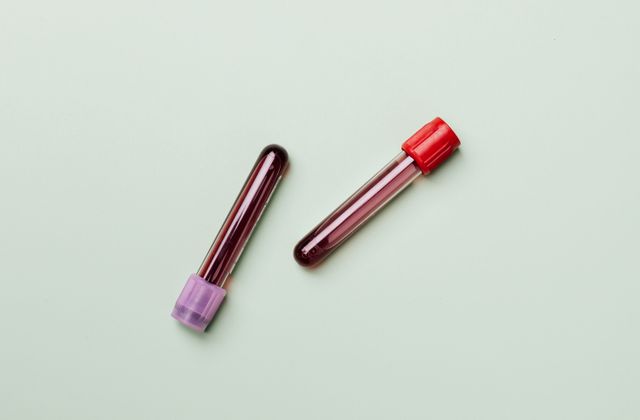
The blood draw itself is the least dramatic part of the whole process. The phlebotomist ties the band, finds a vein, and the needle prick is a sharp second of pressure. A cotton ball gets taped to the crook of your arm. For seniors with fragile veins, a home-collection visit is genuinely easier than a lab trip: no waiting-room chairs, no fasting-morning traffic to Malad. You sit in your own chair, and the report lands in about 24 hours.
One thing families get wrong is the order of operations. They book the ultrasound first because "we need to see what's inside." But imaging without the blood pattern is guesswork: the radiologist needs to know whether they're looking for stones in a dilated duct or confirming a shrunken, scarred liver. Blood first, then imaging, then the doctor puts both together. Follow that order and you avoid paying for the wrong scan.
One practical note on fasting. Bilirubin and liver enzymes don't strictly require fasting at every lab, but morning fasting samples give the cleanest, most comparable numbers, and if the doctor might add a lipid or sugar test to the same draw, fasting covers all of it. Our standing advice: an overnight fast of 8 to 10 hours, water allowed, medicines taken as usual unless your doctor says otherwise.
Questions seniors ask at the counter
These are real questions, paraphrased from what we hear.
My eyes are only slightly yellow. Do I need a test today? Slight yellowing limited to the eyes still means bilirubin is above roughly 2.5 mg/dL, which is already several times normal. Get a bilirubin test this week. "Slight" describes what you see, not what's happening inside.
Can a new medicine alone cause jaundice? Yes. Drug-induced liver injury is one of the commonest causes of jaundice in older adults, and it can mimic viral hepatitis exactly on a blood report. The three-month medicine history is as important as any test.
Is hepatitis A possible if I've never traveled abroad? Absolutely. In Mumbai the virus circulates in food and water, especially during the monsoon. Travel raises the risk, but plenty of infections come from a roadside meal.
What's the difference between IgM and IgG on a hepatitis report? IgM means the infection is current or recent, within roughly the last six months. IgG means past infection or vaccination, with lifelong protection. A report showing IgG alone and no IgM is good news: you're immune.
Do I need to fast for a bilirubin or LFT test? An overnight fast of 8 to 10 hours gives the cleanest result. Water is fine. Take your regular medicines unless your doctor says otherwise.
My bilirubin is high but SGPT is normal. What does that mean? It points away from liver-cell injury and toward either a bile-flow problem (check the direct fraction and ALP) or red-cell breakdown or Gilbert syndrome (if the indirect fraction leads and everything else is normal). Your doctor reads the pattern, not the single number.
Should I stop my medicines if jaundice appears? Not on your own. Tell your doctor everything you're taking, including supplements, and let them decide what pauses and what continues. Stopping some cardiac and BP drugs abruptly is riskier than the jaundice.
Can I get the hepatitis A vaccine at my age? Yes. No upper age limit, two doses, highly effective. Ask your doctor, especially if you travel or have any liver condition.
How soon do reports come, and who explains them? At our lab, routine liver reports are ready in about 24 hours, and the lab is open 24x7. But the lab explains what the numbers are; what they mean for you is your doctor's call. Bring the report to the appointment, not to WhatsApp groups.
Getting it done from home after 60
For a senior with jaundice, the logistics matter as much as the medicine. Feeling nauseous and yellow is exactly when you don't want to navigate traffic to a lab.
Home sample collection works the way you'd hope. You book on 84250 40353, choose a morning slot, and the phlebotomist arrives with everything needed. Seniors often worry about "difficult veins." An experienced collector warms the arm, takes their time, and usually gets it on the first attempt. The cotton ball taped to your arm afterward does the job; keep it pressed for a few minutes and skip lifting anything heavy with that arm for the day.
The tests in this guide's workup, the bilirubin fractions, SGPT, SGOT, ALP, the anti-HAV IgM test, all come from the same single blood draw. There's no need for multiple visits. And because jaundice workups often lead to broader liver evaluation, it's worth knowing the bundles: the liver function test panel covers the core markers in one booking, and for a fuller picture the Liver Health Checkup - Basic or the Complete Liver Health Panel wrap the liver markers into a single package. If your doctor is thinking about general screening rather than jaundice specifically, our health packages page lists the full-body options too.
What to remember
Yellow eyes after 60 are never "just weakness" or "eating too much mango." Get bilirubin checked promptly; the eyes show yellowing once the level crosses about 2.5 mg/dL, which is already well above normal.
Which bilirubin fraction is high tells the doctor where to look. Direct bilirubin points at the liver or the bile ducts. Indirect points at red-cell breakdown. The pattern of SGPT, SGOT and ALP then separates hepatitis-like injury from bile-duct obstruction.
In seniors, blocked bile ducts lead the suspect list, medicines come next, and viral hepatitis, especially hepatitis A caught late in life, hits harder than it does in the young. The anti-HAV IgM test answers the hepatitis A question definitively: positive means a current or recent infection, and IgG alone means lifelong immunity.
And bring every medicine strip to the appointment. In our experience, the plastic bag of tablets a family member carries in often matters as much as the blood report. If you or your parent needs the workup done without leaving home, free home collection runs across Malad, Kandivali, Borivali and Goregaon, reports in about 24 hours, on 84250 40353.
References
CDC: Clinical Screening and Diagnosis for Hepatitis A CDC: Pinkbook Chapter 9: Hepatitis A CDC: Hepatitis A Vaccine Administration and VIS NIH MedlinePlus: Bilirubin blood test Cleveland Clinic: Bilirubin Test: Understanding High vs. Low Levels Merck Manual (Consumer): Jaundice in Adults
Book these tests at home
Live prices · free home sample collection in Malad, Kandivali, Borivali & Goregaon
Anti Hepatitis A Virus (ANTI HAV) - IgM
- Report in 24 hrs
- Free home collection
Serum Bilirubin - Total & Direct
- Report in 24 hrs
- Free home collection
Alanine Transaminase (SGPT)
- Report in 24 hrs
- Free home collection
Aspartate AminoTransferase (SGOT )
- Report in 24 hrs
- Free home collection
Alkaline Phosphatase
- Report in 24 hrs
- Free home collection
More tests related to this topic
Other Liver tests you can book with free home sample collection.
24 hour Albumin creatinine ratio (ACR)
- Report in 24 hrs
- Free home collection
Albumin
- Report in 24 hrs
- Free home collection
Albumin creatinine ratio (ACR) - Spot sample
- Report in 24 hrs
- Free home collection
Alkaline Phosphatase Isoenzymes Electrophoresis, Serum
- Report in 24 hrs
- Free home collection
Anti - Hepatitis B Surface antibodies (Anti - HBs titre)
- Report in 24 hrs
- Free home collection
Anti HCV IgM
- Report in 24 hrs
- Free home collection
Anti Hepatitis A Virus (ANTI HAV) - IgG
- Report in 24 hrs
- Free home collection
Anti Hepatitis B Core Antibody (AHBC) - IGM
- Report in 24 hrs
- Free home collection
Anti Hepatitis B Core Antibody (AHBc) - Total
- Report in 24 hrs
- Free home collection
Anti Hepatitis B Envelope Antibody (AHBe) - Total
- Report in 24 hrs
- Free home collection
Anti Hepatitis C Virus (HCV) - Total
- Report in 24 hrs
- Free home collection
Anti Hepatitis E Virus (HEV) - IgG
- Report in 24 hrs
- Free home collection
Get more from the same visit
Health packages that already include these tests, and tests people usually add.
Frequently asked questions
My eyes are only slightly yellow. Do I need a test today?
Slight yellowing of the eyes still means bilirubin is above roughly 2.5 mg/dL, several times normal. Get a bilirubin test this week rather than waiting.
Can a new medicine alone cause jaundice?
Yes. Drug-induced liver injury is one of the commonest causes of jaundice in older adults and can mimic viral hepatitis exactly on a blood report. The three-month medicine history matters as much as any test.
Is hepatitis A possible if I have never traveled abroad?
Absolutely. The virus circulates in food and water in Mumbai, especially during the monsoon. Travel raises the risk, but many infections come from local food.
What is the difference between IgM and IgG on a hepatitis report?
IgM means the infection is current or recent, roughly within the last six months. IgG means past infection or vaccination, with lifelong protection.
Do I need to fast for a bilirubin or LFT test?
An overnight fast of 8 to 10 hours gives the cleanest result. Water is fine, and take regular medicines unless your doctor says otherwise.
My bilirubin is high but SGPT is normal. What does that mean?
It points away from liver-cell injury: either a bile-flow problem if the direct fraction and ALP are high, or red-cell breakdown or Gilbert syndrome if the indirect fraction leads and everything else is normal.
Should I stop my medicines if jaundice appears?
Not on your own. List everything for your doctor, including supplements, and let them decide. Stopping some heart and BP drugs abruptly is riskier than the jaundice.
Can I get the hepatitis A vaccine at my age?
Yes. There is no upper age limit, the course is two doses, and it is highly effective. Ask your doctor, especially if you travel or have a liver condition.
How soon do liver test reports come?
At our lab, routine liver reports are ready in about 24 hours and the lab is open 24x7. Bring the report to your doctor for interpretation.
HWP Diagnostic Editorial Team
Health guides written by the team at HWP Diagnostic, Mumbai, to help you understand your tests before you book. This article is for general education and is not a substitute for medical advice - reference ranges vary between labs, so always discuss your results with your doctor. Read our editorial policy. Photos: Pexels.