Key takeaways
- HPLC separates your haemoglobin into types and measures each as a percentage; it is the standard screening method for beta-thalassemia trait.
- HbA2 above about 3.5% flags trait; the typical trait band runs roughly 3.6 to 7%, and laboratory ranges vary, so always read your number against your own report's reference range.
- Trait means one changed gene. Carriers are healthy, need no treatment, and will never develop the disease.
- Do not take iron for trait-related anaemia unless a blood test has shown you are actually iron deficient.
- Iron deficiency can mask trait and B12/folate deficiency can fake it; correct both before trusting a borderline result.
- A recent blood transfusion can distort the pattern; tell the lab, and know that DNA testing is the fallback for transfused patients.
- Screen before pregnancy when possible, ideally with both partners tested; if both are carriers, genetic counselling lays out the options.
Book tests from this article
Sample collected at home - free
- Complete Blood Count (CBC)
₹199₹59967% off
- Ferritin
₹949₹1,29927% off
Free collection 24 hr reports
The 60-second version
Here is everything you need to know about the thalassemia HPLC test in half a minute. It is a blood test that separates your haemoglobin into its different types and measures each one as a percentage. Haemoglobin is the protein inside your red blood cells that carries oxygen. Most adults carry mainly one type, called HbA, plus a small amount of a second type called HbA2. If your HbA2 comes back higher than about 3.5%, that flags beta-thalassemia trait, which means you carry one changed copy of the gene. Trait is not the disease. Carriers are healthy, they need no treatment, and they will never develop thalassemia. The reason doctors push this test before marriage or pregnancy is simple: if both partners carry the trait, every pregnancy has a one-in-four chance of producing a child with thalassemia major, the severe form. One test, taken years before anyone is pregnant, is what prevention programmes are built on.
You do not need to fast for it. You do not need to prepare at all, really, though two things can quietly spoil the result: a recent blood transfusion and an uncorrected iron or B12 deficiency. Both are easy to handle if the lab knows about them. Reference ranges vary by laboratory, so treat every number in this article as the general shape, not your lab's exact cutoffs.

What thalassemia is, and what it is not
Thalassemia is a family of inherited conditions that affect how your body makes haemoglobin. Your genes carry the instructions for building haemoglobin's two main parts, the alpha chains and the beta chains. When one of these instruction sets has a change, your body makes fewer chains of that type, and the red blood cells come out smaller than usual. Smaller red cells carry less oxygen, and that is what shows up as anaemia on a blood count.
The names come from which chain is affected. Beta thalassemia means the beta-chain instructions are changed. Alpha thalassemia means the alpha-chain instructions are changed. In India, beta thalassemia is the one most screening programmes focus on, because it is common and the HPLC test spots its carriers reliably.
Now the part people get wrong. There are two very different situations, and the word "thalassemia" gets used for both. Thalassemia trait (also called minor) means you carry one changed gene copy. You are healthy. You might have mild anaemia because your red cells run small, but you need no treatment, and you will never develop the disease later. Thalassemia major means you inherited two changed copies, one from each parent. That is the severe condition, where children usually show symptoms within their first two years and need lifelong care. A carrier cannot turn into a major case. Your genes are set at birth; the trait does not worsen with age.
This matters because the moment a report says "trait," some people hear "disease" and panic. The NHS, which runs one of the world's largest screening programmes, states it plainly: a carrier does not have thalassemia, and will never develop it. The test's whole point is not to treat you, it is to inform decisions you and your partner make before a pregnancy.
Why most carriers have no idea
Walk into any lab in Mumbai and you will meet carriers who found out by accident. A woman gets a complete blood count during a routine checkup, the MCV (mean cell volume) comes back a touch low, and the doctor writes "beta thalassemia screening" on the prescription pad. She feels perfectly fine. She has been fine her whole life. That is the norm for trait, not the exception.
This silent running is exactly why unplanned cases of thalassemia major keep happening. If both parents are carriers and nobody ever tested them, the first anyone hears of thalassemia is when their child falls seriously ill. India sees an estimated 10,000 to 15,000 babies born with thalassemia major every year, and there are roughly 30 to 40 million carriers in the country. The average carrier rate is about 3 to 4%, and it runs higher in several communities: Sindhis, Punjabis, Gujaratis, Bengalis, Mahars, Kolis, Saraswats, Lohanas and Gaurs are named in the national guidelines as higher-prevalence groups.
There is a second, quieter problem. Because trait often produces a mild anaemia with small red cells, doctors who have not seen the HPLC result sometimes mistake it for iron-deficiency anaemia and hand out iron supplements. Iron does nothing for thalassemia trait. The Cooley's Anemia Foundation, the patient organisation that knows this disease better than anyone, warns about this directly: iron should only be taken when a blood test has actually shown iron deficiency. It is a small mistake with a simple fix, but it happens often enough that every honest article on this test should mention it. When the anaemia workup does not add up, a complete blood count plus an HPLC resolves the confusion fast.
At our lab in Malad, the pattern we see most is not confusion but caution done right. A young couple walks in with a doctor's note, sometimes before the engagement is even announced, both a little embarrassed, both rolling up their sleeves. That is prevention working exactly as intended.
What HPLC actually does with your blood sample
HPLC stands for high performance liquid chromatography. The name sounds like something out of a chemistry textbook, but the idea is simple and a little beautiful. Your blood goes into a machine that pushes it, under pressure, through a narrow column packed with a special material. Different haemoglobin types stick to that material with different strength, so they come out the other end at different times. A detector watches the stream, usually at a wavelength of 415 nanometres where haemoglobin absorbs light strongly, and each type announces itself as a peak on a graph called a chromatogram.
Think of it like runners leaving a starting line where the track is muddy in patches. The light-footed ones break free first, the ones that sink in deeper arrive later. The machine does not need to know who the runners are; it recognises them by when they arrive. Each peak is labelled HbA, HbA2, HbF, or one of the variant haemoglobins, and its height tells the lab what percentage of your total haemoglobin it represents.
This is why laboratories trust HPLC for screening. Older methods gave rough answers; HPLC quantifies. It measures HbA2 precisely enough to catch the difference between 3.0% (fine) and 3.8% (worth flagging), and in the same run it can spot the variant peaks that suggest sickle cell haemoglobin (HbS), HbE, or HbD. Programmes that screen whole populations, like the NHS sickle cell and thalassemia programme, run these tests together because the same machine sees both.
One limitation is worth stating clearly, because it is the most misunderstood part of the test. HPLC screening in adults does not reliably detect alpha thalassemia trait. In alpha trait, the chromatogram usually looks normal or only subtly off; a definitive answer needs DNA analysis of the globin genes. So a normal HPLC is reassuring for beta trait, but it does not rule out every kind of thalassemia. If your doctor suspects alpha trait specifically, there is a dedicated alpha thalassemia gene analysis test for that.
Your report, line by line
When the report arrives, usually the next day, it looks like a short table with percentages. Here is how to read it without a medical degree.
HbA: the bulk. In a healthy adult, this is the overwhelming majority of your haemoglobin, above 95% in most laboratory reference ranges. It is the ordinary, fully working haemoglobin. In beta-thalassemia major, this line can drop dramatically or disappear, because the body cannot make enough beta chains. In trait, it stays the dominant fraction, just slightly reduced.
HbA2: the trait flag. This is the number everyone is looking at. Normal adult HbA2 sits around 2 to 3.2%, though the exact normal range varies by laboratory and by the machine used. When it rises above about 3.5%, laboratories flag it as suggestive of beta-thalassemia trait. Most carriers land somewhere between roughly 3.6% and 7%. There is a grey zone around 3.2 to 3.6% where labs do not call it trait outright; results there usually get repeated or investigated further, especially for couples planning a pregnancy.
Why does the flag work? In beta trait, the body makes fewer beta chains, and a related part of the haemoglobin machinery compensates by producing a little more of the delta chains that make up HbA2. It is the body's own workaround, and the machine reads it as an elevated peak.
HbF: the fetal leftover. HbF is the haemoglobin babies are born with; it gets replaced by HbA in the first months of life. Healthy adults carry only a trace, roughly 1 to 2% or less depending on the lab's reference range. A slightly raised HbF is common in beta-thalassemia trait and in several other conditions; it is a prompt for the clinician to look closer, not a diagnosis by itself. Ranges vary by laboratory, so compare your number against the reference range printed on your own report, not a number from the internet.
Variant peaks: the surprise guests. The same run can reveal haemoglobins that should not be there in most people. HbS is the sickle cell haemoglobin. HbE is common in India's north-eastern states, where carrier rates reach as high as 50% in some communities; on a standard HPLC it tends to merge with the HbA2 peak, which is one reason expert interpretation matters. HbD shows up in Punjab at around 2%. The machine finds these by their characteristic arrival times on the chromatogram.
A final caution for the report readers: never try to self-diagnose from these lines. The numbers point, they do not conclude. The clinician who ordered the test reads the whole pattern, along with your blood count and iron status, before saying anything definitive.
Your questions, answered
Does a high HbA2 mean I have thalassemia disease? No. It means you likely carry the trait, which is one changed gene copy. Carriers are healthy, need no treatment, and will never develop the disease. What it does mean is that your partner should be tested too, because the combination of two carriers is what produces the risk.
Do I need to fast before the HPLC test? No. There is no fasting requirement and no special preparation. You can eat, drink, and take your usual routine normally on the day of the test. The result comes from the haemoglobin in your red cells, which does not change with meals.
I had a blood transfusion a few weeks ago. Can I still get tested? Tell the lab about it before the draw. Donor red cells bring donor haemoglobin into your sample, and that can blur your own pattern. Some laboratories will suggest waiting; others may route you to DNA-based testing, which reads your genes directly and is unaffected by donor blood. Either way, the transfusion history belongs on the form.
My HbA2 is borderline, in the low 3s. Am I a carrier or not? Honestly: unclear, and your lab will probably say so too. The 3.2 to 3.6% band is the grey zone where laboratories repeat the test or look for complicating factors before calling anything. This is where iron and B12 status matter most (see below), and where the lab's exact reference range decides the next step.
Will iron deficiency change my HPLC result? Yes, and in the unhelpful direction. Iron deficiency lowers HbA2, which can push a true carrier's number back into the normal range and mask the trait. This is why a proper workup checks iron status first, often with a ferritin test or full iron studies, and repeats the HPLC after any deficiency is corrected. If you are anaemic and iron-deficient, fix the iron question before trusting a borderline HbA2.
Can B12 or folate deficiency change it too? In the opposite direction, yes. Megaloblastic anaemia (the kind caused by B12 or folate deficiency) can raise HbA2 and produce a false-positive trait reading. One peer-reviewed study found that repeating HPLC after correcting the B12/folate deficiency changed the diagnosis in most of the cases it followed. If your B12 has never been checked and your HbA2 looks odd, that is worth investigating before any conclusions.
As a carrier, will I become anaemic or develop the disease later? You will not develop the disease; that is settled. You may carry a mild anaemia from your smaller red cells, the kind that shows up as a slightly low haemoglobin on routine checkups and causes no real trouble. It needs no treatment. The one rule: do not take iron for it unless a blood test has actually shown you are iron deficient.
Both of us are carriers. What are the chances for our baby? For every pregnancy: a one-in-four chance the child has thalassemia major, a one-in-two chance the child is a carrier like you, and a one-in-four chance the child inherits neither changed copy. If only one partner is a carrier, the child cannot have the disease, but has a one-in-two chance of being a carrier. These odds are the same for every pregnancy, like independent coin tosses, and they are why genetic counselling is offered to carrier couples.
Should I take iron supplements if I have thalassemia trait? Only if a blood test shows you are actually iron deficient. Trait-related anaemia is not iron-deficiency anaemia, and iron does not fix it. Get the iron level tested first; treat what the test shows.
When should we get screened, and what happens if both of us are carriers? Ideally before conception. If that window has passed, early in pregnancy is next best; the NHS offers every pregnant woman the test with the aim of doing it before 10 weeks, and India's FOGSI guidance suggests screening before 8 weeks when not done pre-conception. If the mother is a carrier, the father is tested next. If both are carriers, the couple is offered genetic counselling and prenatal diagnosis options, which can include chorionic villus sampling around week 11 or amniocentesis around week 16. What a couple decides from there is theirs alone; the medical system's job is to make sure they are deciding with full information, early.
Can the same test detect sickle cell? Yes. The HPLC run that measures your HbA2 also flags variant haemoglobins including HbS, the sickle cell haemoglobin. National screening programmes test for both together for exactly this reason, and the HbS burden is substantial in India's tribal populations.
Why does my report show slightly raised HbF? A small rise in fetal haemoglobin is common in beta-thalassemia trait and in a handful of other conditions. It is a flag for your clinician to interpret alongside the rest of your report, not a result to decode on your own. Bring the whole report to the doctor who ordered it.
The borderline zone: when HbA2 sits in the low 3s
Few things confuse people more than a borderline result. You were told the test would give a yes or no, and instead you got a number that sits exactly between the two. Welcome to the most human part of laboratory medicine.
The 3.2 to 3.6% band is where the machine's precision meets biology's messiness. A value here is not called trait outright, and it is not dismissed either. What happens next depends on context: are you part of a couple planning a pregnancy, or was this an incidental finding on a routine workup? Is your iron status clean? Is your B12 known? Each answer nudges the interpretation.
The two great confounders deserve repeating because they pull in opposite directions. Iron deficiency pushes HbA2 down, hiding a true carrier. B12 or folate deficiency pushes it up, creating a false alarm. A good laboratory will not just report the number; it will ask about these, or your doctor will order the checks. This is also why the "typical trait" range of roughly 3.6 to 7% is described as typical rather than absolute. Different machines, different calibrations, different reference populations. Your lab's printed reference range is the one that governs your result.
If you land in the grey zone, the usual next steps are: confirm iron and B12 status, repeat the HPLC after correcting any deficiency, and, where the stakes are highest (both partners being screened before a pregnancy), consider DNA testing to settle it. Borderline is not a verdict. It is an instruction to look once more, carefully.
Before the blood draw: three things to get right
The test needs no fasting, but a little preparation makes the result more trustworthy.
- Do: tell the lab about any blood transfusion in the past few months, even if it feels unrelated.
- Don't: assume an old transfusion from years ago matters; donor cells are long gone by then. The recent ones are what count.
- Do: get your iron status checked if you are anaemic or iron-deficient, ideally before the HPLC or alongside it. A ferritin test is the usual first check.
- Don't: start iron supplements just because your haemoglobin is low. Trait-related low haemoglobin does not respond to iron, and starting supplements before the workup can muddy the interpretation.
- Do: mention if you have never had your B12 checked, or if you follow a diet low in animal foods. B12 deficiency is common enough in India that it is worth ruling out before a borderline HbA2 is labelled.
- Don't: worry about what you eat on the morning of the test. Breakfast changes nothing here.
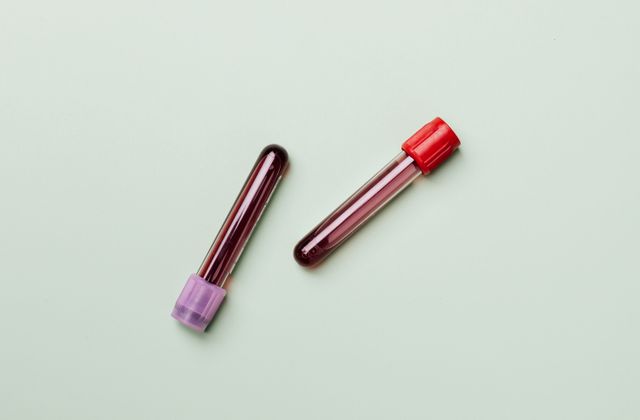
The draw itself is the most ordinary part of the whole process. A tourniquet, a quick sting as the needle finds the vein, the tube filling with dark red blood, then the phlebotomist pressing a cotton ball to your arm and taping it down. Most people are done in under five minutes. Parents sometimes worry more than the child does; the phlebotomists at our Malad lab have a practiced routine for small, nervous arms.
If the result says "trait": what happens next
First, breathe. A trait result is information, not an emergency. No treatment starts, no medicine is prescribed, nothing about your own health changes. What changes is the plan for your partner's testing.
If your partner has not been screened, that is the next step: one more blood draw, one more HPLC. If the partner's result is normal, the story ends there in practical terms. Your children cannot have thalassemia major if only one parent is a carrier; each child has a one-in-two chance of carrying the trait, which is harmless information to pass on, not a health problem to manage.
If both of you are carriers, you will be offered genetic counselling. A counsellor walks through the one-in-four figure, what thalassemia major means in practice, and what options exist, including prenatal testing. Prenatal diagnosis usually means chorionic villus sampling around week 11 or amniocentesis around week 16, and it is only useful when done early enough to give the couple time to think. None of this is rushed, and none of it is decided for you. Counselling exists so that whatever you choose, you choose it with your eyes open.
One more branch worth knowing: if the HPLC pattern is normal but the suspicion of alpha thalassemia remains (small red cells, normal iron, no beta trait), the next test is DNA-based. The alpha thalassemia gene analysis looks directly at the alpha-globin genes, which is the only reliable way to confirm alpha trait in adults. It costs more and takes longer than HPLC, which is why it is a second step, not a first.
And if the result is fully normal? Then you have one of the most useful pieces of paper in preventive medicine: a screening result that closes the question. Keep a copy. If a future doctor asks about thalassemia screening, you will already have the answer.
Who should consider this test in Mumbai
The honest answer is: more people than do. Carrier screening works best when it happens before anyone is pregnant, and the groups who gain most are the ones least likely to walk in unprompted.
Couples before marriage or pregnancy. This is the classic use case, and the one prevention programmes are designed around. In communities with higher carrier rates, testing both partners before the wedding has become as routine as the other pre-marital health checks. If the engagement is recent and nobody has suggested it, suggesting it yourself is perfectly reasonable.
Pregnant women, early. The NHS offers every pregnant woman a thalassemia blood test, aiming for before 10 weeks. India's FOGSI guidance says the same in spirit: screen before 8 weeks if it was not done pre-conception. Early matters because every downstream option, partner testing, counselling, prenatal diagnosis, needs calendar room to happen.
Children with anaemia that does not respond as expected. When a child's haemoglobin stays low and the usual explanations do not fit, thalassemia screening belongs on the list. Our anemia profile guide walks through how doctors layer these investigations.
Anyone with a family history. If a relative has thalassemia major or is a known carrier, your own chance of carrying the trait is higher than the population average. One test settles it.
People from higher-prevalence backgrounds. With India's average carrier rate around 3 to 4% and notably higher rates in several communities, ancestry is a legitimate reason to ask your doctor about screening. Sickle cell screening rides along on the same test, which matters in tribal communities where HbS is common.
The broader point is a public-health one. Every case of thalassemia major prevented by screening is a family spared years of transfusions and hospital visits. The test that does the preventing takes five minutes and a single tube of blood. It is one of the best bargains in medicine, and it is strange how few people have heard of it.
Booking it in Mumbai, and the short list to remember
If your doctor has written "thalassemia screening" or "HPLC" on a prescription, you can book the beta thalassemia screening test directly; the lab runs it on the HPLC method described above. Because carrier screening usually sits inside a wider workup, many people pair it with a complete blood count and a ferritin test, and the site offers dedicated bundles that package these together: the Thalassemia Carrier Screening - Basic and the Thalassemia Carrier Screening - Standard package. You can browse all of them under health packages, or start from the full tests page if you are not sure what to book.
Home collection is free across Malad, Kandivali, Borivali and Goregaon, so the blood draw can happen at your doorstep. The lab in Malad runs 24x7, reports typically land within about 24 hours, and bookings are a phone call away on 84250 40353. At the counter, the question we hear most is some version of "do we both need to give blood?" The answer is yes when screening a couple, because the result that matters is the pair's, not one person's.
The short list to remember:
- HPLC separates your haemoglobin into types and measures each as a percentage; it is the standard screening method for beta-thalassemia trait.
- HbA2 above about 3.5% flags trait; the typical trait band runs roughly 3.6 to 7%, and laboratory ranges vary, so always read your number against your own report's reference range.
- Trait means one changed gene. Carriers are healthy, need no treatment, and will never develop the disease.
- Do not take iron for trait-related anaemia unless a blood test has shown you are actually iron deficient.
- Iron deficiency can mask trait and B12/folate deficiency can fake it; correct both before trusting a borderline result.
- A recent blood transfusion can distort the pattern; tell the lab, and know that DNA testing is the fallback for transfused patients.
- Screen before pregnancy when possible, ideally with both partners tested; if both are carriers, genetic counselling lays out the options.
References
- NHM Guidelines on Hemoglobinopathies in India (Government of India; WHO-based national guidance)
- Mayo Clinic: Thalassemia: Diagnosis and treatment
- MedlinePlus Medical Encyclopedia: Hemoglobin electrophoresis
- CDC: About Thalassemia and Thalassemia Healthcare Provider Resource Toolkit
Book these tests at home
Live prices · free home sample collection in Malad, Kandivali, Borivali & Goregaon
Complete Blood Count (CBC)
- Report in 12 hrs
- Free home collection
Alpha thalassemia gene analysis
- Report in 168 hrs
- Free home collection
Ferritin
- Report in 24 hrs
- Free home collection
Iron Studies
- Report in 24 hrs
- Free home collection
Beta - Thalassemia Screenig
- Report in 24 hrs
- Free home collection
More tests related to this topic
Other Anemia tests you can book with free home sample collection.
Beta - Thalassemia Screenig with Graph
- Report in 24 hrs
- Free home collection
CBC & Pheripheral Blood Smear
- Report in 48 hrs
- Free home collection
CBC - Complete Hemogram Test(28)
- Report in 12 hrs
- Free home collection
G6PD (Glucose - 6 - Phosphate Dehydrogenase) EDTA Whole Blood
- Report in 12 hrs
- Free home collection
Haptoglobin Serum
- Report in 24 hrs
- Free home collection
Hemoglobin
- Report in 24 hrs
- Free home collection
Hemoglobin - Free, Urine
- Report in 24 hrs
- Free home collection
Hemoglobinopathies Profile - HbF/HbS
- Report in 48 hrs
- Free home collection
Hemoglobinopathies Profile - HbF/HbS (with Graph)
- Report in 48 hrs
- Free home collection
Iron
- Report in 24 hrs
- Free home collection
Iron Studies (for Anemia Screening)
- Report in 48 hrs
- Free home collection
Iron Studies (Iron,TIBC, Transferrin saturation)
- Report in 24 hrs
- Free home collection
Get more from the same visit
Health packages that already include these tests, and tests people usually add.
Frequently asked questions
Does a high HbA2 mean I have thalassemia disease?
No. It means you likely carry the trait, which is one changed gene copy. Carriers are healthy, need no treatment, and will never develop the disease. What it does mean is that your partner should be tested too, because the combination of two carriers is what produces the risk.
Do I need to fast before the HPLC test?
No. There is no fasting requirement and no special preparation. You can eat, drink, and take your usual routine normally on the day of the test. The result comes from the haemoglobin in your red cells, which does not change with meals.
I had a blood transfusion a few weeks ago. Can I still get tested?
Tell the lab about it before the draw. Donor red cells bring donor haemoglobin into your sample, and that can blur your own pattern. Some laboratories will suggest waiting; others may route you to DNA-based testing, which reads your genes directly and is unaffected by donor blood. Either way, the transfusion history belongs on the form.
My HbA2 is borderline, in the low 3s. Am I a carrier or not?
Honestly: unclear, and your lab will probably say so too. The 3.2 to 3.6% band is the grey zone where laboratories repeat the test or look for complicating factors before calling anything. This is where iron and B12 status matter most (see below), and where the lab's exact reference range decides the next step.
Will iron deficiency change my HPLC result?
Yes, and in the unhelpful direction. Iron deficiency lowers HbA2, which can push a true carrier's number back into the normal range and mask the trait. This is why a proper workup checks iron status first, often with a [ferritin test](/mumbai/test/ferritin/) or full [iron studies](/mumbai/test/iron-studies/), and repeats the HPLC after any deficiency is corrected. If you are anaemic and iron-deficient, fix the iron question before trusting a borderline HbA2.
Can B12 or folate deficiency change it too?
In the opposite direction, yes. Megaloblastic anaemia (the kind caused by B12 or folate deficiency) can raise HbA2 and produce a false-positive trait reading. One peer-reviewed study found that repeating HPLC after correcting the B12/folate deficiency changed the diagnosis in most of the cases it followed. If your B12 has never been checked and your HbA2 looks odd, that is worth investigating before any conclusions.
As a carrier, will I become anaemic or develop the disease later?
You will not develop the disease; that is settled. You may carry a mild anaemia from your smaller red cells, the kind that shows up as a slightly low haemoglobin on routine checkups and causes no real trouble. It needs no treatment. The one rule: do not take iron for it unless a blood test has actually shown you are iron deficient.
Both of us are carriers. What are the chances for our baby?
For every pregnancy: a one-in-four chance the child has thalassemia major, a one-in-two chance the child is a carrier like you, and a one-in-four chance the child inherits neither changed copy. If only one partner is a carrier, the child cannot have the disease, but has a one-in-two chance of being a carrier. These odds are the same for every pregnancy, like independent coin tosses, and they are why genetic counselling is offered to carrier couples.
Should I take iron supplements if I have thalassemia trait?
Only if a blood test shows you are actually iron deficient. Trait-related anaemia is not iron-deficiency anaemia, and iron does not fix it. Get the iron level tested first; treat what the test shows.
When should we get screened, and what happens if both of us are carriers?
Ideally before conception. If that window has passed, early in pregnancy is next best; the NHS offers every pregnant woman the test with the aim of doing it before 10 weeks, and India's FOGSI guidance suggests screening before 8 weeks when not done pre-conception. If the mother is a carrier, the father is tested next. If both are carriers, the couple is offered genetic counselling and prenatal diagnosis options, which can include chorionic villus sampling around week 11 or amniocentesis around week 16. What a couple decides from there is theirs alone; the medical system's job is to make sure they are deciding with full information, early.
Can the same test detect sickle cell?
Yes. The HPLC run that measures your HbA2 also flags variant haemoglobins including HbS, the sickle cell haemoglobin. National screening programmes test for both together for exactly this reason, and the HbS burden is substantial in India's tribal populations.
Why does my report show slightly raised HbF?
A small rise in fetal haemoglobin is common in beta-thalassemia trait and in a handful of other conditions. It is a flag for your clinician to interpret alongside the rest of your report, not a result to decode on your own. Bring the whole report to the doctor who ordered it.
HWP Diagnostic Editorial Team
Health guides written by the team at HWP Diagnostic, Mumbai, to help you understand your tests before you book. This article is for general education and is not a substitute for medical advice - reference ranges vary between labs, so always discuss your results with your doctor. Read our editorial policy. Photos: Pexels.