
Key takeaways
- ADH, or vasopressin, is the brain-made hormone that tells your kidneys how much water to keep. The test measures that signal in a chilled EDTA plasma sample.
- Low ADH fits the diabetes insipidus picture: unquenchable thirst and huge volumes of pale urine. High ADH with low sodium fits SIADH: the body hoarding water it should release.
- The number is never read alone. Your doctor interprets it next to sodium, serum osmolality, and urine osmolality.
- ADH peaks overnight on a small daily rhythm, so unlike cortisol there is no morning-draw rule. Sit calmly for a bit before the draw, since stress and pain push the hormone up.
- Tell your doctor about every medicine you take. Alcohol, diuretics, blood pressure medicines, insulin, medicines for mental disorders, nicotine, and steroids can all nudge the result.
- The sample must stay cold from draw to analyzer, and only specialized laboratories run this assay well. Some labs measure copeptin, a sturdier fragment released alongside vasopressin, instead.
- Free home collection covers Malad, Kandivali, Borivali, and Goregaon. Reports usually arrive in about 24 hours, the lab runs 24x7, and bookings are on 84250 40353.
Book tests from this article
Sample collected at home - free
- ADH (Anti Diuretic Hormone Vasopressin), EDTA Plasma
₹6,899₹9,19925% off
- Kidney Function Test
₹799₹1,69953% off
- Sodium
₹349₹44922% off
Free collection 24 hr reports
The short version, before the details
ADH stands for anti-diuretic hormone. Its other name is vasopressin, and that is the word your report will most likely use. It is a tiny hormone made deep in your brain and released by the pituitary gland, the pea-sized gland sitting right underneath it. Its job is simple to state and hard to overstate: it tells your kidneys how much water to keep.
The ADH blood test measures that signal. Not your hydration in general, not your kidney function in general. The signal itself, floating in your blood, counted in picograms per milliliter.
Doctors order it when the body's water plumbing seems to be misbehaving in a specific way: thirst that drinking does not fix, urine volumes that feel absurd, or blood sodium that keeps sliding down for no obvious reason. If none of those apply to you, you may never meet this test. It is not a routine health-check item. It is a detective's tool.
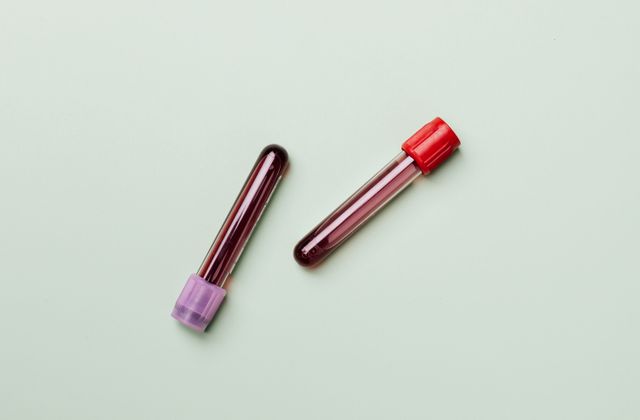
And it comes with the fussiest sample handling in the building. Vasopressin falls apart in a warm tube within minutes, so your blood is drawn into a lavender-topped EDTA tube that goes straight into an ice box and stays cold all the way to the analyzer. If our phlebotomist arrives at your door carrying a small insulated box alongside the usual kit, now you know why.

Why a doctor orders this one
The MedlinePlus medical encyclopedia lists the situations that prompt this test, and the list is short and specific: fluid building up in the body and causing swelling or puffiness, unusually large amounts of urine, low sodium in the blood, and thirst that is intense or uncontrollable.
Read that list again and you will notice the pattern. These are not vague complaints. They are the four ways a water-balance problem announces itself. Swelling means water is stuck where it should not be. Floods of urine mean water is leaving that should have stayed. Low sodium often means too much water is diluting the blood. And unquenchable thirst is the body's alarm bell ringing at full volume.
Sometimes the test is ordered as part of a water restriction test, a supervised hospital procedure where you go without fluids for several hours while doctors watch what your urine and blood do. We will come back to that, because it is one of the cleverest tests in medicine.
What the test is not: a first-line test. Your doctor will usually check the easy things first, blood sugar for the thirst, a kidney function test for the swelling, sodium and serum osmolality for the dilution picture. ADH gets ordered when those results point at the hormone system and the doctor wants to measure the signal directly.
There is also a practical reason this test stays rare. The assay is finicky and the sample handling is demanding, so most routine labs do not offer it at all; MedlinePlus says so outright. Your doctor is not being dramatic by sending you somewhere specific. The test genuinely needs a laboratory set up for it, which is one reason the prescription sometimes comes with a handwritten lab name and a phone number.
One more scenario worth naming: ADH is sometimes measured during the water restriction test itself. In that supervised procedure you go without fluids for several hours while the team tracks your weight, your urine concentration, and your blood numbers. Drawing ADH at the start and the end shows whether the hormone is rising the way it should as your blood gets more concentrated. It turns a static number into a before-and-after story, and that story is often what finally separates the possible causes.
At our lab counter in Malad, patients usually arrive with the prescription and one confused question: "Water hormone? I have never heard of this one." Fair. Most people have not. By the end of this article, you will know more about it than most first-year medical students do on their first day.
A quick tour of your body's plumbing logic
Here is the machinery, in plain language. Deep in your brain, two small clusters of nerve cells (the supraoptic and paraventricular nuclei, if you like the proper names) manufacture ADH around the clock. The hormone then travels down nerve fibers into the posterior pituitary gland, which stores it and releases it into the bloodstream when told.
The telling comes from sensors. Osmoreceptors in the hypothalamus taste your blood's saltiness, or more precisely its osmolality, the concentration of dissolved particles. They can detect a change of just one or two percent. When the blood gets a little too concentrated, because you have been sweating through a Mumbai local-train commute or simply have not drunk water in hours, they send the order: release ADH.
Baroreceptors in your heart and blood vessels watch the other side of the equation. When blood volume or pressure drops, because of bleeding or severe dehydration, they too call for ADH.
The hormone rides the bloodstream to the kidneys and docks onto V2 receptors on the collecting ducts, the last stretch of the kidney's plumbing. That docking triggers something lovely: tiny water channels called aquaporin-2, which normally sit folded inside the duct cells, get pulled up and embedded into the cell walls. Water pours through them from the forming urine back into the blood. The urine that leaves is small in volume and dark. The blood gets a little more dilute, and the osmoreceptors stand down.
When you drink a big glass of water, the whole thing reverses. Osmolality falls, ADH switches off, the aquaporin channels get pulled back inside the cells, and the collecting ducts turn nearly waterproof. The extra water leaves as a large volume of pale urine.
That is how a hormone made in your brain decides the colour of your morning urine: one signal, one set of channels, and your kidneys obey.
Vasopressin moonlights as a blood-pressure hormone
The name gives it away. Vaso, as in blood vessel. Pressin, as in pressure.
ADH also docks onto a second set of receptors, the V1A receptors on the smooth muscle of blood vessel walls. There it does the opposite of a relaxing job: it constricts the vessels, raising blood pressure. In a bleeding patient or someone in shock, ADH surges partly for this reason, squeezing the pipes to keep pressure up while also holding on to every drop of water.
This second job is not what the blood test is chasing. But it explains why the report says vasopressin, why the hormone has two names, and why severe volume loss can push ADH up even when osmolality is normal. The body runs two alarms on one wire.
The lavender tube and its ice box
Now the practical part, and the part that makes this test unusual at the lab.
Vasopressin is a fragile little peptide. Left sitting warm in a tube, it starts degrading within minutes, and a degraded sample reads falsely low. A falsely low ADH could send a doctor chasing diabetes insipidus that is not there, so the cold chain is not optional. It is the whole game.
The draw itself is the usual business. A needle prick in the crook of your elbow, a quick sting that most people describe as a rubber-band snap, blood collected into a lavender-topped EDTA tube, and a cotton ball taped to your arm with that familiar strip of surgical tape.
Then the difference: the tube goes straight into an ice box. It stays chilled through transport, through the lab's receiving desk, and into the analyzer. Some lab protocols call for the tube to be pre-chilled before the draw and the plasma frozen within about half an hour. Every minute warm is a minute of lost hormone.
MedlinePlus puts it bluntly: most labs cannot run this test. Only very specialized laboratories can perform the assay correctly. The hormone's fragility plus the finicky assay method is why your doctor sent you to a lab that handles it properly rather than the nearest collection point.
There is also a modern workaround worth knowing about. ADH is manufactured as part of a longer precursor protein, and when vasopressin is cut loose, a sibling fragment called copeptin is released in equal amounts. Copeptin is far sturdier in a tube, and many laboratories now measure it as a stand-in for ADH. If your report or your doctor ever mentions copeptin, that is what is going on: the same water-balance story, told by a tougher witness.
Getting ready for the draw: what helps, what skews
Preparation for this test is refreshingly light, but the details matter because so many ordinary things nudge ADH.
- Do: Rest quietly for a while before the draw, since stress and pain can push ADH up. Sitting calmly in the waiting area for a bit is genuinely part of the protocol.
- Do: Tell your doctor about every medicine you take. The MedlinePlus list of ADH-affecting substances includes alcohol, diuretics (water pills), blood pressure medicines, insulin, medicines for mental disorders, nicotine, and steroids. Do not stop anything on your own; just make sure the list is complete.
- Do: Drink water normally on the day. Forcing extra litres "to be hydrated" can suppress ADH and muddy the picture, and arriving parched can do the opposite.
- Do: Mention recent illness, surgery, or heavy sweating. All of these move the water-balance system and your doctor reads the result in that context.
- Don't: Drink alcohol before the test. Alcohol is on the interference list.
- Don't: Smoke or use nicotine products beforehand. Nicotine is on the list too.
- Don't: Assume you need to fast. There are no heavy fasting rules for ADH itself. If your doctor ordered it alongside fasting tests like a fasting blood sugar, follow the fasting instructions for those, and the ADH tube simply rides along.
One timing question comes up constantly, and the answer surprises people. ADH does follow a small daily rhythm, peaking overnight, so unlike cortisol there is no morning-draw rule for this test. Cortisol must be caught at 8 AM because its rhythm is the whole point of the measurement. For ADH, the rhythm is small enough that the time of day does not drive the interpretation. (If you are curious about the hormone that does need the 8 AM draw, our article on the ACTH blood test explains why.)
What the number on your report means
Your report will show ADH in picograms per milliliter, pg/mL, next to the laboratory's reference range. The MedlinePlus encyclopedia quotes a commonly cited range of 0 to 5.9 pg/mL (0 to 5.4 pmol/L), while other references quote slightly different spans. That disagreement is normal in laboratory medicine, not a mistake. Assay methods differ, and so do their ranges. Compare your number only to the range printed on your own report, never to a number you found online.
More important than the number itself is the company it keeps. ADH is never interpreted alone. Your doctor reads it next to sodium (normal roughly 135 to 145 mEq/L), serum osmolality (normal roughly 275 to 295 mOsm/kg), and urine osmolality. The hormone only makes sense against what the kidneys are actually doing.
Two classic pictures make this concrete. Low ADH in a person passing litres of pale urine with a high serum osmolality points toward diabetes insipidus: the "save water" signal is missing, so the kidneys let everything flow out. High ADH in a person with low blood sodium and inappropriately concentrated urine points the other way, toward a body hoarding water it should be releasing.
It helps to see how the same ADH value can mean different things in different people. Take a reading of 1.2 pg/mL. In someone drinking eight litres a day, passing pale urine around the clock, with a serum osmolality of 305, that low-ish number fits the missing-signal picture: the body should be screaming for ADH and is barely whispering. In someone with a normal thirst, normal urine, and a serum osmolality of 282, the same 1.2 pg/mL is exactly what you would expect: the system is at rest, so the signal is quiet. The number did not change. The context did. This is why doctors get twitchy when patients arrive having already diagnosed themselves from a single value found online.
One number on its own is never a diagnosis. The lab gives the numbers; the doctor gives the meaning.
When the signal goes quiet
Low ADH has a short list of causes and a long list of consequences.
Central diabetes insipidus is the headline one. The hypothalamus or the pituitary gland is damaged, by brain surgery, head injury, infection, inflammation, or a tumor, and ADH production falls. Rarely, the cause is genetic. Without the signal, the kidneys cannot concentrate urine at all. The ADAM medical encyclopedia notes that people with central diabetes insipidus can pass 10 to 15 litres of dilute urine a day. Read that again. Ten to fifteen litres. The thirst is proportional: the body is losing water faster than any normal drinking habit can replace, so the person drinks constantly, wakes through the night to drink and urinate, and can become confused or dangerously dehydrated if water is ever out of reach.
Nephrogenic diabetes insipidus looks identical from the outside but the mechanism is flipped. Plenty of ADH is circulating; the kidneys simply do not answer it. The collecting-duct receptors or the aquaporin channels are faulty. The inherited forms come from variants in the V2 receptor or aquaporin-2 genes and mostly affect boys, while the acquired forms are more common in adults: long-term lithium treatment for bipolar disorder is the classic cause, and chronic kidney disease and high blood calcium can do it too.
Then there is the odd one out: primary polydipsia, excessive drinking driven by the thirst center itself rather than by water loss, sometimes linked to mental health conditions. Here ADH is low because the body is water-loaded and correctly suppressing the signal, not because anything is broken. Sorting this out from true diabetes insipidus is exactly what the water deprivation test is for.
MedlinePlus adds one more low-ADH situation that surprises people: too much fluid in the blood vessels, volume overload, which suppresses ADH as it should. Low is not always disease. Context decides.
The day-to-day reality of diabetes insipidus is worth picturing, because it explains the urgency people feel. Nights get chopped into pieces by bathroom trips. Long meetings, train journeys, and movie halls become logistical problems. Children with the condition may wet the bed long past the usual age and struggle to keep up in school for sheer exhaustion. None of this is dangerous in itself as long as water is always within reach, which is why the condition turns frightening mainly in situations where it is not: a long surgery, an illness with vomiting, or an elderly person who cannot easily get to the kitchen.
One specific situation deserves a mention. Central diabetes insipidus sometimes appears after surgery near the pituitary gland, even when the surgery itself went well. The gland is delicate, and the ADH-producing machinery sits close enough to be bruised by the procedure. Surgeons watch fluid balance closely in the days after such operations for exactly this reason, and the change can be temporary or permanent.
Treatment, in broad strokes, follows the cause. Central diabetes insipidus is usually managed with desmopressin, a synthetic ADH analogue that replaces the missing signal. Nephrogenic diabetes insipidus is trickier since the kidneys ignore the signal; doctors work around it with careful fluid management and medicines that reduce urine output. The details belong to your endocrinologist, but the logic of each approach follows directly from the mechanism you now understand.
When the signal won't switch off
At the other end sits the syndrome of inappropriate ADH, SIADH. The hormone keeps flowing when the blood is already dilute, the kidneys keep reabsorbing water, and blood sodium sinks. Not because salt is being lost, but because water is being kept. Dilution, not depletion.
Doctors diagnose SIADH against a classic set of criteria, the Bartter and Schwartz criteria, which translate into plain language roughly like this: blood sodium below about 135 with low serum osmolality below about 275; urine that is inappropriately concentrated (osmolality above 100) for someone whose blood is that dilute; a person who is neither swollen nor dehydrated, clinically euvolemic; and normal thyroid, adrenal, and kidney function, because hypothyroidism and adrenal failure can mimic the picture. A thyroid profile is often part of the workup for exactly this reason. When fluid restriction corrects the sodium, the diagnosis is effectively confirmed.
The causes list is long, and MedlinePlus lays it out plainly. Certain medicines top it: seizure medicines, antidepressants, cancer medicines, opiates, and some heart, diabetes, and blood pressure drugs. Then surgery under general anesthesia, brain disorders like injury, infection, and stroke, tuberculosis, lung disease such as pneumonia, substance use disorders, and cancers that make ADH where they should not, small cell lung cancer being the classic example. Heart failure, liver failure, and some kidney diseases can raise ADH too, as the body misreads its own volume status.
The symptoms that bring people in are the symptoms of low sodium: nausea, headache, confusion, loss of energy, muscle weakness or cramps, and in severe cases seizures or coma, as Mayo Clinic describes. Mild chronic cases may feel like nothing at all, which is why the number gets found on routine bloodwork more often than patients expect. One caution worth stating plainly: when sodium has been low for a while, correcting it too fast can injure the brain, a condition called osmotic demyelination. That is why doctors raise sodium slowly and monitor it closely. Slow and watched beats fast and sorry.
What happens after the diagnosis depends on the cause, and the first step is often refreshingly low-tech. For SIADH, the cornerstone is fluid restriction: drinking less so the retained water stops diluting the blood further. It sounds almost too simple, and patients sometimes resist it, but it directly reverses the mechanism. Alongside that, the doctor hunts the trigger. An offending medicine gets reviewed and often swapped. A pneumonia gets treated. A small cell lung cancer gets its oncology plan, and the sodium problem rides along with the cancer treatment rather than being a separate disease. For severe symptoms like seizures or coma, hospital care with carefully controlled sodium correction is needed, with blood sodium checked repeatedly because the correction speed itself is the danger. The through-line in every case is the same: find why ADH is flowing when it should not be, and the water balance usually follows.
How doctors actually pin down the cause
When the ADH number, the sodium, and the urine studies still leave room for doubt, endocrinologists reach for the water deprivation test. It is simple in concept and demanding in execution, which is why it happens under supervision, often in a hospital.
You stop drinking fluids. Every hour or two, the team weighs you and checks your urine osmolality and your blood sodium and osmolality. The test ends when your weight has dropped by three to five percent, your urine osmolality plateaus across consecutive checks, or your sodium climbs above 145. Nobody lets it run past safe limits; the stopping rules are the safety rails.
Then comes the elegant part. You receive an injection of desmopressin, synthetic ADH. If your kidneys suddenly start concentrating urine, with urine osmolality jumping more than about fifty percent, the diagnosis is central diabetes insipidus: the signal was missing, and replacing it fixed the plumbing. If the urine barely budges, rising less than about ten percent, the kidneys are the problem: nephrogenic diabetes insipidus. Between those responses lies a grey zone that needs more testing.
In the combined version of the test, the team also draws ADH itself at the start and the end, watching the hormone rise against the climbing plasma osmolality. That pairing is the whole diagnostic logic of this article in a single procedure: the signal, the stimulus, and the kidney's answer, all measured together.
Answers to the questions our counter hears
Is the ADH test the same as a diabetes test? No. Diabetes insipidus shares a word with blood-sugar diabetes, and both can cause heavy thirst, but the causes are completely different. A fasting blood sugar test already rules the sugar kind in or out. If your sugar reports are normal and the thirst persists, that is precisely when doctors start thinking about ADH.
Do I need to fast before the ADH test? There are no strict fasting rules for ADH itself. Give yourself a calm few minutes before the needle goes in, since stress and pain can push the hormone up, and skip alcohol and cigarettes beforehand. If other tests are being drawn from the same visit, follow whatever preparation those require.
Is morning the best time for this test? No, and this is a common mix-up because cortisol testing works that way. ADH does follow a small daily rhythm, peaking overnight, but the rhythm is small enough that it does not change the interpretation. Unlike cortisol, there is no morning-draw rule for this test. Book whatever slot suits you.
Why does the sample have to be kept cold? Vasopressin breaks down quickly at room temperature, and a warm tube gives a falsely low reading. The lavender-topped EDTA tube goes straight into an ice box after the draw and stays chilled all the way to the analyzer. The cold chain is what keeps your result honest.
Can this test be done through home collection? Yes. The draw is a standard blood draw; the only difference is that the phlebotomist carries an insulated ice box for this one tube. Free home collection runs across Malad, Kandivali, Borivali, and Goregaon.
What tests are usually ordered along with ADH? Doctors working up thirst or sodium problems typically pair ADH with serum osmolality, sodium, and urine osmolality, since the hormone only makes sense when read against what the kidneys are doing. A thyroid check often joins the list when SIADH is suspected.
What is the difference between central and nephrogenic diabetes insipidus? In central diabetes insipidus the brain fails to make enough ADH; in nephrogenic diabetes insipidus the kidneys fail to respond to it. Same thirst, same floods of pale urine, opposite fault lines. The water deprivation test with desmopressin tells them apart.
Why is my sodium low if the problem is a water hormone? Because the sodium is diluted, not lost. In SIADH the body holds on to water it should release, and the extra water thins out the blood's sodium. That is also why the fix is usually fluid restriction rather than eating more salt.
Does drinking lots of water before the test affect the result? It can. A big water load suppresses ADH, which is the system working as designed, but it can blur what your doctor is trying to see. Drink normally. Do not force extra water and do not deliberately dehydrate yourself either.
How soon will I get the report? Reports are usually ready in about 24 hours. Compare your number only to the reference range printed on your own report, since ranges vary between laboratories and assay methods.
Booking it, and what usually rides along
The ADH test books like any other draw, with one difference: the phlebotomist brings the insulated ice box along with the kit. Call or message 84250 40353, or start from the tests page. Collection costs nothing extra across Malad, Kandivali, Borivali, and Goregaon, the lab runs 24x7, and reports usually land in about 24 hours.
If your doctor is working up excessive thirst or a sodium problem, the tests usually ordered alongside are serum osmolality, sodium, and urine osmolality. Asking for all of them on the same visit saves you a second needle prick and a second day of waiting.
Two bundles are worth knowing about if the workup is broader. The Complete Kidney Health Panel (complete-kidney-health-panel) covers the kidney side of any water-balance investigation, and the Heart Electrolytes Panel (heart-electrolytes-panel) tracks sodium and the other electrolytes through treatment. Browse the full packages list if your doctor has suggested a wider screen.
For background reading, two companion articles may help: our guide to the kidney function test and the prolactin test, another pituitary hormone with its own very different story.
One last thing to keep
ADH is a small hormone with an outsized job, and the test exists for the moments when the water balance stops making sense. If your prescription carries it, the practical side is ordinary: one tube, an ice box, and a calm few minutes before the draw. The interpretation is the doctor's part, read against sodium, osmolality, and what your kidneys are actually doing.
References
- MedlinePlus Medical Encyclopedia (A.D.A.M.): Antidiuretic hormone blood test
- Mayo Clinic: Hyponatremia: symptoms and causes; diagnosis and treatment
- Mayo Clinic Laboratories: Copeptin proAVP, Plasma test catalog
- National Organization for Rare Disorders: Nephrogenic diabetes insipidus
Book these tests at home
Live prices · free home sample collection in Malad, Kandivali, Borivali & Goregaon
ADH (Anti Diuretic Hormone Vasopressin), EDTA Plasma
- Report in 24 hrs
- Free home collection
Kidney Function Test
- Report in 24 hrs
- Free home collection
Sodium
- Report in 24 hrs
- Free home collection
Osmolality (Serum)
- Report in 48 hrs
- Free home collection
Fasting Blood Sugar (FBS)
- Report in 12 hrs
- Free home collection
More tests related to this topic
Other Hormones tests you can book with free home sample collection.
Thyroid Profile (T3, T4, TSH)
- Report in 24 hrs
- Free home collection
25 OH Vitamin D
- Report in 24 hrs
- Free home collection
ACTH (Adreno Corticotropic Hormone)
- Report in 24 hrs
- Free home collection
Aldosterone
- Report in 24 hrs
- Free home collection
Aldosterone Urine 24H
- Report in 24 hrs
- Free home collection
Aldosterone/Direct Renin Ratio
- Report in 48 hrs
- Free home collection
Androstenedione (A4)
- Report in 24 hrs
- Free home collection
Anti Mullerian Hormone (AMH)
- Report in 24 hrs
- Free home collection
Calcitonin
- Report in 24 hrs
- Free home collection
Catecholamines (Adrenaline and Nor – adrenaline) – 24 Hours Urine
- Report in 24 hrs
- Free home collection
CATECHOLAMINES(Adrenaline and Nor - Adrenaline)
- Report in 24 hrs
- Free home collection
Cortisol
- Report in 24 hrs
- Free home collection
Get more from the same visit
Health packages that already include these tests, and tests people usually add.
Frequently asked questions
Is the ADH test the same as a diabetes test?
No. Diabetes insipidus shares a word with blood-sugar diabetes, and both can cause heavy thirst, but the causes are completely different. A [fasting blood sugar](/mumbai/test/fasting-blood-sugar/) test already rules the sugar kind in or out. If your sugar reports are normal and the thirst persists, that is precisely when doctors start thinking about ADH.
Do I need to fast before the ADH test?
There are no strict fasting rules for ADH itself. Give yourself a calm few minutes before the needle goes in, since stress and pain can push the hormone up, and skip alcohol and cigarettes beforehand. If other tests are being drawn from the same visit, follow whatever preparation those require.
Is morning the best time for this test?
No, and this is a common mix-up because cortisol testing works that way. ADH does follow a small daily rhythm, peaking overnight, but the rhythm is small enough that it does not change the interpretation. Unlike cortisol, there is no morning-draw rule for this test. Book whatever slot suits you.
Why does the sample have to be kept cold?
Vasopressin breaks down quickly at room temperature, and a warm tube gives a falsely low reading. The lavender-topped EDTA tube goes straight into an ice box after the draw and stays chilled all the way to the analyzer. The cold chain is what keeps your result honest.
Can this test be done through home collection?
Yes. The draw is a standard blood draw; the only difference is that the phlebotomist carries an insulated ice box for this one tube. Free home collection runs across Malad, Kandivali, Borivali, and Goregaon.
What tests are usually ordered along with ADH?
Doctors working up thirst or sodium problems typically pair ADH with [serum osmolality](/mumbai/test/osmolality-serum/), [sodium](/mumbai/test/sodium/), and [urine osmolality](/mumbai/test/urine-osmolality/), since the hormone only makes sense when read against what the kidneys are doing. A thyroid check often joins the list when SIADH is suspected.
What is the difference between central and nephrogenic diabetes insipidus?
In central diabetes insipidus the brain fails to make enough ADH; in nephrogenic diabetes insipidus the kidneys fail to respond to it. Same thirst, same floods of pale urine, opposite fault lines. The water deprivation test with desmopressin tells them apart.
Why is my sodium low if the problem is a water hormone?
Because the sodium is diluted, not lost. In SIADH the body holds on to water it should release, and the extra water thins out the blood's sodium. That is also why the fix is usually fluid restriction rather than eating more salt.
Does drinking lots of water before the test affect the result?
It can. A big water load suppresses ADH, which is the system working as designed, but it can blur what your doctor is trying to see. Drink normally. Do not force extra water and do not deliberately dehydrate yourself either.
How soon will I get the report?
Reports are usually ready in about 24 hours. Compare your number only to the reference range printed on your own report, since ranges vary between laboratories and assay methods.
HWP Diagnostic Editorial Team
Health guides written by the team at HWP Diagnostic, Mumbai, to help you understand your tests before you book. This article is for general education and is not a substitute for medical advice - reference ranges vary between labs, so always discuss your results with your doctor. Read our editorial policy. Photos: Pexels.