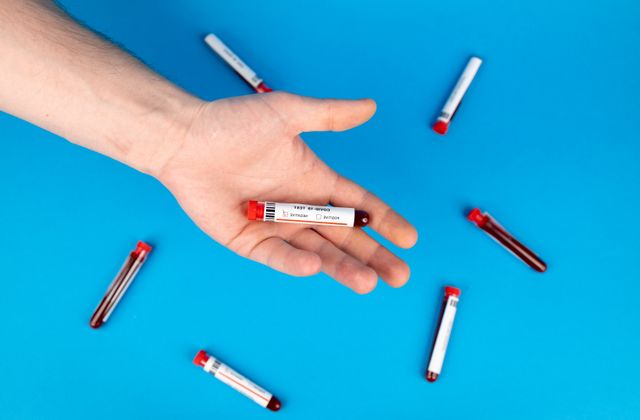

Key takeaways
- Homocysteine is a recycling amino acid; B6, B12, and folate are the crew that clears it.
- Under about 15 µmol/L is the usual normal; bands run moderate 15 to 30, intermediate 30 to 100, severe above 100. Ranges vary by laboratory.
- A high reading usually points to nutrition, kidneys, thyroid, or medicines, not a disease of its own.
- Mumbai vegetarians test high often because B12 runs short; that is fixable.
- The heart link is real as an association, but lowering homocysteine has not cut heart events in trials, so treat the cause.
- Raised levels predict faster brain decline; one trial slowed shrinkage in people with mild memory trouble and high levels.
- Fast 8 to 12 hours unless your slip says otherwise, declare your supplements, and recheck only on your doctor's advice.
Book tests from this article
Sample collected at home - free
- Vitamin B12
₹799₹1,59950% off
- Folate (Folic Acid)
₹1,049₹1,89945% off
- Kidney Function Test
₹799₹1,69953% off
Free collection 24 hr reports
The short answer: high homocysteine is a clue, not a diagnosis
Let's start where your anxiety starts. You opened your report, or your doctor slid it across the desk, and there it was: homocysteine, flagged high. The first thought that crossed your mind was probably about your heart. That is fair. This number gets talked about in the same breath as heart attacks and strokes, and nobody likes a flagged line in red.
Here is the calm version. Homocysteine is an amino acid your body makes every day while processing the protein you eat. Your body is supposed to recycle it quickly with the help of three B vitamins: B6, B12, and folate. When the recycling slows down, homocysteine piles up in the blood. A high reading usually points at one of those vitamins running low, kidneys clearing less efficiently, the thyroid acting up, or a medicine interfering with the machinery. It is a clue that sends your doctor looking in a direction. It is not, by itself, a disease.
And the question you actually want answered: does a high number mean your heart is in trouble? The honest answer is longer than yes or no, and we will get to it. But the short form is this. People with high homocysteine do show higher rates of heart and blood vessel problems in study after study. Yet the big trials that lowered homocysteine with B vitamins did not cut heart attacks. That contradiction is the whole story of this marker, and understanding it will save you from both panic and complacency.

What homocysteine actually is (your body's recycling-bin amino acid)
Forget the tongue-twister name for a moment. Homocysteine is an intermediate, a halfway product. When you eat protein, one of its building blocks, methionine, gets used and eventually converted into homocysteine. Your body does not want homocysteine hanging around, so it runs two recycling routes.
Route one turns homocysteine back into methionine. That step needs folate and vitamin B12 working together. Route two converts homocysteine into a different amino acid called cysteine. That step needs vitamin B6. As long as those three vitamins are around in decent supply, the system hums along and blood levels stay low, roughly under 15 micromoles per liter in most labs.
Think of it like kitchen waste. Methionine is the vegetable you bought, homocysteine is the peelings, and the B vitamins are the people who carry the peels to the compost. When the carriers are missing, peels pile up on the counter. The number on your report is the pile, measured. Your doctor's job is to figure out which carrier went missing, and whether the pile is doing any damage while it sits there.
Most of the homocysteine in your blood rides along attached to proteins, which is why labs call the measurement "total homocysteine". The unit, µmol/L, just means micromoles per liter. Nothing about it is exotic. The needle draw is the same ordinary venous sample as every other blood test: a tourniquet, a quick alcohol swab, a sting that lasts a second, a cotton ball taped over the spot. Blood cells keep releasing homocysteine after the tube is drawn, which is one reason labs spin and process the tube promptly. If a result ever looks oddly high, sample handling is one of the things the lab double-checks before anyone acts on it.
The three B vitamins that keep it in check
Folate (vitamin B9), B12, and B6 are the trio, but they do not do identical jobs, and the pattern of your other results tells your doctor which one is short.
Folate and B12 team up on route one, the remethylation route that turns homocysteine back into methionine. B12 is the interesting one here because your body cannot make it and plants do not contain it. You get B12 from animal foods: meat, fish, eggs, and dairy. Folate comes from green leafy vegetables, dals, beans, and whole grains, which most Indian diets include generously. So in practice, when an Indian patient's homocysteine climbs because of nutrition, B12 is the usual suspect and folate the occasional one. The Cleveland Clinic's lab guidance lists deficiency in B6, B12, or folate among the four major drivers of raised homocysteine, alongside genetic enzyme problems, kidney failure, and certain medicines.
B6 works on route two, the transsulfuration route that converts homocysteine to cysteine. B6 deficiency is less common as a cause, but it matters because cysteine itself goes on to do useful work, including supporting antioxidant defenses.
Here is a detail worth knowing. Your B12 blood level can read "borderline" while homocysteine is already climbing. Researchers studying young vegetarian Indians found that homocysteine flagged low B12 status with better sensitivity than the B12 number itself in some cases. Total B12 is what most labs measure, and it includes forms your cells cannot use well. Homocysteine reflects what your metabolism is actually managing to do with the B12 you have. That is why doctors often order the two together: vitamin B12 test plus homocysteine tells a fuller story than either alone. Some labs also report an "active" or usable-B12 fraction, which our active vitamin B12 guide explains in plain words if your report carries that line. And B vitamins are not the only deficiency story in Indian diets. Magnesium runs short in similar households, and our magnesium deficiency guide covers the night-cramps-and-poor-sleep side of that one.
Why Mumbai vegetarians keep showing high numbers
This is the Mumbai chapter, and it is the reason this marker deserves a Nutrition & Deficiencies article rather than a cardiology one.
A landmark Pune study measured B12 and homocysteine in 441 middle-aged men, rural, slum, and urban middle-class. The median B12 was low at 110 pmol/L. Two-thirds of the men had low B12, and 58 percent had raised homocysteine above 15 µmol/L. Among the urban middle class, the numbers were starker: 81 percent low B12, 79 percent raised homocysteine. Vegetarians carried 4.4 times the risk of low B12 and 3 times the risk of raised homocysteine compared with men who ate non-vegetarian food frequently. Low B12 explained about 28 percent of the raised homocysteine in the group.
A separate study of young, healthy vegetarian graduates found 92 percent of the men and half of the women had raised homocysteine, and none of them had any clinical signs of B12 deficiency. Let that sink in. These were young, educated, apparently healthy people. The deficiency was silent, and homocysteine was the signal.
The mechanism is simple. B12 comes only from animal foods. Many Mumbai households are vegetarian or eat meat rarely. Dairy and eggs do contain B12, but in modest amounts, and a lot of it is lost to how food is cooked and stored. Add age-related absorption issues after 50, medicines like acid suppressants and metformin that blunt B12 absorption, and you get a city full of people whose recycling machinery is short of its key carrier.
None of this means vegetarian food is bad. It means B12 deserves a deliberate plan: dairy and eggs if your diet includes them, fortified foods where available, or supplements on a doctor's advice. A practical note on portions. A cup of milk carries only a fraction of a microgram of B12, and an egg not much more, so "I have chai with milk" does not automatically cover the day's need, especially once absorption slows after 50. This is why doctors here test rather than guess. At our lab in Malad, the pattern we see on the counter is exactly what the research predicts. The reports with raised homocysteine very often sit next to low or borderline B12, and the patients are frequently vegetarian. They are usually relieved to hear it is fixable.
What your number means: reading the bands
Your report shows a number in µmol/L. Most laboratories consider anything under about 15 normal. Above that, clinicians commonly use these bands:
- 15 to 30 µmol/L: moderate elevation. The most common finding. Frequently nutrition-related.
- 30 to 100 µmol/L: intermediate elevation. Needs a proper workup for cause.
- Above 100 µmol/L: severe elevation. Rare, and points toward the genetic condition homocystinuria or a serious underlying cause.
One warning before you read further. Reference ranges vary by laboratory. Your lab's printed range is the one that counts, not a blog's. Age, sex, and the assay method all shift the numbers a little. Men tend to run slightly higher than women, and levels creep up with age.
A moderately high number, say 18 or 22, is the result most people actually get. It does not diagnose anything on its own. Your doctor will read it alongside your B12, folate, kidney function, and thyroid results, plus your medicines and diet history. That combination is what turns a clue into a plan. People sometimes ask us at the counter whether a single high value means they need treatment. The answer is that it means they need the follow-up tests their doctor ordered, and usually not much drama before those come back.
There is also the reverse situation. A normal homocysteine does not guarantee your B12 is fine, and a high homocysteine does not prove your B12 is low. Kidney disease can raise homocysteine with perfectly good B12. Hypothyroidism can raise it. Smoking nudges it up. Age nudges it up. The number is one instrument in an orchestra, not the whole performance.
The heart question, answered honestly
Now the part you came for. In study after study, people with higher homocysteine have higher rates of coronary artery disease, stroke, and blood clots in the legs and lungs. The proposed damage makes sense on paper: excess homocysteine appears to injure the inner lining of arteries, which makes it easier for fatty deposits to take hold, and it seems to encourage clotting. The American Heart Association has called elevated homocysteine a potentially modifiable risk factor for vascular disease.
So lowering it should prevent heart attacks. That was the logic, and it was tested properly in large randomized trials. The Norwegian Vitamin Trial gave heart attack survivors B vitamins to lower homocysteine. The SEARCH trial followed thousands of heart patients for nearly seven years and cut homocysteine by 28 percent with folic acid and B12. The HOPE-2 trial did the same. The result, across the board: lowering homocysteine did not reduce heart attacks, strokes, or deaths. One trial even hinted the combination might do more harm than good.
That leaves an awkward but useful picture. The association is real, but homocysteine looks more like a marker of the fire than the fire itself. The fire is the underlying cause: the B12 deficiency, the kidney disease, the thyroid problem, the smoking. Those are worth treating for their own sake. Chasing the number down with supplements while ignoring the cause is like mopping the floor without fixing the leak.
This is also why routine homocysteine screening is not recommended the way cholesterol screening is. Pathology guidance is clear that its role in progression of cardiovascular disease has never been established well enough to justify testing everyone. Doctors order it for specific reasons: suspected B12 or folate deficiency, unexplained clots, heart disease unusually early or without the usual risk factors, follow-up of treatment, or suspected homocystinuria. If your doctor ordered it, there was a reason. Ask what that reason was. You will understand your own number much better.
There is a companion angle worth a look. If heart-risk markers are on your mind, our recent piece on Lp(a), the inherited cholesterol your lipid profile never shows covers a marker whose genetics, unlike homocysteine, have held up as causal. And the troponin guide explains the test doctors use when chest pain is actually happening.
The brain question: what the dementia evidence really says
The brain story is younger than the heart story, and in some ways more interesting. Observational research has linked higher homocysteine with faster brain shrinkage, milder cognitive scores, and higher rates of Alzheimer's disease and other dementias. The proposed routes are plausible: small-vessel damage in the brain, plus direct effects on nerve cells.
Unlike the heart trials, one well-run brain trial actually produced something. The VITACOG trial in Oxford took 271 people over 70 with mild cognitive impairment and gave half of them a daily combination of folic acid, B12, and B6 for two years, with brain MRI scans at the start and end. Brain shrinkage slowed from 1.08 percent per year on placebo to 0.76 percent per year on the vitamins. The effect concentrated in people whose homocysteine started above 13 µmol/L: in that group, the shrinkage rate was 53 percent lower on treatment. A follow-up analysis found the benefit showed up mainly in people who also had good omega-3 levels, which suggests the vitamins and the fatty acids work as a team.
Read that carefully, because the details matter. The trial studied people who already had mild memory problems, not healthy adults. The benefit tracked with starting homocysteine above 13, meaning people with normal levels gained little. And slowing shrinkage on a scan is not the same as preventing dementia. It is a genuinely hopeful signal, not a prescription for everyone to start popping B vitamins.
One more honest caveat. Most of the dementia research, VITACOG included, was done in Western populations eating B12-fortified diets. Indian vegetarians often start from lower B12 baselines, so the "high homocysteine" group here may look different from the one in the trial. That does not invalidate the finding, but it is one more reason to treat the individual in front of the doctor, not the headline from a study.
If your memory is slipping and your homocysteine is high, that combination deserves a proper medical workup, including B12, because B12 deficiency itself can cause reversible cognitive symptoms. Fix the deficiency first. The research on prevention is still being written, and anyone who tells you a supplement will definitely protect your brain is ahead of the evidence.
Homocystinuria: the rare, severe cousin
There is a condition with a similar name that causes confusion, so let's clear it up. Homocystinuria is a rare inherited disorder, most commonly caused by a deficiency of the enzyme cystathionine beta-synthase. The recycling machinery is broken from birth, so homocysteine climbs to severe levels, often above 100 µmol/L, far beyond the 18 or 25 that a B12 deficiency produces.
The signs are distinctive: severe nearsightedness and dislocation of the eye's lens, a tall slender build with long limbs, developmental delays, weak bones, and blood clots at unusually young ages. Many countries include it in newborn screening. With early diagnosis and lifelong treatment, most children can expect to live normal, healthy lives, according to the Cleveland Clinic. Treatment is specialist territory: vitamin B6 for the patients who respond to it, a prescription medicine that provides an alternate recycling route, a carefully planned low-methionine diet, and folate or B12 for the other enzyme types.
Your raised homocysteine is almost certainly not this. The condition is rare, the numbers are extreme, and the clinical picture is unmistakable. But now you know why a doctor takes a very high value, say above 50 or 100, much more seriously than a 19. Different numbers, different worlds.
Getting the test right
A few practical things decide whether your result is trustworthy.
Fasting is the main one, and here the sources disagree slightly, so check your lab's instruction. The NIH's MedlinePlus page says you may need to fast, not eating or drinking, for 8 to 12 hours before a homocysteine test. Some lab test directories say no preparation is required. When in doubt, an overnight fast is the safer choice and it matches what most Indian labs actually ask for on the requisition slip. Water is fine during the fast.
Medicines and supplements matter. Tell your doctor about everything you take, especially B-vitamin supplements and multivitamins, because they can lower your homocysteine and mask a deficiency. Do not stop any medicine on your own to "prepare" for the test. The Cleveland Clinic's lab notes specifically flag methotrexate, certain anti-seizure medicines like phenytoin and carbamazepine, and nitrous oxide as drugs that can push homocysteine up by interfering with its metabolism. If you take any of these, your doctor already knows to read your number with that context.
Timing of the recheck is the doctor's call. If the cause was B12 deficiency, a repeat after treatment shows whether the recycling is working again. If the cause was kidney disease or thyroid, homocysteine gets tracked alongside those conditions. Do not order repeat homocysteine tests on your own every month to watch the number fall. It is a slow-moving marker and the trend over months matters more than any single reading.
One more practical point. Because the test is often ordered as part of a heart-risk or nutrition workup, labs bundle it into panels. The Heart Homocysteine Panel wraps homocysteine into a 16-parameter cardiac screening set, which suits people whose doctor is investigating heart risk from several angles at once. Broader health packages are listed under /packages/ if you are due for a general checkup.
Your questions, answered plainly
Do I really need to fast before a homocysteine test? Most labs ask for an 8 to 12 hour overnight fast, and the NIH advises the same. A few lab directories say no preparation is needed. Follow the instruction on your test slip, and when in doubt, fast overnight with water only.
I am vegetarian. Is that why mine is high? Very possibly. The Pune research found vegetarians had three times the risk of raised homocysteine compared with frequent non-vegetarians, driven by low B12. Dairy and eggs help, but many vegetarians still run short. A B12 check alongside homocysteine tells the story.
My result is 19. Should I be worried? That sits in the moderate band, the most common finding. It is worth investigating, not worth losing sleep over. Your doctor will pair it with B12, folate, kidney, and thyroid results before deciding anything.
Will taking B vitamins bring it down? Usually, yes, the number falls when the missing vitamin is replaced. But remember the trial results: lowering the number did not reduce heart attacks. Treat the underlying cause on your doctor's advice rather than chasing the number alone.
Is high homocysteine the same as homocystinuria? No. Homocystinuria is a rare genetic disorder with severe elevations, usually above 100, plus distinctive eye, bone, and developmental signs. Nutritional high homocysteine is common and sits in the teens or twenties.
Should everyone get this test done? No. Routine screening is not recommended. It is ordered for suspected B12 or folate deficiency, unexplained clots, early or unexplained heart disease, treatment follow-up, or suspected homocystinuria.
My report mentions an MTHFR gene variant. Do I need special treatment? The common C677T variant is carried by a large share of the population and raises homocysteine only modestly, mostly when folate is low. It is not a disease and does not automatically call for special supplements or methylated vitamins. Discuss it with your doctor, not with the internet.
Does high homocysteine cause dementia? It is associated with faster brain shrinkage and higher dementia rates, and one trial slowed shrinkage in people with mild memory problems and high levels. Association is not proof of causation, and the benefit was specific to that group. Get deficiencies checked if memory is slipping.
Which medicines can push homocysteine up? Methotrexate, some anti-seizure medicines, and nitrous oxide are the documented ones. Always tell your doctor your full medicine list before the test.
When should the test be repeated? Only as your doctor advises, usually after the suspected cause has been treated for some weeks or months. Monthly self-ordered rechecks add cost without adding information.
Small habits that keep the number honest
Medicines and supplements before the test
Do: Tell your doctor about every medicine, supplement, and multivitamin you take, especially anything with B vitamins. The lab reads your number in that context.
Don't: Stop a prescribed medicine on your own to "clean up" the result. An artificially tidy number hides the real picture your doctor needs.
Fasting
Do: Follow the slip. If it says fasting, keep an 8 to 12 hour overnight fast with water only, and book a morning slot.
Don't: Turn up after a heavy late-night meal when the slip asked for fasting, then wonder why the number looks odd. Preparation is part of the test.
Food and the result
Do: Treat a high result as a prompt to review B12 sources in your diet: dairy, eggs if you eat them, and fortified foods, with supplements only on medical advice.
Don't: Start high-dose B-vitamin pills on your own because a forum said so. The trials showed the number falling without the heart benefit, and self-dosing skips the actual diagnosis.
Repeat testing
Do: Recheck when your doctor asks, after the cause has been addressed. Trends across months are what matter.
Don't: Order the test monthly to watch the number move. It shifts slowly, and frequent rechecks mostly buy anxiety.
Reading the report
Do: Read homocysteine alongside B12, folate, kidney function, and thyroid results. One flagged line is a sentence, not the story.
Don't: Compare your 21 with someone else's 14 and conclude anything. Ranges vary by laboratory, age, and sex. Your lab's reference interval is the only one that counts for you.
What to do with your result
If your report shows raised homocysteine, the next steps are refreshingly ordinary. Your doctor will likely order or review your vitamin B12 test and folate test, since those two drive the main recycling route. Kidney function gets a look through the kidney function test because struggling kidneys clear less homocysteine. If the KFT report confuses you, our kidney function test guide walks through it line by line. Thyroid and medicine review round out the usual workup.
For the test itself, the homocysteine test is a single morning blood draw. At HWP Diagnostic you can book it as a home collection anywhere across Malad, Kandivali, Borivali, and Goregaon. The phlebotomist arrives with the tubes and a small cooler, finds a vein while you sit on your own sofa, and the whole visit is usually over in ten minutes, cotton ball taped and all. The report is typically ready in about 24 hours. The lab runs round the clock, so an early-morning fasting slot before office is easy to get. Bookings go through 84250 40353. Patients often ask us at the counter whether they should just walk in fasting or book first. Booking first means the paperwork is ready when the phlebotomist arrives, which keeps the doorstep visit short.
A quick note on cost, since everyone asks. Prices change, so we never print them in articles. The test page carries the live price, and the Heart Homocysteine Panel page shows what the bundled cardiac workup costs. If you are due for a broader review, the health packages under /packages/ cover the nutrition and cardiac angles together.
Takeaways, if you skimmed: homocysteine is a recycling amino acid, and B6, B12, and folate are the crew that clears it. Under about 15 µmol/L is the usual normal, with moderate, intermediate, and severe bands above that, and your own lab's range is the one that counts. A high reading usually traces to nutrition, kidneys, thyroid, or medicines, not to a disease of its own. Mumbai vegetarians test high often because B12 runs short, and that is fixable. The heart association is real but lowering the number has not prevented heart events in trials, so treat the cause. On the brain side, raised levels predict faster decline, and one trial slowed shrinkage in people with mild memory trouble and high levels. And if you are getting tested, fast 8 to 12 hours unless your slip says otherwise, declare your supplements, and recheck only when your doctor asks.
References
NIH MedlinePlus: Homocysteine test, preparation, procedure, and interpretation. Cleveland Clinic: Homocysteine, Function, Levels and Health Effects. American Heart Association advisory on homocysteine, folic acid, and cardiovascular disease. VITACOG randomized controlled trial (PLoS ONE): homocysteine-lowering B vitamins and brain atrophy in mild cognitive impairment. Yajnik et al.: Vitamin B12 deficiency and hyperhomocysteinemia in rural and urban Indians (Journal of the Association of Physicians of India).
Book these tests at home
Live prices · free home sample collection in Malad, Kandivali, Borivali & Goregaon
Vitamin B12
- Report in 24 hrs
- Free home collection
Folate (Folic Acid)
- Report in 24 hrs
- Free home collection
Kidney Function Test
- Report in 24 hrs
- Free home collection
Homocysteine
- Report in 24 hrs
- Free home collection
More tests related to this topic
Other Vitamin tests you can book with free home sample collection.
Vitamin D (25-OH)
- Report in 24 hrs
- Free home collection
25 OH Vitamin D
- Report in 24 hrs
- Free home collection
Ferritin
- Report in 24 hrs
- Free home collection
Folic acid
- Report in 24 hrs
- Free home collection
GD Wellness Vitamin Profile (2)
- Report in 48 hrs
- Free home collection
GD Wellness Vitamin Profile (3)
- Report in 48 hrs
- Free home collection
RBC Folate
- Report in 48 hrs
- Free home collection
Vitamin A (All trans Retinol)
- Report in 24 hrs
- Free home collection
Vitamin B1 (Thiamine)
- Report in 24 hrs
- Free home collection
Vitamin B12 - Active
- Report in 24 hrs
- Free home collection
Vitamin B2 (Riboflavin) - Quantitative, EDTA Blood
- Report in 24 hrs
- Free home collection
Vitamin B3 (Niacin) - Quantitative, Serum
- Report in 24 hrs
- Free home collection
Get more from the same visit
Health packages that already include these tests, and tests people usually add.
Frequently asked questions
Do I really need to fast before a homocysteine test?
Most labs ask for an 8 to 12 hour overnight fast, and the NIH advises the same. A few lab directories say no preparation is needed. Follow the instruction on your test slip; when in doubt, fast overnight with water only.
I am vegetarian. Is that why mine is high?
Very possibly. Pune research found vegetarians had three times the risk of raised homocysteine compared with frequent non-vegetarians, driven by low B12. A B12 check alongside homocysteine tells the story.
My result is 19. Should I be worried?
That sits in the moderate band, the most common finding. It is worth investigating, not worth losing sleep over. Your doctor will pair it with B12, folate, kidney, and thyroid results before deciding anything.
Will taking B vitamins bring it down?
Usually, yes, the number falls when the missing vitamin is replaced. But the trial results matter: lowering the number did not reduce heart attacks. Treat the underlying cause on your doctor's advice rather than chasing the number alone.
Is high homocysteine the same as homocystinuria?
No. Homocystinuria is a rare genetic disorder with severe elevations, usually above 100, plus distinctive eye, bone, and developmental signs. Nutritional high homocysteine is common and sits in the teens or twenties.
Should everyone get this test done?
No. Routine screening is not recommended. It is ordered for suspected B12 or folate deficiency, unexplained clots, early or unexplained heart disease, treatment follow-up, or suspected homocystinuria.
My report mentions an MTHFR gene variant. Do I need special treatment?
The common C677T variant is carried by a large share of the population and raises homocysteine only modestly, mostly when folate is low. It is not a disease and does not automatically call for special supplements. Discuss it with your doctor.
Does high homocysteine cause dementia?
It is associated with faster brain shrinkage and higher dementia rates, and one trial slowed shrinkage in people with mild memory problems and high levels. Association is not proof of causation, and the benefit was specific to that group.
Which medicines can push homocysteine up?
Methotrexate, some anti-seizure medicines, and nitrous oxide are the documented ones. Always tell your doctor your full medicine list before the test.
When should the test be repeated?
Only as your doctor advises, usually after the suspected cause has been treated for some weeks or months. Monthly self-ordered rechecks add cost without adding information.
HWP Diagnostic Editorial Team
Health guides written by the team at HWP Diagnostic, Mumbai, to help you understand your tests before you book. This article is for general education and is not a substitute for medical advice - reference ranges vary between labs, so always discuss your results with your doctor. Read our editorial policy. Photos: Pexels.